
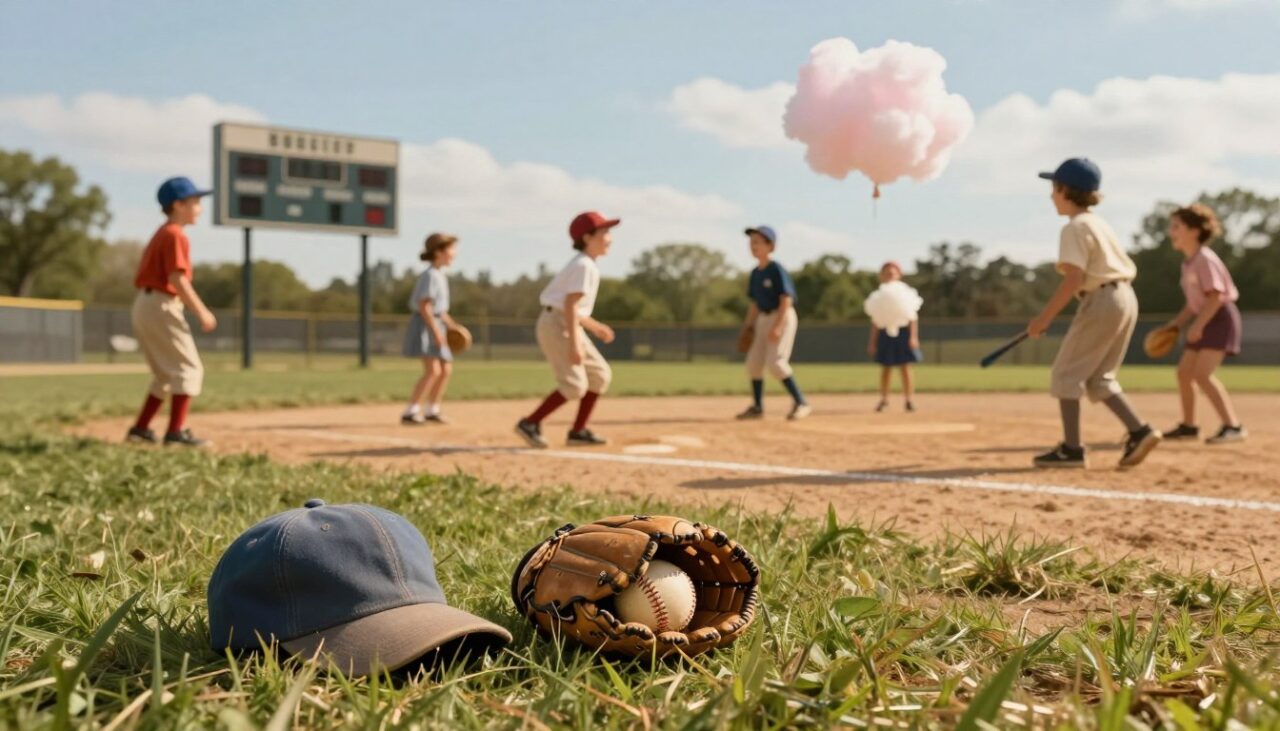
We don’t just watch baseball for the stats. We watch for the feeling of a bygone era. A time when the world seemed simpler, and the sound of a bat was music to our ears. This is the magic of baseball fiction.
It’s not just about the game. It’s a longing for a lost America. A time when life was less complicated. This nostalgia is a powerful tool that connects us to our past.
This nostalgia isn’t just about looking back. It’s the heart of a special kind of story. Think of novels where underdog teams find victory or a player gets one last chance. These stories are more than tales of triumph. They’re about a simpler, more hopeful time.
They’re longing turned into a story. Classics like “The Natural” and the “Miracle Mets” show this. These tales are about the hope baseball represents. A hope for a time when life was less complicated.
This nostalgia even affects real life, mixing fact and fiction. The “Curse of the Bambino” was more than a sports story. It was a shared cultural mythology. It felt like a novel’s plot.
Fiction and reality blend, creating a shared nostalgia. A longing for a game that exists more perfectly in our memories than it ever did in reality. It’s a collective sigh for a game we all remember, even if it never was.
Key Takeaways:
- Baseball fiction often uses nostalgia as a lens to explore lost innocence and a mythic, simpler past.
- The “baseball as miracles” subgenre uses the game as a metaphor for hope, redemption, and a lost America.
- Real-world baseball lore, like the “Curse of the Bambino,” blends with fiction to create a shared, nostalgic mythology.
Fathers, Sons, and Legacy
Forget the box score. The most important stat in the great American novel isn’t batting average or ERA; it’s paternity. Baseball fiction isn’t really about the game on the field. It’s about the game off it.
The diamond is just a stage for a much older, more primal drama: the father-son saga. This is the core of so many baseball fiction themes. The real action happens in the quiet moments between pitches.
In the silent lessons passed down with a worn-out glove, or in the deafening silence of a father’s unmet expectations. It’s not just a sport; it’s a proving ground for masculinity, legacy, and the things we inherit but can’t always name.

The Lineage of the Lineup Card
In the world of baseball fiction, the lineup card is more than a batting order; it’s a family tree. The father-son dynamic isn’t just a subplot—it’s the central nervous system of the story. This is where the raw material of baseball fiction themes gets its most potent fuel.
We’re not just talking about a game of catch in the backyard. We’re talking about the silent, unspoken language of a father teaching his son to throw a curveball—a lesson in physics, yes, but also a lesson in patience, in failure, in getting up after you’ve been hit by a pitch. The ballpark becomes a cathedral where the father is the high priest, and the son is both acolyte and possible usurper.
This is the heart of the matter. The father, often a failed or faded player himself, sees in his son a chance for redemption. He’s not just teaching a kid to hit a fastball; he’s trying to correct the errors in his own life’s scorecard. The son, in turn, isn’t just swinging a bat; he’s swinging for approval, for a nod, for a word of praise that is the currency of their world.
The legacy isn’t just a name or a number on a jersey; it’s the weight of expectation carried in every swing.
| Legacy Type | How It Manifests | Example in Fiction | Gender & Legacy |
|---|---|---|---|
| Skills & Scars | Physical skills (a perfect swing) and emotional baggage (fear of failure). | A father’s perfect swing passed down, but also his explosive temper. | Traditionally male, stressing stoicism and grit. |
| Unfinished Business | A father’s unfulfilled dream becomes the son’s burden. | The son feels he must win the championship his father lost. | Often excludes women from the “lineage” narrative. |
| Name & Identity | Carrying a famous name with the pressure to match it. | Son of a legend, living in a shadow, or rejecting the name entirely. | Patrilineal; the family name is the franchise. |
| Inverted Legacy | Breaking the cycle, rejecting the father’s path entirely. | Son becomes a writer, not a player, but the ghost of the game haunts him. | Challenges the masculine, win-at-all-costs narrative. |
Passing the Baton: Skills and Scars
In this genre, the baton isn’t just passed; it’s often thrown with the force of a 95 mph fastball. The skills are tangible: the art of the slide, the grip on a changeup, the mental toughness. But the scars are the real inheritance.
The son inherits not just his father’s batting stance, but also his father’s rage, his fear of failure, his silent, stoic way of showing love. The ball field becomes a therapist’s couch, a place where a simple “good eye, son” can mean more than a World Series ring. This isn’t just a transfer of knowledge; it’s a transfusion of identity.
The Unfinished Inning: Unresolved Legacies
Some games don’t end at the ninth inning. Some stories don’t get a clean resolution. The unfinished inning is a powerful metaphor in these baseball fiction themes. It’s the father who left for a pack of cigarettes and a pro contract that never came, the son who never made the varsity team, the game that was rained out before the final pitch.
This unresolved tension is the ghost runner on base, forever threatening to score. It’s the son who must decide whether to complete his father’s at-bat or step out of the batter’s box and write his own story. The true baseball fiction themes aren’t about winning the game; they’re about learning to play with the cards—or the cards you were dealt.
This is where the genre gets subversive. In a field dominated by stories of fathers and sons, a novel like Barbara Gregorich’s She’s on First throws a perfect curveball. By putting a woman at the center of a professional baseball story, it doesn’t just add a female character to the father-son dynamic; it shatters it. It asks a profound question: What does legacy look like when the “son” in the father-son story is a daughter? This single move inverts the entire legacy narrative, challenging the very definition of who gets to carry the torch—or the baton, or the family name—forward. It proves that the most compelling baseball fiction themes are the ones that are brave enough to change the game.
Failure and Redemption
Baseball mirrors life, showing us we will fail often. Even the best players fail to hit 70% of the time. This makes the sport’s stories about the chase, not the win.
It’s about the almost home runs and the perfect games that slip away. The focus isn’t on winning, but on the journey back to try again. This journey is what makes baseball fiction so compelling.
The Glorious, Public Humiliation
The most memorable baseball moments are the public failures. Think of Bill Buckner in ’86 or Roy Hobbs’s flaws. These moments shape the characters, making them relatable.
Stacey May Fowles calls this “glorious, public humiliation.” It’s the moment when the crowd gasps, and the player walks back to the dugout. This is where stories start, not end.
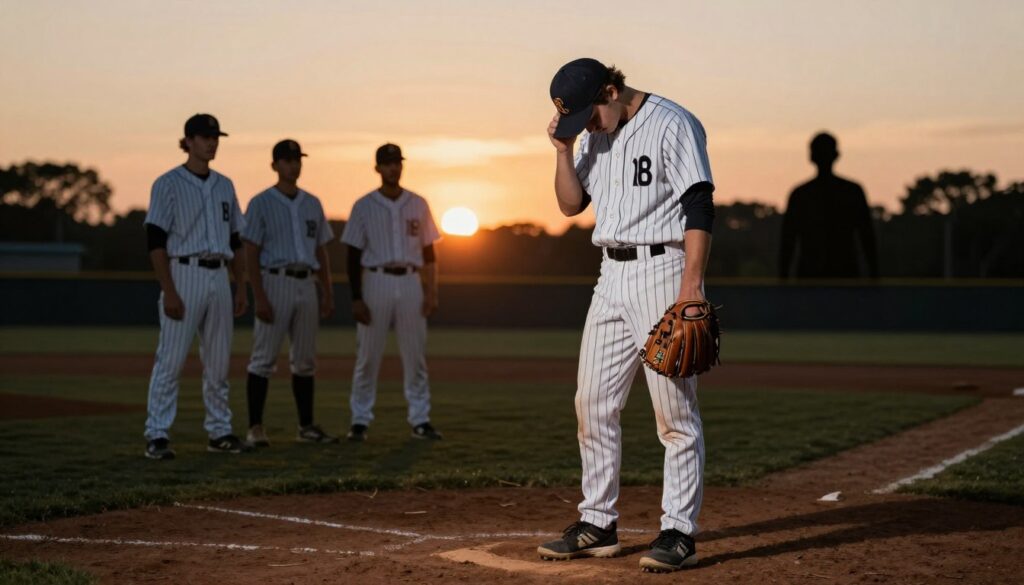
The “Almost” Hero is not the star. He’s Roy Hobbs, who squanders his talent. He’s the aging slugger in a tragic tale of failed redemption. His heroism is in trying, not winning.
As Samuel Beckett said, “Ever tried. Ever failed. No matter. Try again. Fail again. Fail better.” The story is about getting better at failing. Redemption isn’t in winning, but in trying again.
Baseball fiction is about resilience, not victory. It’s about the minor-leaguers and the has-beens who find grace in their final games. The baseball fiction themes we love are about the almost-champions. They are the stories of “what if” and “if only,” showing us the beauty in quiet, private victories.
Time, Memory, and Place
Baseball fiction doesn’t just use time as a setting; it makes it a character. It’s a trickster with a deceptive changeup. Unlike other sports, baseball doesn’t follow a clock. This makes it perfect for exploring memory and nostalgia.
In this world, the ballpark is more than a venue. It’s a stage where the past and present play a poetic game of catch.
The Ballpark as a Time Machine
The ballpark is the ultimate time machine in baseball fiction. It’s not just a physical space but a “memory palace” made of green grass and chalk lines. The sport’s unique relationship with time makes it a perfect metaphor for memory.
The game’s pacing, with its non-linear, sensory moments, mimics how memory works. As discussed in the body in motion, playing can be a physical memory. In the ballpark, a scent of cut grass or the sound of a bat can instantly bring back decades.
The ballpark is the one constant through all the years, as James Earl Jones’s character in *Field of Dreams* says. It’s the place where the ghosts of players past can come back. The past isn’t a foreign country but the starting lineup.
This isn’t just nostalgia; it’s a powerful literary device. The diamond is a stage for moments like a son catching with his father’s ghost or a failed player getting a second chance. The field is a chronos-free zone, where time is measured in innings and outs, not minutes.
The Field of Reconstructed Dreams
Great baseball novels and stories often use the field as a canvas for memory. It’s not just a plot location but a psychological landscape. The “field of dreams” is the mental space where our past triumphs, regrets, and “what-ifs” play an eternal game.
Authors use game details like the exact spot of a home run or the smell of the bleachers as triggers. These sensory details are the building blocks of the “field of reconstructed dreams.” They make the memory and the fiction it inspires feel real.
The lack of a clock in baseball isn’t a bug; it’s the central metaphor. It tells us that in the stories that matter most, the game isn’t over until the last memory is played out, and the final score is not the point.
Why These Themes Endure
So, why do we keep coming back to baseball fiction themes season after season? It’s not just the sound of the bat or the score. The game is a nine-inning story, a poem with a fast twist. The diamond is more than a field; it’s a stage for timeless stories, told in chalk.
The Mythology of the Diamond
The diamond is a special shape. It’s where the American dream meets the game’s hard facts. This story isn’t from gods, but from the game itself. Roger Angell’s work warns us not to rely too much on clichés.
The real magic is in the dirt, grass, and the long season. The baseball fiction themes last because they connect with this story. They tell of a rookie’s first hit, a veteran’s last game, curses, and comebacks. It’s a complete epic in nine parts.
The Game as a Mirror
The game reflects us. The distance between bases is a timeline. A pitcher’s duel is a silent talk, and a double play is a dance of order and chaos.
We see ourselves in the .300 hitter’s slump, the rookie’s debut, and the late-game comeback. This is why themes of identity, belonging, and redemption in baseball resonate deeply. The ballpark shows us life, sometimes distorted, sometimes clear, but always showing our true selves, one pitch at a time.