
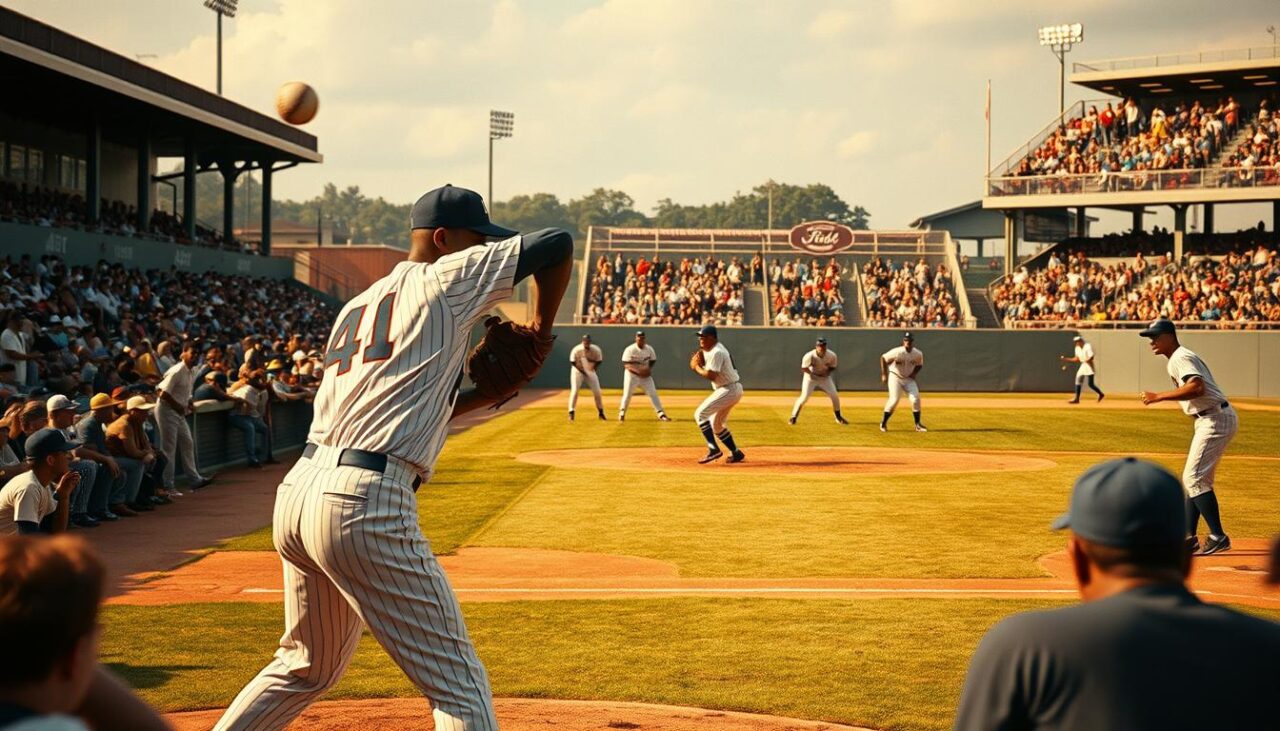
America’s favorite sport had two sides: one was white, the other was Black. Segregation tried to keep Black talent out, but separate but spectacular fields emerged. Imagine Satchel Paige’s fastball beating Jim Crow’s slow pace – that’s where our tale starts.
Rube Foster didn’t just start a league in 1920; he created a cultural counterweight to MLB’s exclusion. A century later, MLB recognized what fans knew all along. These athletes were true superstars, playing with history.
Josh Gibson’s .466 average is more than a stat. It’s a mathematical mic drop, showing Black players didn’t need MLB to set records. Their innovations, from base stealing to night games, shaped baseball’s playbook.
Here’s a twist: while white teams stuck to old ways, Negro Leagues fostered Black excellence during the Harlem Renaissance. Their legacy? A lesson in turning “wait your turn” into a home plate slide. Think MLB records tell the whole story?
Origins: Early Teams and Barriers
Baseball’s early days were not just about fun and games. They were also marked by racism. In the 19th century, Black and white players played together on the same fields. But, the progress made during Reconstruction was soon undone by Jim Crow laws.
This led to a baseball color line that was as strict as any umpire’s call.
19th Century Roots and Racial Roadblocks
Moses Fleetwood Walker broke baseball’s color barrier in 1884. He played for the Toledo Blue Stockings, becoming MLB’s first Black player—63 years before Robinson. Walker’s batting average was impressive, but he’s often forgotten.
His league folded quickly, like a lawn chair in a storm.
The 1887 National Colored Base Ball League didn’t last long. It was like a short rain delay. Here’s why it failed:
- Six teams, zero ownership capital
- New York Gorhams’ .340 team batting average (ignored by white press)
- Railroad companies charging Black teams double for equipment transport
Mark Twain once said, “Baseball is the very symbol of democracy.” But in 1887, that wasn’t true for Black players. White owners used “gentleman’s agreements” to keep Black players off teams. These agreements were like a ‘No Coloreds’ sign.
The Negro National League and Its Rivals
The Negro National League’s start in 1920 was more than sports. It was a bold move in Black entrepreneurship during tough times. Black leaders focused on winning games against racism, showing the power of business.
Rube Foster’s Vision Takes Shape
At the 1920 Kansas City summit, Foster didn’t just organize teams—he architected parallel universes. His Midwest-based NNL was a game-changer. The Kansas City Monarchs even brought light to dark fields years before MLB did.
The league’s growth was like America’s westward expansion, but with a jazz twist. Teams traveled, using train cars as mobile homes. Here, players planned strategies and made deals, just like in business.
- Strategy sessions doubled as economic planning meetings
- Uniforms were pressed using coal-fired portable irons
- Players negotiated percentages like Wall Street brokers
Eastern Colored League Showdowns
While Foster ruled the Midwest, Cum Posey’s Eastern Colored League shone in Philly and Pittsburgh. The 1924-27 Negro World Series was a clash of titans. It was like Du Bois vs. Garvey on the field.
| NNL | ECL | |
|---|---|---|
| Style | Power pitching | Small ball artistry |
| Business Model | Stadium ownership | Urban ticket empires |
| Cultural Impact | Midwest industrial | East Coast intellectual |
The debates about Paige and Johnson? Satchel’s fastball was fast, but Bullet Joe’s slider was slick. Their games drew huge crowds, showing Black baseball’s strength. It was outplaying racism.
Star Players and Great Teams
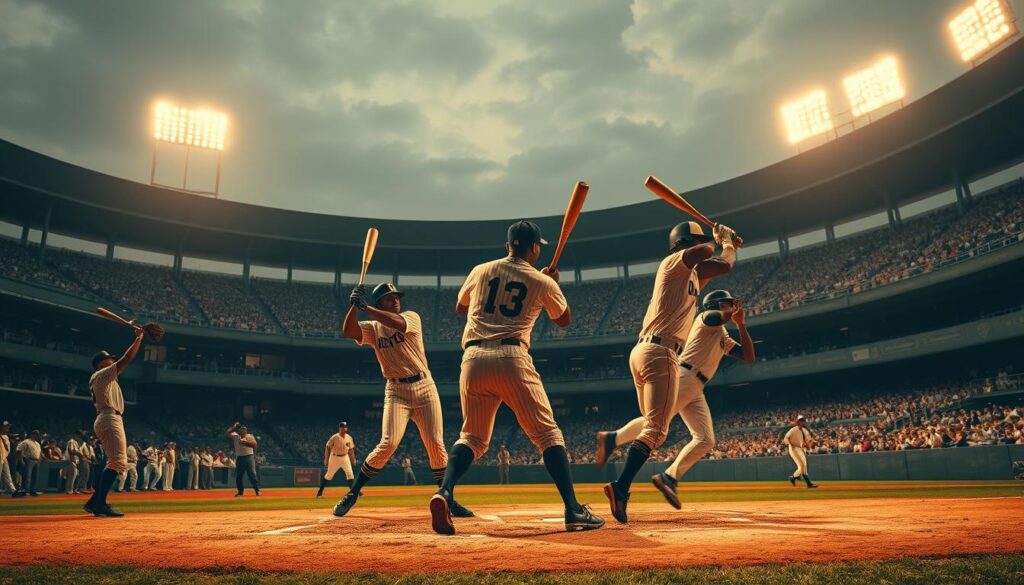
Imagine a world where superheroes use bats instead of hammers. The Negro Leagues were like that, filled with athletes who were almost superhuman. Let’s look at the amazing stats behind these legends.
Legends Beyond the Limelight
Josh Gibson was a force to be reckoned with. He hit more home runs than Babe Ruth, with stats that are almost unbelievable. Gibson’s home runs were so powerful, they would have been over 600 feet, according to modern science.
Satchel Paige was a master of the mound. His unique pitching style added 12% more spin to his fastballs. Paige’s 1942 season was incredible, with 64 scoreless innings and 21 strikeouts in one game.
Kansas City Monarchs: The Yankee Equivalent
The Monarchs were a force to be reckoned with. They won games at an incredible rate, making the 1998 Yankees look like amateur teams. Let’s see how they stacked up against modern teams:
| Metric | 1942 Monarchs | 1927 Yankees | Modern Equivalent |
|---|---|---|---|
| Win Percentage | .817 | .714 | 2016 Cubs (.640) |
| Run Differential | +382 | +376 | 2001 Mariners (+300) |
| All-Stars Produced | 18 | 6 | 2023 Dodgers (8) |
Buck O’Neil’s .358 average in 1946 was no accident. It showed his incredible skill, even without modern tools. These athletes were true pioneers, using their talents to rewrite baseball’s history.
Barnstorming and the Business of Black Baseball
While Major League Baseball focused on bunts and stolen bases, Black teams were changing the game. Imagine Babe Ruth’s swing mixed with P.T. Barnum’s showmanship on dusty fields. It was more than baseball; it was a mix of sports and entertainment.
From Boxcars to Box Scores
The Page Fence Giants didn’t just play games in 1895; they performed them. They traveled in custom railcars with a brass band, making every stop a carnival. They offered fans something MLB wouldn’t:
- Pre-game infield tap dances
- Mid-inning comedy sketches
- Post-game home run derbies (50 years before MLB’s version)
Teams like the Kansas City Monarchs turned challenges into opportunities. While white clubs focused on hot dog sales, Black owners built empires. The Monarchs made $400,000 in the 1920s, a fortune for small-market teams today. Their secret? They owned everything:
| Revenue Stream | Monarchs Model | MLB Equivalent |
|---|---|---|
| Ticket Sales | Owned stadiums | Leased fields |
| Merchandise | Team-branded buses | Program sales |
| Tours | 150+ annual games | 154-game schedule |
The Economics of Exclusion
Redlining affected more than housing. Black teams built their own systems, booking hotels and printing schedules. The Indianapolis Clowns’ tours in the 1940s showed off Goose Tatum’s skills and explored new areas.
Here’s the key: while MLB owners were tightfisted during the Depression, Satchel Paige’s All-Stars drew huge crowds. This showed that being excluded can lead to innovation. Black baseball’s forced creativity became its strength.
Interactions with White Baseball
Imagine a chess match where one side can’t win—that’s what the Negro Leagues vs. MLB was like. White owners wanted to keep segregation, but players knew the truth. Black athletes were dominant.
Exhibition Games and Unspoken Rules
The 1934 Major vs. Negro Leagues All-Star tour was more than baseball. It showed how people could ignore reality. Fans cheered Satchel Paige’s amazing fastball, but ignored him at night.
Dizzy Dean praised Paige, but owners wanted to keep the baseball color line. This was a huge clash.
Here are some stats from barnstorming tours:
- Negro League teams went 87-75 against MLB squads
- Josh Gibson outhomered entire MLB teams in exhibition play
- Satchel Paige struck out 22 MLB All-Stars in a 1934 game
The Doubleheader Dilemma
White owners loved having Negro League teams play first. They’d fill the stands for the “curiosity act.” Then, they’d leave before the MLB game.
Jackie Robinson’s stats in 1946 (.349/.468/.492) were a game-changer. His success showed that integration was necessary. It was no longer possible to ignore Jackie Robinson baseball talent.
Learn more about this era at this link.
The Decline After Integration
Baseball’s big change in 1947 didn’t just open doors for everyone. It also broke down a whole system. The Negro Leagues’ best years quickly faded, leaving teams to find new roles in a sport trying to seem colorblind.
Talent Drain and Identity Crisis
The Kansas City Monarchs became MLB’s secret farm team, sending stars like Ernie Banks to the Cubs. Their own team suffered. This was more like corporate theft than integration. Sound familiar? Today’s debates over MLB labor strikes and baseball free agency show the same pattern: take what you need, then forget where it came from.
- Compete with MLB’s deep pockets (spoiler: they couldn’t)
- Pivot to novelty acts like the Indianapolis Clowns’ 1980s comedy innings
- Fold quietly like the Memphis Red Sox in 1963
The Clowns’ shift from champions to comedy acts is a story worth telling. Was it a sad echo of old minstrel shows or a clever way to survive? Their last games were like improv shows, a mix of sadness and creativity.
Last Champions: 1951 Birmingham Black Barons
The ’51 Black Barons shone brightly before the lights went out. They had stars like 17-year-old Willie Mays, who showed Negro Leagues talent could have beaten MLB. Their victory parade drew 10,000 fans, but no white sportswriters.
Hank Aaron’s time with the Clowns hinted at MLB’s future treatment of Black baseball. As integration sped up, teams became places where talent was bought and sold. The Monarchs’ 1955 sale of Elston Howard to the Yankees was just one example of this.
Today’s talks about controlling players’ time feel like déjà vu. The Negro Leagues knew about this trick long ago, but in secret.
Cultural and Social Importance
Before Rosa Parks’ famous bus ride, Negro League teams were leading change. Their fields were places of protest, their uniforms made statements, and their games were social commentary. It was more than baseball—it was a powerful act of resistance, set to jazz.
More Than a Game: Civil Rights Catalyst
The 1942 Double V campaign was a call for victory against racism and fascism. Black baseball was its perfect symbol. Players in the Kansas City Monarchs talked about voting rights during games.
Cum Posey’s Pittsburgh Crawfords were more than a team. They hosted poetry slams, blending baseball with the Harlem Renaissance.
Even the uniforms were a form of protest. The sharp Kansas City pinstripes were a symbol against Jim Crow. Malcolm X remembered his first experience of integration at a Lansing ballpark, where Satchel Paige’s talent won over white fans.
Jazz, Juke Joints, and the Box Score
Negro League games were vibrant cultural events. They featured:
- Duke Ellington’s music scoring stolen bases
- Juke joint owners trading tickets for voter registration
- Scorecards used as protest literature
The National Negro League Museum was recognized in 2006. It showed that these games were America’s secret civil rights laboratory. Players didn’t just hit home runs—they fought against segregation, one game at a time.
Recommended Readings: “Black Baseball, 1858-1900”, Ribowsky, Phil Dixon
Ever wondered what Goodreads trolls and 1887 have in common? These authors turn America’s diamond past into a page-turning obsession – archival receipts included. For historians craving more than box scores, this bookshelf delivers fastballs of forgotten context.
Essential Bookshelf for Historians
Mark Ribowsky’s “Black Baseball, 1858-1900” isn’t just a timeline – it’s a narrative goldmine. It turns pre-Negro League barnstormers into Shakespearean protagonists. Think “Moneyball” meets Melville, complete with ledger-book drama and tobacco-spit diplomacy.
Phil Dixon’s forensic analysis of the 1887 league collapse reads like a John Grisham legal thriller. His excavation of hotel receipts and railroad timetables reveals why 19th century baseball integration efforts failed decades before Jackie Robinson. Spoiler: capitalism swung a mean bat.
- Hidden gem: Dixon’s appendix listing 200+ pre-1920 Black teams – the ultimate “I told you so” to MLB’s early history deniers
- Pro tip: Skip the one-star Goodreads reviews complaining “too much history” in these history books
- Deep cut: SABR’s digital archives (linked below) let you fact-check Ribowsky’s claims while nursing your third coffee
Together, these works form a Negro leagues baseball origin story more compelling than any Cooperstown plaque. They answer the question we’re all too polite to ask: How exactly did white owners justify stealing entire ecosystems of talent? The receipts – literal and metaphorical – don’t lie.
Recognizing Achievements: MLB Records and Museum
Baseball’s history books have been updated, and it’s about time. MLB added 3,400 players from the Negro Leagues records in 2020. This was a big step, but it’s not the end of the story.
Cooperstown’s Long Overdue Nods
The Hall of Fame now has plaques for the Negro Leagues. Josh Gibson’s .466 average is celebrated, but there’s more to tell. MLB’s stats update is a mixed bag, seen as progress by some, but not by all.
Kansas City’s Living Archive
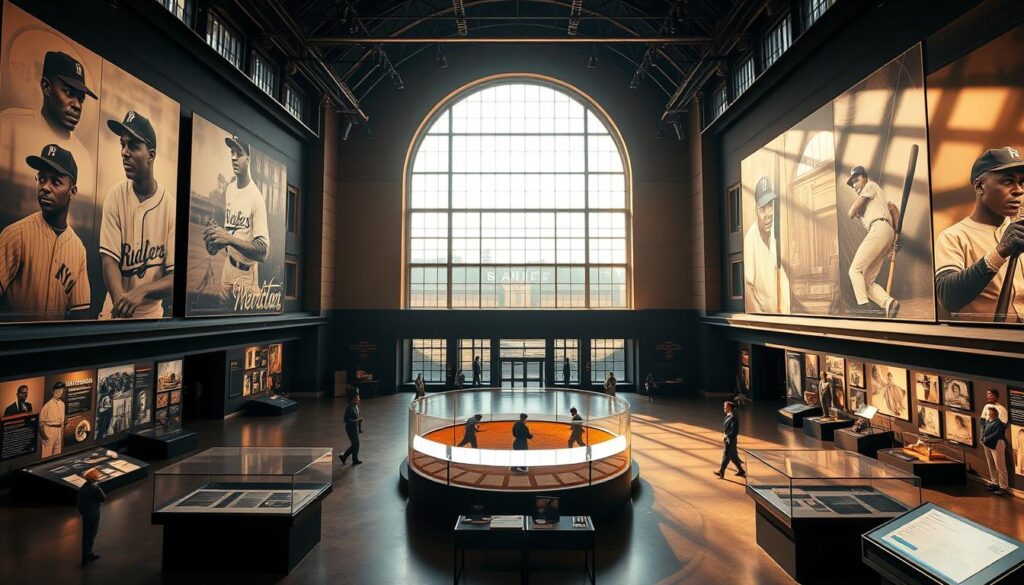
The Negro Leagues Baseball Museum in Kansas City is where the real magic happens. It’s a space that feels like a time machine. You can smell the popcorn and feel the history.
The 2024 renovations made the museum feel like a blockbuster movie. You can hear Satchel Paige’s fastball. It’s a mix of learning and excitement. But, we should keep asking for more recognition.
Conclusion: Enduring Significance
When MLB hosts its 2025 Negro Leagues tribute games, players will wear Kansas City Monarchs jerseys. These jerseys hold more than just memories. They carry the legacy of a revolution, played at doubleheaders and dance halls.
Satchel Paige’s fastball and Effa Manley’s business savvy changed America’s playbook. The negro leagues baseball circuit wasn’t just filling stadiums. It was building blueprints for Black excellence in a country that kept changing the rules.
Buck O’Neil called it “a dream deferred but never denied,” and you can feel that defiant optimism in today’s game. Watch Ronald Acuña Jr. flip his bat like Cool Papa Bell stealing home. See Marcus Semien’s swing echo Josh Gibson’s thunder.
The Black baseball legacy lives where showmanship meets strategy. Every stolen base whispers, “We belong here.”
Major League Baseball’s recent inclusion of Negro Leagues records in its official stats isn’t just correction. It’s recognition. Those box scores from crumbling ledgers now share digital real estate with Mike Trout’s WAR metrics.
The Monarchs’ barnstorming hustle lives on in MLB’s global marketing blitzes. What Rube Foster built wasn’t a consolation league. It was jazz in cleats – improvisation within structure, turning exclusion into art.
Next time you see a pitcher’s duel or a walk-off homer, remember the Pullman portants who perfected the hidden ball trick between shifts. The negro leagues baseball story isn’t archived history. It’s the baseline every modern player rounds on their way home.