
By Terra Kelly | April 16, 2026
In the astronomical economic reality of 2026, where a superstar’s free-agent contract can rival the gross domestic product of a small island nation, it is dangerously easy to forget that baseball players were once bound by an economic system bordering on indentured servitude. We watch the winter meetings unfold like high-stakes corporate mergers, yet this modern financial landscape was paid for by the quiet defiance of a few men decades ago. Reading the literature of baseball’s labor movement is not an exercise in dry economics; it is the study of a bloodless revolution.
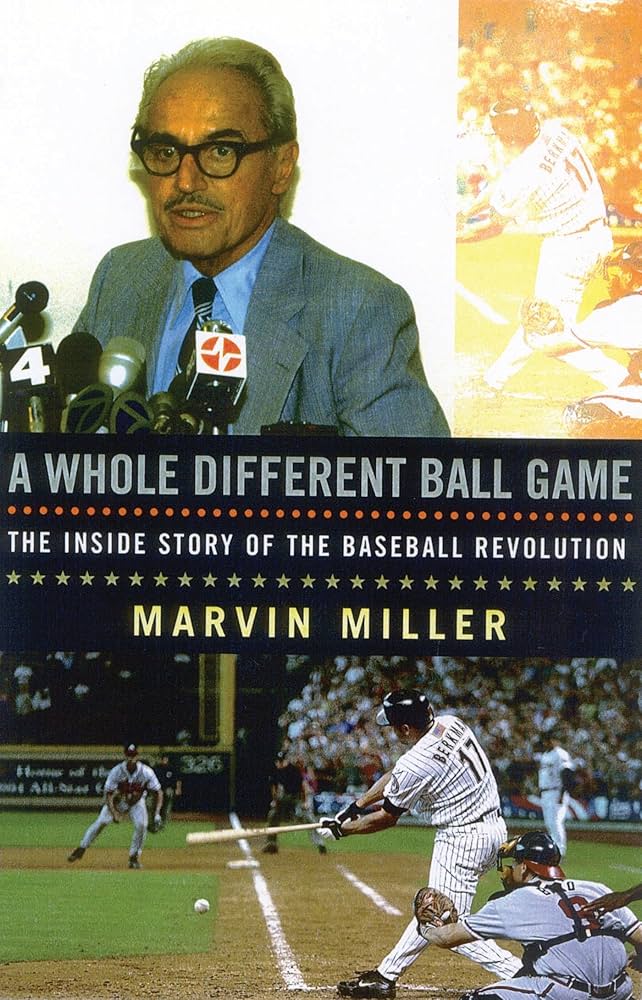
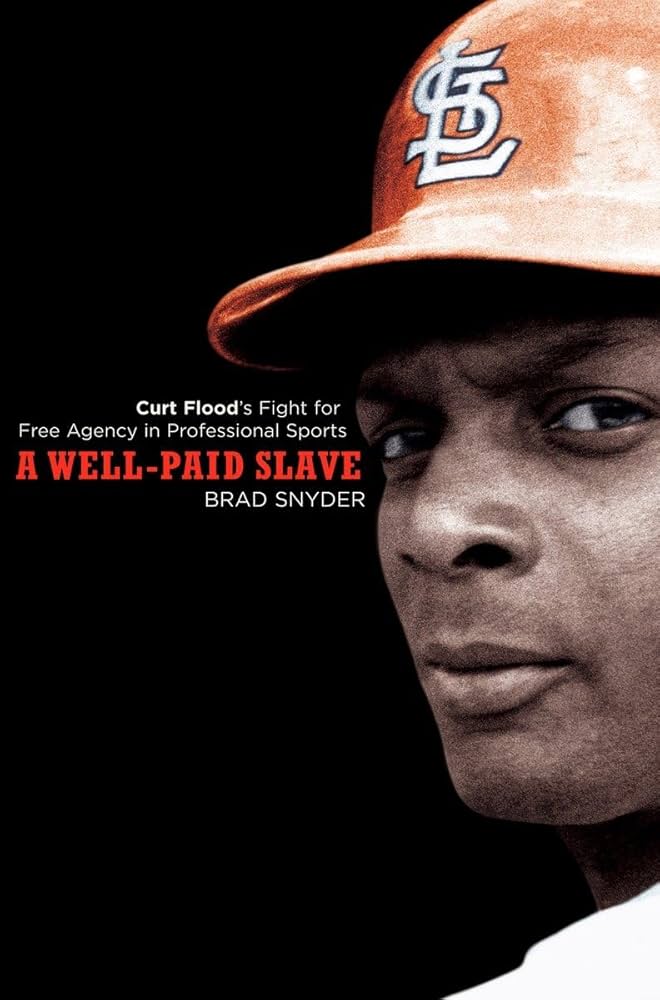
When we dive into books like Brad Snyder’s A Well-Paid Slave or Marvin Miller’s own seminal memoir, A Whole Different Ballgame, we are not just reading about contract negotiations. We are confronting the paternalistic bedrock upon which the sport was built. For nearly a century, owners operated under the protection of the reserve clause, treating human beings as perpetual property. The books chronicling the dismantling of this system offer a narrative as dramatic and foundational as any World Series Game 7.
To understand the modern game, you cannot just read about the players who hit the home runs; you must read about the men who fought for the right to decide where those home runs would be hit.
The Shackles of the Reserve Clause
The literature surrounding Curt Flood fundamentally redefines what it means to be a “hero” in sports. In 1969, when Flood was traded from the St. Louis Cardinals to the Philadelphia Phillies, he did the unthinkable: he said no. His legendary letter to Commissioner Bowie Kuhn—stating, “I do not feel that I am a piece of property to be bought and sold irrespective of my wishes”—remains one of the most vital texts in the history of American civil rights.
Historical accounts of Flood’s stand reveal a profound and isolating sacrifice. Flood did not reap the financial rewards of the free agency he birthed. He was blackballed, exhausted, and largely forgotten by the public for years. Authors covering this era excel at highlighting the psychological toll of challenging a legalized monopoly. Flood took on the Supreme Court’s antitrust exemption almost entirely alone, armed with nothing but the moral high ground. He lost his career so that the next generation of players could gain their dignity.
A Comparison of Power: Pre and Post-Flood
To appreciate the cataclysmic shift documented in these labor histories, one must look at how the literature contrasts the distribution of power across the two eras:
| The Element | The Reserve Clause Era | The Free Agency Era |
| Player Mobility | Dictated entirely by the club owner; players could be traded, sold, or demoted without consent. | Dictated by the open market, negotiated contracts, and no-trade clauses. |
| Salary Leverage | None. Players had to accept the owner’s offer, hold out, or retire from the sport entirely. | Supported by salary arbitration, open-market bidding wars, and collective bargaining minimums. |
| The Union | A weak, paternalistic “company union” funded by the owners. | The strongest, most unified labor syndicate in North American professional sports. |
Marvin Miller and the Weaponization of Solidarity
If Curt Flood was the martyr of the labor movement, Marvin Miller was its brilliant, uncompromising architect. Reading biographies and accounts of Miller’s tenure as the head of the Major League Baseball Players Association requires a shift in perspective. You are not reading about a baseball man; you are reading about a brilliant labor economist who recognized that the owners’ greatest weapon was the players’ own lack of unity.
Miller’s genius, as captured in print, was educational. He taught a fractured, diverse group of young men how to recognize their own leverage. He meticulously dismantled the reserve clause not through grand, sweeping gestures, but through the careful, surgical use of impartial arbitration—specifically the landmark Messersmith-McNally decision in 1975. Books detailing Miller’s strategy read like legal thrillers, showcasing how he outmaneuvered a cartel of billionaires simply by forcing them to adhere to the letter of their own contracts.
The Echoes in Modern Collective Bargaining
Revisiting these foundational texts is essential for contextualizing the cyclical labor stoppages and intense collective bargaining negotiations we still witness today. When modern players strike or lock horns with the commissioner’s office over luxury taxes and revenue sharing, they are operating directly out of the playbook Miller wrote and Flood died for.
These books serve as a permanent record of one of the most critical landmark events in baseball history. They remind us that the players are the product, the game is a business, and freedom is never granted by the powerful—it must be collectively seized.