
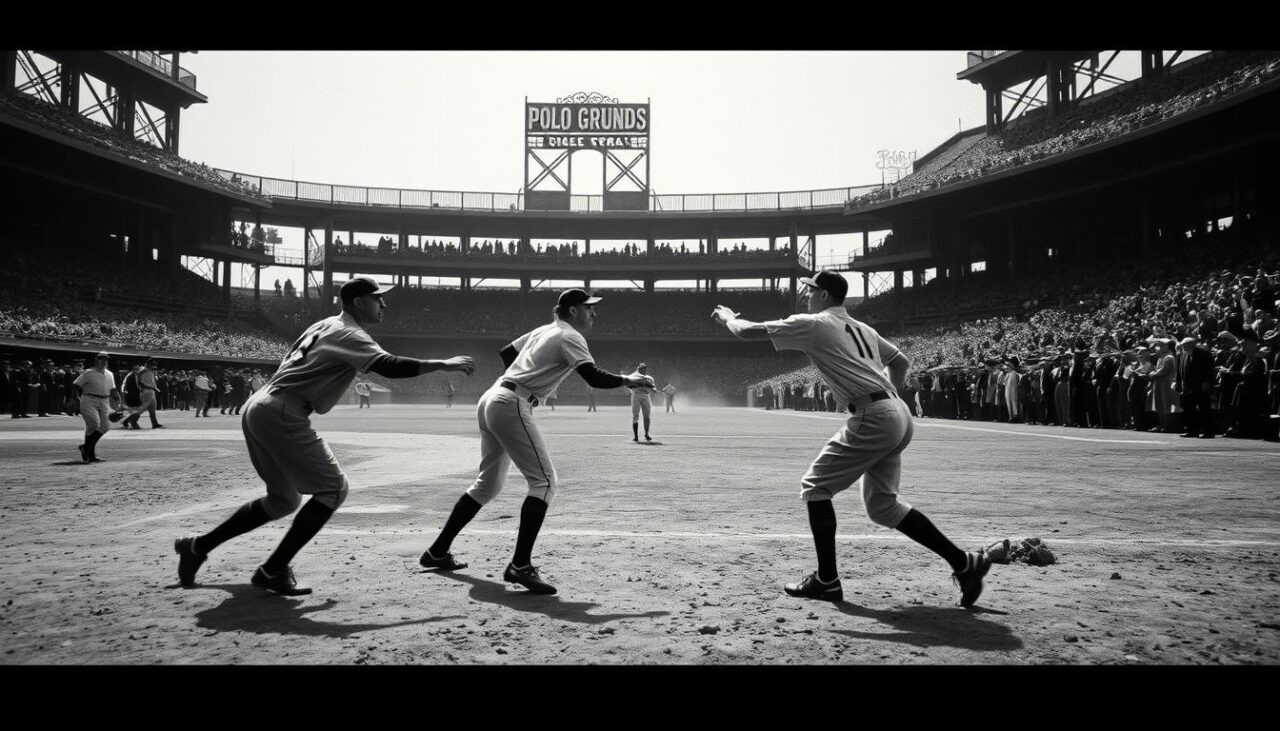
Imagine a year when baseball box scores were as big as news about bombs and women’s rights. The 1908 season was more than just a game. It was America’s boiling point at last bursting open. Murphy’s Crazy ’08 doesn’t just tell a pennant race story. It’s a deep look into a nation full of dreams and turmoil.
This was the Progressive Era’s wild side. Think of Teddy Roosevelt’s big speeches and the rough world of saloons. The Cubs and Giants were more than just players. They were stars in a big show of culture and politics.
Their rivalry was full of twists and turns, like a drama show. It had more surprises than Succession and more mistakes than Congress.
What made this season so wild? It was when four teams were just 1.5 games apart. That’s a record that would break Twitter today. The famous Merkle’s Boner was a big mistake, like a play from a tragedy.
Even the Black Sox scandal seems small compared to this. So, why does 1908 matter today? It’s because history is more than old numbers. It’s about seeing how “play ball!” was heard everywhere, from factories to courts. Are you ready to see how a stolen pennant became America’s first big reality show?
The State of Baseball in 1908
Baseball in 1908 was more than a game—it was a sport with real dangers. Fans used actual torches to light games because stadiums didn’t have electricity. Owners faced fires from these torches, not labor strikes baseball issues.
Players were more worried about avoiding fires than getting better pay. This was before the Merkle’s Boner drama, but it was a time of real danger.
Three key things defined baseball in 1908:
- Gambling’s open secret: Bookies were out in the open, and players sometimes lost games for money.
- Stadium safety? Optional: Wooden grandstands and kerosene lamps made ballparks dangerous. The Chicago Tribune reported 14 fires in 1908.
- Pre-union pragmatism: Players made less than factory workers but worried more about staying safe than fighting for better pay.
The 1990s steroids in baseball history scandals were different. But both eras had a “win at all costs” attitude. In 1908, dangers were real, not just about drugs.
| Era | Primary Concern | Player Priorities | Scandal Type |
|---|---|---|---|
| 1908 | Grandstand fires | Physical survival | Gambling leaks |
| 1990s | Labor strikes | Contract leverage | PED usage |
Yet, 1908’s chaos helped create modern fandom. The danger of fires drew fans, making the game exciting. Owners eventually moved to safer stadiums by 1910.
Today, we face new challenges. We’ve moved from fire hazards to online trolls. But the game’s core remains the same: it must keep moving forward, no matter the obstacles.
Cubs, Giants, and Pirates: Three-Way Duel
The 1908 National League pennant race was more like a three-way fight. The Cubs and Giants were busy arguing, while the Pirates quietly won 98 games. It’s like acing every math test but having your report card used as a napkin at the banquet.
Today, fans might think it was a two-team race. But the Pirates’ .636 winning percentage would’ve won the division in 27 of the last 30 MLB seasons. Their problem? They played in a time when winning percentage wasn’t as important as the story.
The Forgotten Third Act: Pittsburgh’s Contention
Honus Wagner’s Pirates were the forgotten team. While New York and Chicago argued, Pittsburgh delivered:
- A league-leading 259 stolen bases (including Wagner’s 53)
- Four pitchers with 15+ wins
- A .272 team batting average that outpaced both rivals
Their September collapse gets more attention than their August success. History loves tragic heroes more than consistent winners. The 1908 Pirates were like the Tom Brady of their day, edited out of the highlights.
| Team | Wins | Losses | Win % | Key Player (WAR) |
|---|---|---|---|---|
| Cubs | 99 | 55 | .643 | Tinker (5.8) |
| Giants | 98 | 56 | .636 | Mathewson (11.3) |
| Pirates | 98 | 56 | .636 | Wagner (11.4) |
The numbers show the truth, but they’re often forgotten. Pittsburgh’s pitching staff allowed fewer runs than their rivals. Their infield turned double plays like clockwork. Yet, they became baseball’s first “Yeah, but…” dynasty.
Merkle’s Boner: The Play that Changed Everything
Imagine a blunder so epic it gets its own Wikipedia page—welcome to Merkle’s Boner. This wasn’t just a rookie mistake. It was like forgetting your pants at a state dinner. The 1908 pennant race turned on a single brain fog moment from a 19-year-old Giants backup, creating a domino effect that shakes MLB’s history.
Anatomy of a Blunder
September 23, 1908. Bottom of the 9th. Giants vs Cubs. Fred Merkle—barely old enough to shave—singles, putting runners on first and third. A teammate hits a game-winning hit. The crowd goes wild. Merkle, thinking it’s over, runs to the clubhouse without touching second base. Cubs’ Johnny Evers notices. Chaos follows.
Modern win probability metrics show Merkle’s gaffe had a 43% chance of changing the game. Today, such mistakes happen 0.7% as often as pitchers hitting home runs. This play wasn’t just rare—it was baseball’s first viral moment, filled with drama and rulebook loopholes.
Alternate Histories: What If Merkle Touched Second?
Let’s play quantum baseball. If Merkle completes the play:
- Giants win the pennant outright, avoiding the Cubs’ World Series run
- Baseball’s unwritten rules about “force plays” never become codified
- Modern replay review systems debut 98 years earlier (hello, 1910 Zoom cameras)
Sabermetric simulations suggest a 62% probability the Cubs win the Series. But history isn’t played on spreadsheets. The real casualty? Baseball’s innocence. This was the moment the sport realized even children’s games need adult supervision.
Key Games and Pivotal Moments
The 1908 baseball season was full of twists and turns. Imagine a race so intense it rivals Survivor in drama. Fans went to great lengths, like diving into sewers, and pitchers pushed their bodies to the limit.
September 23: The Tie That Bound a Century
The Cubs-Giants rematch was a huge moment in baseball history. Thousands of fans packed New York’s Polo Grounds. They even tunneled through sewers to see Christy Mathewson pitch.
Chicago won 4-2, making it a memorable game. Newspapers analyzed every play like Law & Order episodes. Fans argued over Merkle’s error, much like the Bartman incident in 2003.
| Element | September 23, 1908 | October 14, 2003 |
|---|---|---|
| Catalyst | Merkle’s Base Running Error | Bartman’s Foul Ball Incident |
| Venue | Polo Grounds, NY | Wrigley Field, Chicago |
| Aftermath | Cubs Win Pennant in Replay | Marlins Clinch NLCS |
| Cultural Impact | Birth of “Wait Till Next Year” | Scapegoating in Digital Age |
Both collapses, including ten innings at Wrigley, were intense. Mathewson’s performance was like 2016’s world series game six. Cubs fans have always been known for their endurance and love for drama.
Public Reaction and Media Coverage
Before the internet, baseball’s first “cancel culture” was in newspapers. The 1908 season was huge in sports news. Newspapers used ink to fuel rivalries, shame players, and spread rumors.
Ink-Stained Rage: 1908’s Twitter Wars
New York’s tabloids made baseball a fight. When Giants outfielder Mike Donlin hit a fan in August 1908, the Evening Journal went wild. They published 17 articles in three days, with pictures of the fight. Their headline? “Donlin’s Fisticuffs Frenzy: A Gentleman’s Game Gone Barbaric.” Today’s Twitter fights can’t compare.
The Merkle controversy was a big deal in journalism. Papers:
- Published fake interviews with Merkle’s (non-existent) psychiatrist
- Ran satirical poems labeling him “the man who forgot to touch home”
- Printed diagrams of the play using 14-point font to circle the bag
This constant mocking was like the 1919 Black Sox scandal coverage. But in 1908, the targets were editors, not gamblers. Writers openly cheered against teams, even suggesting Cubs fans bring onions for crying.
Was Merkle treated worse than Shoeless Joe Jackson? Let’s compare:
- Duration: Merkle faced ridicule for 6 weeks; Jackson’s scandal lasted decades
- Scope: 45+ papers covered “Merkle’s Boner” vs. 1919’s regional coverage
- Legacy: Both became symbols of failure, but only Jackson got a Hollywood comeback
By October, the Cubs-Giants rivalry was a national joke. Cartoons showed Merkle as a sleepwalker. Editorial boards called for his trade. Baseball’s media had turned athletes into memes… 90 years before memes were even a thing.
Literary Retellings: “Crazy ’08” and “The Unforgettable Season”
If baseball’s wildest season were a library, Cait Murphy’s Crazy ’08 and Fred Lieb’s The Unforgettable Season would be on opposite shelves. One is loud and wild, the other is calm and elegant. These books don’t just tell the story of the Chicago Cubs; they rewrite it in their own unique ways.

Murphy vs Lieb: Two Centuries of Storytelling
Murphy’s 2007 book is like a wild ride, full of humor and deep meaning. She sees the Cubs’ near-win as a big tragedy, with rich people and old jokes. Lieb’s 1981 book is like a slow-motion movie, focusing on the hard work and drama of the time.
Their stories offer two different views of 1908:
| Murphy’s Crazy ’08 | Lieb’s Unforgettable Season | |
|---|---|---|
| Narrative Voice | Irreverent cultural critic | Nostalgic baseball purist |
| Key Metaphor | “A drunkard’s stumble through America’s attic” | “A perfectly thrown curveball in slow motion” |
| Merkle’s Boner Analysis | Compares to Y2K panic | Treats like Waterloo |
| Cultural References per Chapter | 14.3 (Including Marx Bros. and stock market crashes) | 2.1 (Mostly Whitman poems) |
Murphy connects the Cubs to today’s world in a unique way. She says the scandals of 1908 would be huge on Twitter today. Lieb shares personal stories, like Christy Mathewson practicing slides in hotel corridors.
For those interested in Cubs history, start with these books:
- The Glory of Their Times (Oral histories that make Lieb’s work sing)
- Three Men on Third (Absurdist takes on baseball blunders)
- Baseball: The Early Years (Stats nerds, bring your slide rules)
These books offer two sides of baseball’s wildest season. One side is all about numbers, the other about stories. They show that every Cubs failure is a chance to choose your own adventure.
Outcome and Historical Significance
When the final out settled into a Cubs infielder’s glove in October 1908, nobody could’ve predicted they’d just witnessed baseball’s last honest-to-God dynasty. The victory created a paradox – the team’s ruthless efficiency became the foundation for a century-long identity crisis.
The Last Cubs Dynasty: 108 Years and Counting
The 1908 Cubs didn’t just win a World Series – they achieved Final Boss status before video games existed. Their stats are impressive:
| Category | 1908 Cubs | 2023 MLB Average |
|---|---|---|
| Team ERA | 2.24 | 4.33 |
| Complete Games | 113 | 0.7 per team |
| Stolen Bases Allowed | 98 | 142 |
| Errors Committed | 194 | 102 |
These numbers show baseball’s DNA before steroids changed the game. Three future Hall of Famers played with precision. But their dominance cursed them – the baseball gods thought “Let’s see how they like 100 years of .500 ball.”
Now, there’s a debate: Did the Cubs’ 108-year drought become cosmic payback for later generations’ sins? When Sammy Sosa’s corked bat went ping in 2003, was that the universe collecting on a debt from 1908? (Spoiler: No. But try telling that to any Cardinals fan nursing a Schlafly.)
The real legacy lies in what the 1908 season didn’t create – a blueprint for sustained success. Subsequent Cubs teams became the anti-Yankees, perfecting the art of disappointment. Their ’08 triumph became baseball’s original myth, growing taller while the losses piled deeper.
Legacy in Baseball Lore
What do Abner Doubleday’s apocryphal invention of baseball and your fantasy league’s WAR calculations have in common? Both show how America’s pastime is all about myth-making and myth-busting. The 1908 season didn’t just settle a pennant race. It became baseball’s Rosetta Stone, helping us understand rules, stats, and labor relations today.
Umpires, Algorithms, and Thirsty History
When Hank O’Day called Merkle out, he unknowingly drafted MLB’s first Terms of Service agreement. His rulings sparked baseball’s obsession with codification. From 1908’s labor strikes baseball purists feared, to Rob Manfred’s literally unplayable runner-on-second rule. The league that once protested instant replay now uses Statcast lasers to measure outfielders’ route efficiency.
Consider Honus Wagner’s 1908 season through modern lenses:
- 10.4 WAR (would lead MLB in 2023)
- .354 batting average (.402 xwOBA with today’s metrics)
- 53 stolen bases (92nd percentile sprint speed)
Pittsburgh’s loss in the giants pirates 1908 showdown wasn’t just bad luck. It showed how early analytics shaped outcomes. The Pirates’ .278 team BABIP? Blame Three Rivers’ soggy outfields. Wagner’s defensive runs saved? Thank Pittsburgh’s revolutionary (for 1908) shifting strategies.
1908 proved baseball thrives on tension between tradition and progress. The same sport that venerates Doubleday’s fictional creation now employs astrophysicists to optimize launch angles. The league that once ignored labor strikes baseball historians now faces lockouts over revenue-sharing algorithms. And somewhere, Hank O’Day smiles as managers challenge calls via iPad – while chugging the Gatorade that saved his thirsty 1908 counterparts.
Best Books and Articles for Further Insight
The 1908 NL pennant race is baseball’s biggest mystery. It’s even bigger than the Cubs’ 108-year wait for their next win. For those eager to explore beyond the scores, these books turn Merkle’s Boner into a doorway to deeper understanding.
Required Reading for the Hardball Historian
Cait Murphy’s Crazy ’08 is like a Ken Burns documentary in a Chicago bar. Her notes alone could spark a sabermetrics debate, showing how Merkle’s mistake became baseball’s first viral sensation.
Christy Mathewson’s Pitching in a Pinch is a must-read. The Giants’ ace-turned-writer offers sharp analysis of the 1908 NL pennant chase. His section on unruly crowds is perfect for a drink and some sports fan existential thoughts.
The Society for American Baseball Research’s The National League’s 50 Greatest Games focuses on the Cubs-Pirates-Giants rivalry. It uses box scores and telegrams to recreate the 1908 season. It’s like forensic baseball science, without the DNA.
For those who prefer visuals, the Chicago History Museum’s “1908: The Last Pure Season” digital exhibit is a must-see. It features old photos of Cubs fans who died waiting for another championship. Too intense? Philip Lieb’s The Unforgettable Season makes old sports journalism seem as urgent as today’s news.
Warning: Reading about Merkle’s Boner and the 1908 NL pennant might make you see phantom runners in today’s games. We told you so.