

September Schedules are not just calendar filler in the 2026 MLB Wild Card chase. As of September 1, 2026, the regular season ends on September 27, with the Wild Card Series scheduled to begin on September 29. That leaves less than four weeks for contenders to settle division races, Wild Card berths, and first-round bye positioning. The schedule arc that began with pitchers and catchers has now narrowed to individual series that can shift a club’s probability profile quickly.
For an analyst, the September lens is different from the April lens. A three-game series against another contender is no longer one small sample in a 162-game season. It is still a small sample statistically, but it also changes the number of games left to respond. That is why head-to-head series, remaining opponent quality, and standings compression matter more now than they did earlier in the schedule.
Why September Schedules Carry Extra Weight
September Schedules And Division History
History gives division leaders a measurable advantage entering the final month. Since 1996, in full MLB seasons, 136 of 168 teams that led or shared a division lead entering September 1 went on to win that division, a rate of about 81%, according to MLB’s September division-lead history. MLB also reported that no full season since 1996 has seen all three division leads on September 1 fail to hold by season’s end.
That history does not guarantee anything for a 2026 club. It does show that early September position matters. Teams in front can trade time for stability, while teams chasing must create movement quickly. For Wild Card clubs, September Schedules separate two different pressures: staying close enough to qualify and, when possible, making a division leader uncomfortable. The schedule can either create those openings through direct matchups or close them through long stretches against stronger opponents.
The Calendar Shrinks The Error Bar
By September 1, there is less room for a team’s true talent level to reveal itself through a long correction. A team that has underperformed its run prevention or lineup quality cannot assume a 30-game rebound will be enough if several other clubs are grouped within a narrow standings band. The Wild Card format increases that pressure because multiple teams can remain mathematically alive while fighting for one final opening.
This is where schedule quality interacts with player development and roster usage. Clubs may need innings from young starters, multi-inning relief from swingmen, or production from bench players in day games after night games. The research available here does not provide roster-specific injury or workload data, so no club-level medical assumptions should be made. The supported point is broader: the September calendar compresses decision-making for contenders and forces managers to weigh series importance against fatigue risk.
Contender Clusters In Both Leagues
American League Pressure Points
The American League race is especially sensitive to small swings. As of the September 1, 2026 framing in the research, the Guardians, Orioles, Blue Jays, and Rangers were packed within two games of each other in the fight for the final AL Wild Card spot. The Orioles also had September series listed against the Rockies from September 1-3, the Guardians from September 7-9, and the Blue Jays from September 11-13 and September 21-23.
Those dates are meaningful because two of Baltimore’s listed September opponents were direct competitors in the same Wild Card grouping. A series win in that setting does not just add wins to one column; it denies wins to another team chasing the same berth. Cleveland’s September 7-9 series in Baltimore also carries tiebreaker importance based on the research, though the exact standings outcome cannot be known before those games are played.
National League Leverage Without The Hype
In the National League, the Diamondbacks and Padres were identified as battling for what appeared to be the final Wild Card spot, with the Marlins still nearby, while FOX Sports also framed remaining schedule strength as a key variable in September races through its September schedule analysis. The analytical caution is clear: “appeared” matters. A standings picture on September 1 is not a finished bracket.
The NL also has direct and indirect schedule pressure. A club facing another Wild Card contender can change the standings immediately. A club facing a last-place opponent can still face a high-friction series if that opponent is scheduled against multiple contenders during the month. The research notes that the Rockies close September with multiple series against contenders, including the Padres, Mariners, and Diamondbacks. That type of opponent can influence playoff margins even without holding a playoff spot itself.
Series That Change The Math
Head-To-Head Games
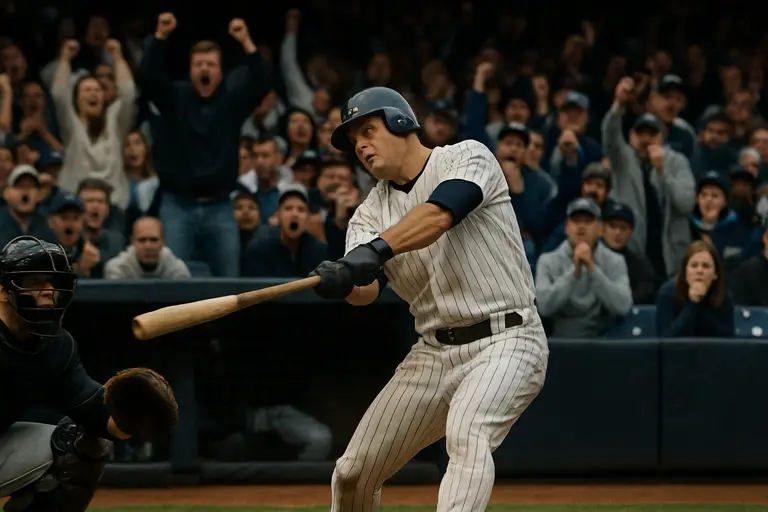
Several series listed in the research carry direct playoff implications. Brewers vs. Cubs from September 1-3 has two-way importance because it affects both NL Central positioning and broader Wild Card or seeding outcomes. Astros vs. Diamondbacks from September 4-6 matters because Arizona was part of the NL Wild Card fight. Rays vs. Yankees from September 22-24, near the end of the regular season, was also identified as a high-impact set tied to division and Wild Card positioning.
Analytically, head-to-head games are high-value because the standings effect is immediate. If two teams are separated by one or two games, a sweep can flip control. Even a 2-1 series result can matter if it changes tiebreaker position or reduces the remaining schedule to a smaller number of opportunities. That is not a prediction that any listed club will win a series. It is a structural fact about how standings math works late in a season.
Schedule Strength And Spoiler Value
Strength of remaining schedule is useful, but it should not be treated as destiny. A difficult schedule can sharpen a contender if it wins direct games, and a softer schedule can still become costly if a club fails to convert against non-contenders. The Rockies example from the research shows why this matters: even teams outside the top Wild Card picture can shape outcomes if they face several contenders over the final month.
There is also a player-development angle. September baseball often asks less-heralded roster pieces to handle meaningful plate appearances or innings. A bench bat facing a late-inning matchup, a rookie reliever entering with traffic on base, or a depth starter giving five stable innings can create a standings effect larger than his season-long profile suggests. Without verified player-specific September projections in the research, the safer conclusion is that depth is tested more visibly when the standings are tight.
- Direct contender series can change both win totals and tiebreaker position.
- Remaining opponent quality can raise or lower the required performance level.
- Non-contenders can still affect Wild Card margins through spoiler series.
- The September 27 regular-season endpoint limits recovery time after a bad week.
September Schedules In The Wild Card Chase
A Cautious Read On September
September Schedules should be read as pressure maps, not forecasts. The research supports a clear point: several races were close as of September 1, 2026, and multiple listed series could influence who reaches the Wild Card Series on September 29. It does not support certainty about final standings, exact tiebreaker outcomes, or individual player performance over the final month.
The best way to evaluate the chase is to track three variables together: who a team plays, how many direct competitors remain on the schedule, and how little time is left after each result. That framework explains why the Guardians, Orioles, Blue Jays, and Rangers being within two games in the AL matters so much. It also explains why the Diamondbacks, Padres, and Marlins could see the NL race swing on a single weekend.
For those interested in multi-sport news and insights, Texas Sportsmen features coverage of sports topics within the same network. However, this article focuses on the vital math of baseball’s final month: the standings remain tight, the series are crucial, and the timeline is short.