
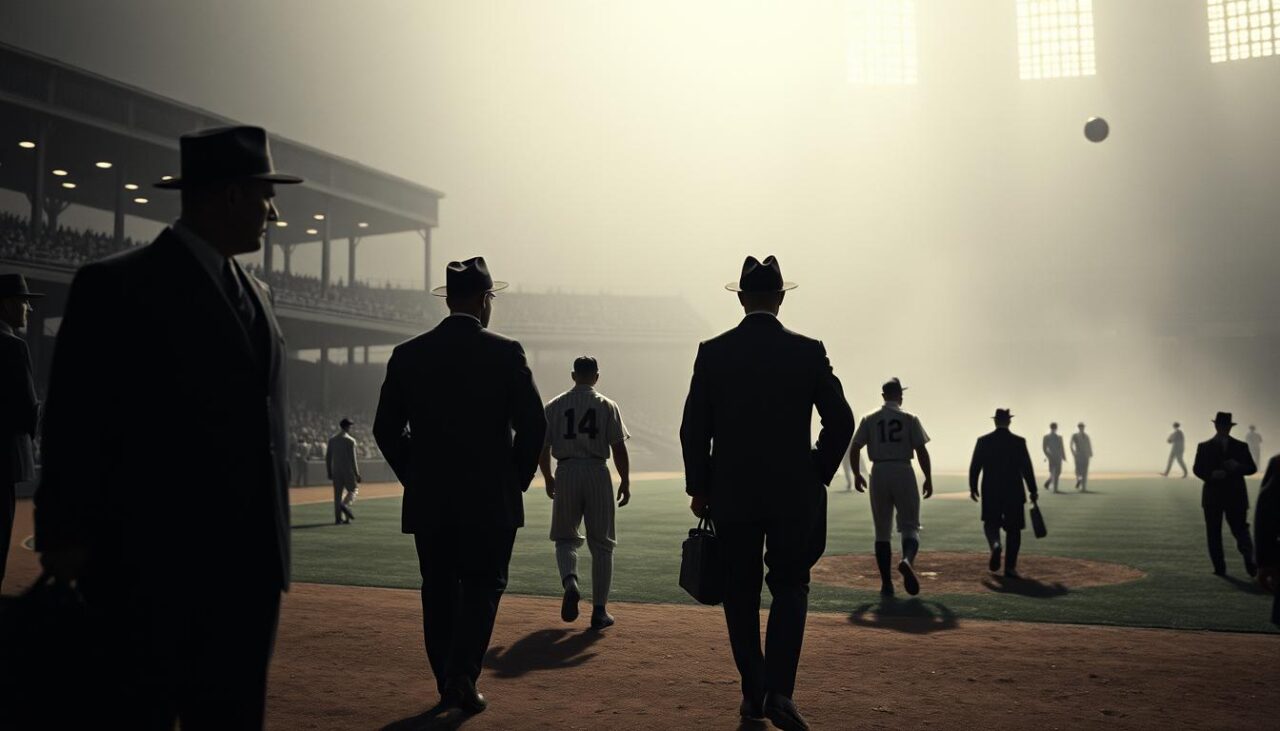
Baseball’s “original sin” wasn’t played in Eden—it happened under Chicago’s Comiskey Park lights. The 1919 World Series was America’s first big sports scandal. It was a story of eight White Sox players who traded their jerseys for shame.
Imagine the outrage of today, but back then with typewriters and cigar smoke. Newspapers screamed. Grand juries met. And fans saw that even heroes can fall.
Why does this old drama captivate us? It’s not just about cheating—it’s about lost innocence. The 1919 World Series didn’t just fix games—it broke America’s love for baseball. It’s like the Game of Thrones of baseball scandals, filled with betrayal and greed.
Hollywood made Shoeless Joe’s story famous in Field of Dreams. But reality showed us courtroom records and $5,000 bribes. The Black Sox legend is a mix of tragedy and tabloid stories. As we near its 105th year, it asks: Who’s really keeping score?
The Lead-Up: Gambling in Baseball Pre-1919
Before the Black Sox scandal, Chicago’s baseball had already seen its share of shady dealings. In 1908, the Cubs and Giants were in a heated pennant race. This race was filled with rumors, making it hard to know what was real. The Cubs won the National League title, but many thought it was tainted by bribery.
Charles Comiskey, the future White Sox owner, was fighting against gambling in baseball. His teams in the 1900s were underpaid, and bookies were everywhere. By 1915, baseball cheating was common. A sportswriter joked that banning players who took bribes would leave no one to sell hot dogs.
Here’s a look at the Deadball Era’s gambling world:
- Bookies as influencers: They shaped public opinion before radio
- Player payments: $100 bribes (about $3,000 today) could change a game
- Media complicity: Newspapers ignored scandals for ad money
By 1919, the White Sox scandal seemed like just another chapter in their history. The real surprise? That anyone was surprised. When a pitcher’s salary was less than a Model T, how many pitches would you sell for cash?
Inside the Fix: Player Testimonies and Evidence
If the Black Sox scandal were a Netflix series, Cicotte’s grand jury testimony would be the mic-drop cliffhanger. The pitcher’s 1920 confession—“We got the money”—dropped like a Deadball Era bombshell, exposing baseball’s first major gambling conspiracy. His admission of intentionally hitting leadoff batter Morrie Rath? That’s the 1919 equivalent of leaving a voicemail confession. With evidence this damning, you’d think the Cook County courthouse needed a better lockbox.
The paper trail read like a mob ledger. Shoeless Joe Jackson’s $5,000 payment—half his annual salary—was found crumpled in his hotel room. Gandil, the ringleader, played both sides: threatening teammates like Swede Risberg (“You’re in or you’re dead”) while later claiming moral anguish in a 1956 interview. Talk about revisionist history.
Key Testimony Contrasts
| Player | Admitted | Denied | Consequences |
|---|---|---|---|
| Eddie Cicotte | Taking $10K, throwing games | Full knowledge of gamblers’ identities | Lifetime ban |
| Shoeless Joe Jackson | Accepting payments | Actively participating in scheme | Mythologized exile |
| Chick Gandil | Locker-room pressure tactics | Direct financial gain | Baseball obscurity |
Modern forensic accountants would’ve had a field day. The players’ cash flow resembled a Rube Goldberg machine:
- $80,000 total promised by gamblers (only $10K delivered)
- Jackson’s payments split between hotel room drops and shady intermediaries
- Cicotte’s share hidden in his basement coal bin—the original offshore account
Yet for all their scheming, the banned MLB players forgot one rule: criminals make terrible accountants. When Cicotte’s testimony vanished from the courthouse (allegedly stolen), it became baseball’s version of the “dog ate my homework” defense. The jury acquitted—but Commissioner Landis wasn’t buying what they were selling.
The Trial of 1921: Media Sensations

If courtrooms had laugh tracks, the 1921 Black Sox trial would’ve drowned out the jury. Imagine Buck Weaver getting tickled by teammates during his testimony. It was more like fraternity hazing gone federal than a courtroom scene. Headlines shouted about the “death of America’s pastime” like TMZ covering a Kardashian divorce.
Sportswriter Hugh Fullerton made the trial a must-read drama. His articles dissected the fix like a true-crime podcast host. His report on Game 3’s suspicious plays was like a blueprint for today’s investigative deep dives. Yet, spectators treated it like open-mic night, with players cracking jokes and jurors stifling giggles.
Arnold Rothstein—the Elon Musk of 1920s gambling—loomed over it all. Imagine Musk buying Twitter just to rig trending topics. That’s Rothstein’s energy: a shadow billionaire manipulating the memorable baseball series while reporters scrambled to prove his involvement. The trial exposed baseball’s seedy underbelly, but the real story was the media’s transformation.
- Headlines compared players to Benedict Arnold
- Cartoons depicted Comiskey as a weeping Uncle Sam
- Editorials demanded lifetime bans before verdicts were read
Sound familiar? Today’s hot takes on world series game six controversies are just polished versions of 1921’s ink-stained outrage. The trial didn’t just decide eight men’s fates—it taught America how to turn sports into content. And we’ve been binge-watching ever sense.
Aftermath: Personal Fates and Baseball Law Changes
The Black Sox scandal was baseball’s original sin. Judge Kenesaw Mountain Landis became its unforgiving archangel. He banned eight players for life with the finality of a divine decree. Forget second chances – Landis’ edict turned Shoeless Joe Jackson and co. into baseball’s original ghost crew, their careers vanishing faster than a pop fly in a hurricane.
Landis didn’t just punish players. He rewrote baseball’s DNA. His “Thou Shalt Not Gamble” commandments became the foundation for every future MLB controversy. Steroid scandals? Pete Rose’s exile? They’re all spiritual successors to Landis’ 1921 playbook.
Let’s break down the fallout:
- The banned MLB players became cautionary tales. Chick Gandil died in Montana obscurity. Swede Risberg ran a chicken farm. Only Shoeless Joe’s myth survived – a Greek tragedy in cleats.
- The Pacific Coast League learned the hard way. When they tried signing banned players in 1922? Landis nuked their MLB affiliation faster than you can say “farm system.”
- Labor relations got radioactive. Owners suddenly had a nuclear option against labor strikes baseball would later endure. The 1994 strike? That’s Landis’ ghost smirking in the owners’ box.
| Pre-1921 MLB | Post-Landis MLB | Modern Echoes |
|---|---|---|
| Gentlemen’s agreements | Written conduct codes | Steroid policy handbooks |
| Player-run gambling | Federal oversight | Sports betting partnerships |
| Owner omnipotence | Commissioner as deity | Rob Manfred’s sticky stuff crackdown |
Here’s the twisted part: Landis’ iron fist worked. Gambling scandals vanished… until the 1980s Pete Rose debacle. But his legacy birthed new demons. That absolute commissioner power? It turned MLB labor negotiations into a Cold War sequel. When players unionized, they were fighting a system Landis weaponized against them.
Today’s MLB walks Landis’ tightrope. Legal sports betting partners coexist with lifetime bans for gambling. The banned MLB players of 1921 would’ve LOL’d at the irony – if they hadn’t died in baseball exile.
Shoeless Joe Jackson: Myth, Reality, and Literary Legacy
Shoeless Joe Jackson’s story is a mix of myth and reality, like a ball hit into the stands. If he actually threw the 1919 World Series, he’d be the worst conspirator ever. His .375 batting average during the scandal is unmatched today.
- 12 hits in the Series (a record at the time)
- Zero errors in left field
- A signed confession he later claimed was coerced
Baseball’s “Shoeless One” became a tragic hero. W.P. Kinsella brought him back to life in Iowa cornfields. Field of Dreams made him famous, with Ray Liotta’s swing impressing many.
Jackson’s real crime was being too good at baseball. The 1919 Black Sox scandal made him a symbol of controversy. His .356 career average is a record that stands today.
Today’s analytics fans would love him. His swing and glove work were ahead of his time. Yet, we’re debating his legacy a century later. Myths are always more exciting than facts.
The “Scandal on the South Side”: Chicago’s Perspective
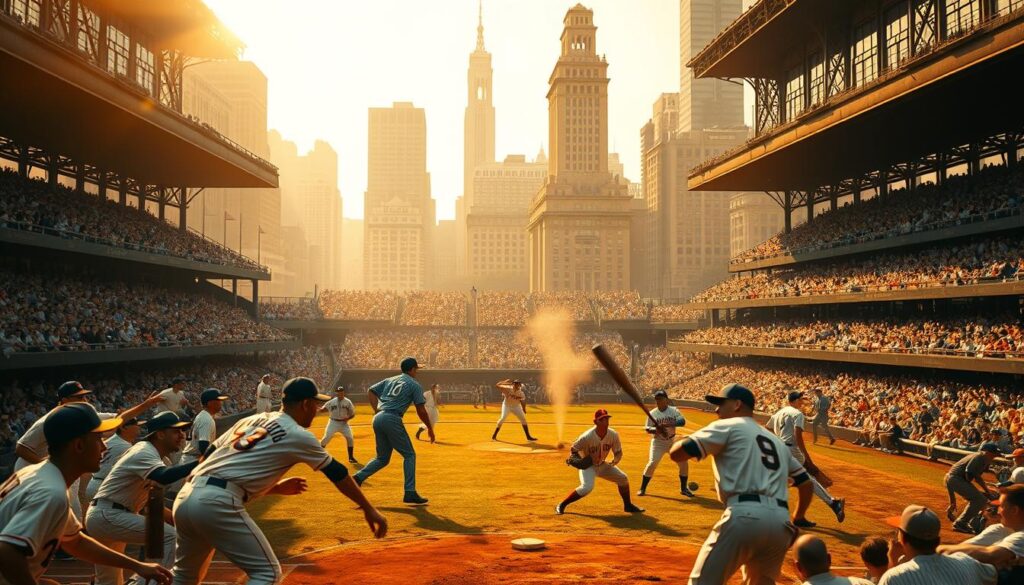
Chicago’s love for baseball was split long before 1919. The city remembered the 1908 Cubs-Giants pennant race fondly. This race was a legitimate miracle, filled with fog, Fred Merkle’s mistake, and 10 innings at Wrigley Field.
But then, the White Sox made baseball seem like a rigged game in 1919. The ’08 Cubs had a real excuse. They were playing fair baseball, unlike the mob’s influence in 1919.
Charles Comiskey spent $2.3 million on his team, but his penny-pinching was well-known. He made his players do their laundry and didn’t pay them well. Here’s a look at how he treated his players:
| Expense | Comiskey’s Policy | League Average |
|---|---|---|
| Player Laundry | Self-service | Team-covered |
| World Series Bonuses | $0 (1917) | $4,000+ |
| Star Player Salaries | $6,000 (Shoeless Joe) | $10,000+ |
Today, Chicago’s sports fans remember this greed and resentment. The Chicago Sports Museum shows a 1908 Cubs jersey next to Eddie Cicotte’s ball. It’s a reminder of the corruption in baseball.
Modern fans learn about these dark times through books like Ten Innings at Wrigley. They see that Chicago’s baseball stories are often about what happens when the game stops being a game. After 1919, could any comeback feel real? Or does every close play make us wonder: “What’s the angle?”
Influence on Baseball’s Culture and History
Baseball scandals can be big or small. The Black Sox scandal changed how we see baseball. It also showed how future cheaters would act.
Judge Landis banned eight players in 1921. This was a big deal. Then, in the baseball steroid era, players like Mark McGwire used banned substances. The big change was how punishments were handled:
| Black Sox (1919) | Steroid Era (1990s-2000s) | |
|---|---|---|
| Scandal Type | Gambling conspiracy | PED usage |
| Punishment | 8 lifetime bans | 0 suspensions during peak usage |
| Public Reaction | National outrage | Record attendance |
| Legacy | “Shoeless” Joe as tragic figure | Bonds/Clemens HOF debates |
Today, players who cheat often get book deals, not bans. This is a big change from the past. Baseball now focuses on making money, not just playing fair.
Pete Rose is banned for gambling, but Alex Rodriguez, who used steroids, works on ESPN. This shows how rules are applied differently today. Fans love watching games but get upset by ads about betting.
The Black Sox scandal had a big impact on baseball:
- The Myth of Innocence: Made people nostalgic for a “pure” baseball era
- Selective Enforcement: Showed how rules are applied based on what looks good
- Cultural Mirror: Revealed how America views cheating and money
When you see a player with special gear or muscles, think of the Black Sox. They started a long line of scandals in baseball. The game has changed, but the cheating part remains the same.
Book Reviews: “Eight Men Out” and others
Reading Eliot Asinof’s Eight Men Out is like watching a true-crime documentary. Every player had a reason, and the commissioner’s office was clueless. The new Criterion Collection edition makes it even more gripping.
Asinof’s book is the definitive autopsy of the scandal. It mixes trial transcripts with behind-the-scenes stories. But the real excitement comes in the Ten Innings at Wrigley story by Kevin Cook. It’s a wild tale of a 1979 Cubs-Phillies game that makes today’s home runs seem tame.
For fans of baseball’s darker side, here are some must-reads:
- Say It Ain’t So, Joe! – A biography that turned Shoeless Joe into a national icon
- Burying the Black Sox – Gene Carney’s deep dive into grand jury records
- The Betrayal – Charles Fountain’s look at Chicago’s newspapers’ role in the scandal
What makes these stories so captivating? They’re not just about baseball. They’re like Succession with cleats, Law & Order with box scores. The 1919 Series was like the first prestige TV drama, full of shocking twists and a finale that left everyone feeling guilty.
Further Readings and Book Recommendations
Gene Carney’s Burying the Black Sox is a must-read for baseball fans. It’s a detailed look into the scandal that shook the sport. Eliot Asinof’s Eight Men Out offers a mix of journalism and historical fiction. For real-life drama, check out the MLB’s declassified files.
The Field Museum in Chicago has amazing archives. They include telegrams and pay stubs that give a raw look at the era. Forget online rumors and dive into the real stories.
Kostya Kennedy’s Pete Rose: An American Dilemma draws parallels with the Black Sox scandal. It makes you question the ethics of baseball. The MLB’s response to scandals is always a topic of debate.
For a lighter read, remember the 2004 World Series game six. It was a night of magic that showed baseball’s power to create legends. Your bookshelf needs these stories. They’re as exciting as a game-winning home run.