
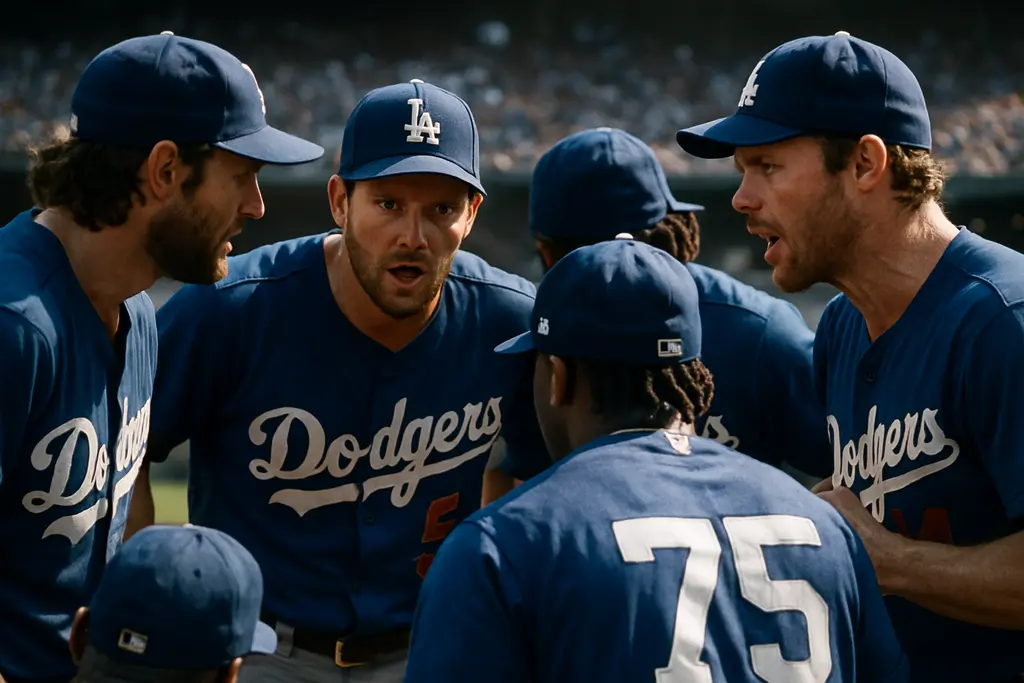
The Dodgers clinching strategy in 2026 was less about one dominant stretch than about keeping enough usable players available while the roster absorbed repeated injury pressure. Los Angeles clinched the NL West on September 17, 2026, with an 8-2 win over Cincinnati, securing its fifth straight division title and 13th in the past 14 years, according to MLB.com’s clinch report.
That result fit a broader pattern. The Dodgers did not reach the clinch line with a fully settled roster. They did it while managing catcher instability, a stretched rotation, position-player absences, and the reduced availability of Shohei Ohtani’s two-way role. The lesson was not that injuries were harmless. It was that Los Angeles had enough redundancy to keep a division lead from unraveling.
Dodgers Clinching Strategy And The Value Of Depth
Dodgers Clinching Strategy Began Before September
The roster structure that carried Los Angeles through September was not built in a single week. Research from the club’s season reporting showed that depth was already a planning point before the season, with Will Smith, Freddie Freeman, Tommy Edman, Mookie Betts, and Max Muncy listed as core infield or lineup pieces while Edman was still rehabbing from right ankle surgery. That early context matters because the club entered the year with a strong projected group, but also with a clear need for secondary options.
By September, that need had become direct. The Dodgers’ late-season injury list included Andy Pages with a fractured left hand, Dalton Rushing with a right elbow issue, Freeman with right knee tendinitis, and Miguel Rojas with right shoulder soreness, as noted by the Los Angeles Times. Those losses and limitations affected more than the batting order. They altered defensive choices, late-game substitutions, and how aggressively the club could rest regulars.
Roster Expansion Helped, But Did Not Solve Everything
On September 2, 2026, roster expansion to 28 players allowed the Dodgers to reinstate Smith, Justin Wrobleski, and Rushing from the injured list. Smith had missed time with a neck injury and made four rehab appearances in Triple-A before returning. That sequence gave Los Angeles more coverage, but it did not return the club to full strength. Rushing’s right elbow situation remained a limiting factor, and later reporting indicated he was unlikely to catch again in 2026.
The catcher position showed the practical side of the Dodgers clinching strategy. Smith’s inflamed disc in his neck and Rushing’s partial UCL tear forced Los Angeles to use Ben Rortvedt and Hunter Feduccia, both acquired before the Trade Deadline, behind the plate. That was not a luxury alignment. It was a survival structure. For a team trying to protect pitchers and manage October positioning, catcher depth was not simply bench depth; it was tied to game-calling, staff continuity, and the ability to avoid rushing injured players back into higher-risk duty.
Rotation Coverage Carried The Margin
Starter Injuries Shifted Responsibility
The Dodgers’ rotation was another area where the roster had to bend without breaking. Blake Snell exited a September start because of left groin tightness, and Tyler Glasnow also dealt with discomfort. With those concerns in play, Los Angeles leaned more heavily on Yoshinobu Yamamoto and Tarik Skubal, among others, to carry innings and preserve the staff structure. For a deeper look at Skubal’s fit after his move to Los Angeles, this site’s analysis of the Tarik Skubal Dodgers move provides useful roster context.
That rotation base was one of the main reasons the club could absorb uneven offense. Research notes placed the Dodgers’ starting pitching ERA around 3.01 in June, ranking near the top of MLB at that point. That number should be treated as a midseason marker rather than a full-season verdict, but it helps explain how the team bought time when the lineup lacked rhythm or when injured position players needed reduced workloads.
Preservation Became Part Of The Plan
Workload management was not limited to position players. The Dodgers also handled pitchers with October in mind. Yamamoto was preserved at times rather than pushed deeper, and multiple starters had their workloads adjusted due to lingering issues or tightness. This was not risk-free. Shorter starts can transfer stress to the bullpen. Still, with the division lead intact, Los Angeles had reason to weigh one extra September inning against pitcher availability in the NL Division Series path.
Ohtani’s status added another layer. Research indicated that he missed six of seven late regular-season games as of early September because of lingering issues in his left knee and right biceps. His eligibility to return from the 15-day injured list was backdated to September 8, but his ability to pitch in the postseason was uncertain as of mid-September. The Dodgers could still use his offensive value when available, but the uncertainty around his pitching role narrowed the margin for rotation planning.
Offense, Bench Flexibility, And September Timing
Run Support Arrived In The Clincher
The September 17 clinch game offered a clean example of how offense can change the stress level on an injury-thinned roster. Los Angeles beat Cincinnati 8-2, and the lineup provided early support. Research notes identified Kyle Tucker’s near-cycle and early RBIs from Freeman, Muncy, Josue De Paula, and Rojas as part of the decisive performance. That mattered because the Dodgers’ offense had been described as productive in bursts rather than steady through every stretch.
The club did not need every hitter to be at peak form at once. It needed enough contributors to prevent opposing pitchers from attacking the same weak points. That is where a bench built for coverage can matter. A player returning from injury may not be ready for full defensive duty. Another may be able to hit but not run at full speed. In those cases, the bench is not just a set of substitutes. It becomes a way to separate offensive availability from defensive exposure.
Deadline Restraint Put Pressure On Internal Options
The Dodgers did not make a blockbuster move at the August Deadline, based on the research provided. Instead, the club leaned on internal reinforcement and roster flexibility, with names such as Edwin Díaz, Snell, Glasnow, Smith, and Kiké Hernández expected to factor into second-half depth plans. That approach can be defensible for a team with high-end talent already in place, but it also raises the burden on medical judgment and minor-league readiness.
For readers who track how technical systems approach depth, redundancy, and process planning, CAD/CAM Network explores similar dynamics in a different arena. The baseball parallel is not exact, but the operating idea is similar: a plan is strongest when it still works after a key component becomes unavailable.
Top-Two Seed Stakes After The NL West Clinch
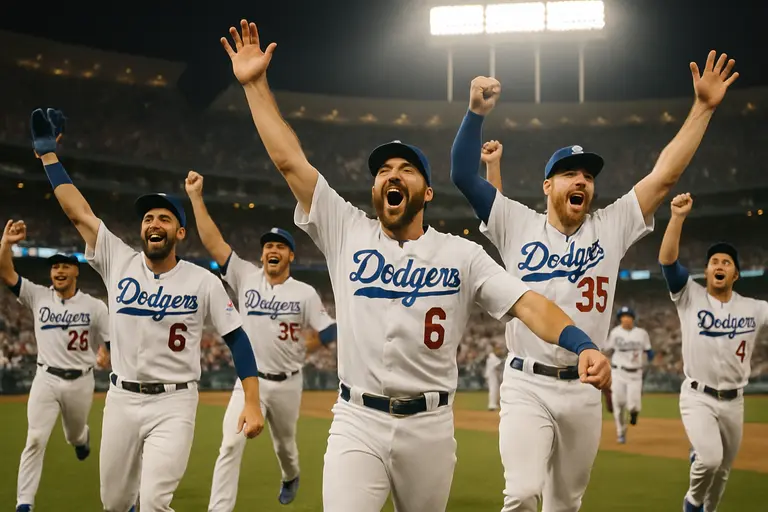
The Division Title Changed The Target
Once the Dodgers secured the NL West, the immediate target shifted toward earning one of the top two records in the National League. As of September 17, 2026, Los Angeles held a four-game lead over Atlanta for the No. 2 seed, according to the research notes. That position mattered because a top-two seed would allow the Dodgers to bypass the Wild Card Series and move directly to the NL Division Series.
This is where the Dodgers clinching strategy became more than a division-race story. The same choices that helped Los Angeles survive September also shaped the risk profile for October. Pushing injured players too hard could improve short-term seeding odds but reduce postseason availability. Resting too many regulars could narrow the lead for the bye. The club’s challenge was to protect both outcomes without assuming that health would return on a fixed schedule.
What The Clinch Revealed
The clinch revealed a team built around layered protection. Catcher acquisitions gave the pitching staff support when Smith and Rushing were limited. Rotation depth helped cover Snell and Glasnow concerns. Position-player flexibility allowed the Dodgers to survive absences involving Pages, Freeman, Rojas, and others. None of those moves erased the injuries, but together they reduced the chance that one absence would dictate the division race.
There are limits to that reading. The available research supports the view that depth and cautious injury management helped Los Angeles clinch. It does not prove that every medical or roster decision was optimal. Baseball outcomes remain tied to opponent quality, timing, and short-series variance. Still, by September 21, 2026, the evidence showed that the Dodgers had already converted roster depth into a division title while preserving at least some flexibility for October.
Dodgers Clinching Strategy In Historical Context
The Dodgers’ 2026 division title fit within a longer organizational pattern: sustained regular-season success built on star power, player development, and the ability to cover injuries better than most rivals. Clinching a fifth straight NL West title and a 13th in 14 years did not happen by accident, but the 2026 version was distinct because the injury load was so visible near the finish.
From a historical lens, this was not simply a case of a wealthy roster overpowering the division. It was a case study in how modern contenders manage uncertainty. Expanded pitching staffs, rehab assignments, deadline depth, position flexibility, and controlled workloads all shaped the path to September 17. The Dodgers clinching strategy worked because the club had more than one route to a win: frontline starters when healthy, substitute catchers when needed, role players who could handle short-term responsibility, and enough offense to break open the clincher when the moment arrived.