
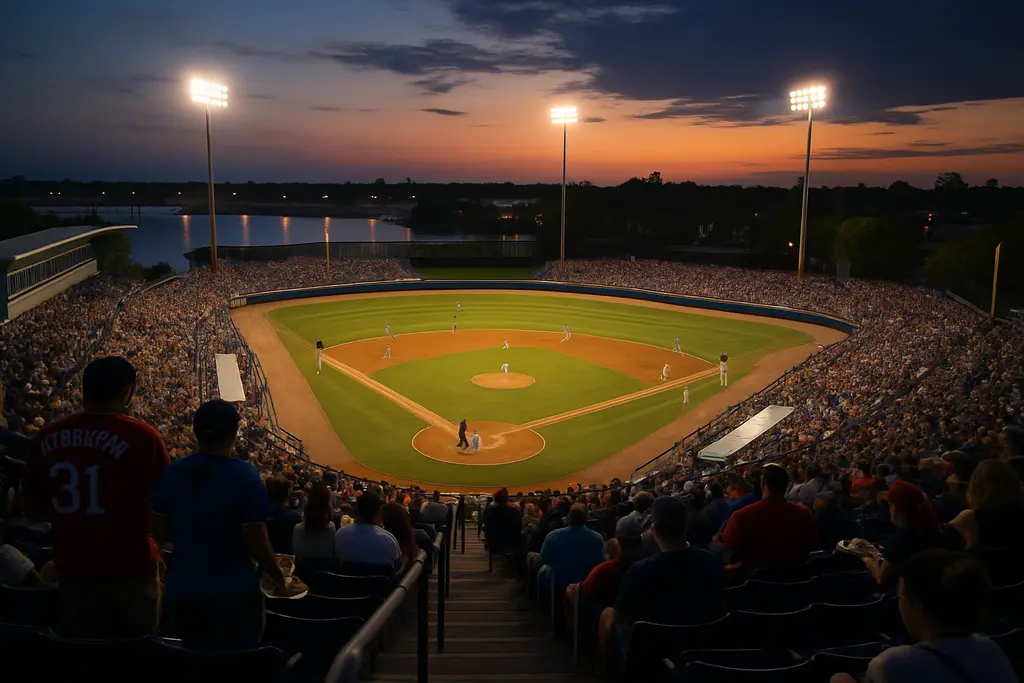
Jackie Robinson Ballpark has become a useful case study in how Minor League Baseball facility projects now connect history, player development rules, and local business goals. The Daytona Tortugas’ home was not simply refreshed for appearance after the $30 million renovation approval in mid-August 2024; the project was tied to MLB’s player development facility standards and to the need to keep an old, historically significant venue viable for modern affiliated baseball.
The analytical question is not whether a better building automatically produces better baseball. That claim would go beyond the available record. The more defensible question is whether the renovation reduced operating risk, improved player-development conditions, and gave the franchise more ways to earn revenue from fans, hospitality, merchandise, and non-game use.
Jackie Robinson Ballpark And The Compliance Problem
Why Jackie Robinson Ballpark Needed A Facility Reset
The compliance pressure was direct. Sports Business Journal reported that a two-phase, $30 million renovation was approved in mid-August 2024 to bring the facility into line with MLB’s new player development facility standards, often discussed in connection with the post-2021 Professional Development League structure Sports Business Journal report. That matters because affiliated Minor League clubs operate under facility expectations that reach well beyond seating bowls and scoreboards. Clubhouses, training space, batting areas, dugouts, and support areas became part of the competitive and contractual base for keeping a club aligned with affiliated baseball.
At Jackie Robinson Ballpark, the renovation strategy therefore began from a defensive position. The club and public stakeholders needed to protect the Daytona Tortugas’ place in the affiliated system while adapting a ballpark opened on June 4, 1914. MLB has described the venue as the oldest active Minor League Baseball stadium and tied its national meaning to March 17, 1946, when Jackie Robinson made his spring training debut there, breaking the professional color barrier in Florida MLB’s history of the ballpark.
What Phase 1 Changed For Baseball Operations
Phase 1 was reported as completed in April 2026 and delivered a 38,472-square-foot player development facility. The listed elements included renovated home and visiting clubhouses, indoor batting cages, upgraded dugouts with restrooms, a team store, offices, and a second-floor club seating area. From a team-success standpoint, that mix is notable because it did not isolate player needs from revenue needs. The same phase that addressed clubhouses and training areas also added fan-facing and business-facing components.
That sequencing fits the modern MiLB model. A Single-A club cannot judge success only through wins and losses, because roster movement, player assignment, and development priorities are shaped by the parent-club system. A more practical framework weighs whether the local operation can support player preparation, maintain league standing, keep fans returning, and preserve enough revenue diversity to manage future costs. The renovation, based on the disclosed scope, was aimed at each of those pressure points.
Player Development Value Versus On-Field Claims
Facility Upgrades As Development Infrastructure
The strongest baseball case for the renovation rests on player working conditions. Indoor batting cages, improved clubhouses, and updated dugouts create a more usable daily environment for players and staff. These are not cosmetic upgrades in a developmental setting. Repetition, recovery space, weather protection, and staff access all affect how a minor league affiliate runs its daily program.
Still, caution is needed. The research record supports the link between improved facilities and better development conditions, but it does not prove a direct jump in wins, promotions, or major league production after the project. For that reason, the better analytical measure is process quality rather than immediate standings movement. If the facility helps the organization stage training work more reliably, meet MLB standards, and reduce friction for players and coaches, it has created value even before any win-loss effect can be separated from roster quality.
Why Compliance Also Affects Talent Environment
Compliance has a reputational side. Clubs that fall short of facility standards can face pressure from leagues, parent organizations, and public partners. Bringing player spaces closer to the required standard helps remove a negative variable from the player-development chain. It does not guarantee that better prospects will pass through Daytona, but it makes the site less likely to be judged as an obstacle within the system.
This distinction matters in historical analysis. Earlier minor league ballpark projects often emphasized attendance growth through seating, picnic areas, and concourses. A related site analysis of MLB infrastructure investment at Copeland Hills Golf shows how ballpark spending has become tied to broader organizational strategy, not only to the visible fan experience.
Fan Revenue, Capacity Limits, And Daytona Economics
Attendance Data Sets The Baseline
The business case for renovation was shaped by attendance history. Research notes report that the Tortugas averaged 1,713 fans per game through 2025, while a higher mark of 2,518 was recorded in 2013. That decline does not by itself explain every local variable, but it provides a baseline for why premium seating, concessions, restrooms, merchandise, and hospitality areas mattered in the project plan.
For a club at this level, success often depends on per-capita spending and repeat local engagement as much as raw attendance. A new club seating area, an upgraded merchandise store, and planned hospitality spaces can help the team earn more from each visit. They also create inventory that can be sold to groups, sponsors, and community partners. Those categories are critical when average attendance has been below earlier highs.
Construction Constraints Temper Short-Term Judgments
The 2026 season was played under managed capacity constraints tied to safety and fan experience during renovation work, especially around areas such as the Riverwalk and third-base concourse. That makes short-term attendance comparisons difficult. If capacity was intentionally limited, then a 2026 gate figure would not be a clean measure of demand. Analysts should treat 2026 as a transition period rather than a simple pass-fail year.
The project’s broader civic argument is also tied to the reported estimate that the team contributes about $17.5 million annually to the Daytona Beach economy. That figure helps explain why a municipal venue can be discussed not only as a baseball site, but also as a tourism and events asset. Readers comparing community sports facilities might recognize similar local-use questions related to sites such as Copeland Hills Golf, where recreation value depends on public access, upkeep, and repeat use rather than a single event date.
| Evaluation Area | Supported Renovation Link | Analytical Caution |
|---|---|---|
| Player Development | Clubhouses, indoor batting cages, dugout upgrades, support space | No direct proof yet of better records or player promotions |
| Fan Revenue | Club seating, team store, hospitality concepts, concessions and restrooms | 2026 capacity limits complicate attendance comparisons |
| Historic Identity | Oldest active MiLB venue and Jackie Robinson’s 1946 Daytona debut | Heritage must be balanced with daily operating standards |
| Local Economics | Reported $17.5 million annual economic contribution | Economic impact should be read with methods and assumptions in mind |
Historic Preservation Within A Modern MiLB Model
A Ballpark With Unusual Constraints
Historic value can help a franchise stand apart, but it also creates limits. An older ballpark may offer identity that newer parks cannot copy, yet its original form was not designed for current player-space standards, modern food service, premium seating, expanded restrooms, or protective netting expectations. The Daytona project had to keep the historical setting meaningful while changing enough of the operating base to satisfy present needs.
That is the core tension. If the renovation had focused only on preservation, the team could have remained exposed to facility compliance risk. If it had focused only on new construction logic, the venue could have lost part of the identity that makes it valuable. The disclosed two-phase plan tried to separate the problem: first address major player and operational needs, then move into fan amenities, premium support spaces, expanded concessions and restrooms, protective netting, shaded bullpen seating, landscaping, utilities, and demolition of older clubhouse structures.
Why The Robinson Connection Matters To Strategy
The Jackie Robinson connection is not a side detail. It is part of the venue’s economic and civic identity. A museum location and commemorative elements can give the ballpark a year-round educational function, while also helping the Tortugas market the site beyond ordinary game promotion. That does not replace the need for attendance growth or better amenities, but it gives the franchise a clearer story than many low-minor-league venues can claim.
For MiLB teams, that kind of identity can shape group sales, school visits, civic partnerships, and tourism positioning. The responsible reading is that history gives Daytona an advantage only if the building can also meet current baseball and fan-service expectations. The renovation strategy recognized that history alone could not solve the compliance problem.
Jackie Robinson Ballpark Renovation Strategy
The strongest case for Jackie Robinson Ballpark after the renovation is not that construction spending will automatically create a winning team. The evidence supports a narrower and more useful conclusion: the project reduced facility-standard risk, improved the daily environment for players, and expanded the business tools available to the Tortugas.
As of October 5, 2026, the most reliable assessment remains staged. Phase 1’s completed player development facility gave the baseball operation a clearer foundation. Planned and continuing fan-facing upgrades offered paths toward higher per-visit revenue and a better event experience. The historical setting gave the project a distinct identity, but that identity required modern support systems to remain useful in affiliated baseball.
For MiLB team success, the lesson is measured rather than dramatic. A renovation can protect affiliation status, improve working conditions, and create new revenue channels. It cannot, by itself, prove future attendance recovery or on-field improvement. Daytona’s strategy should be judged by those linked indicators over multiple seasons, with 2026 treated carefully because construction-related capacity limits affected the normal operating environment.