

F. Scott Fitzgerald once said that “faith of fifty million people” was baseball’s true value. By October 1919, that faith was broken. The Chicago White Sox, a team that dominated, became America’s first sports heartbreak. How did a team built for greatness fall into infamy? Let’s explore baseball’s original sin.
The 1919 White Sox were a team of stars. Shoeless Joe Jackson hit like Beethoven composed music. Eddie Cicotte’s knuckleball was like a drunk moth’s dance. But beneath their glory, a dark secret lurked. They were accused of throwing the World Series for money. Warren Ballpark in Bisbee echoes with the ghosts of this scandal.
These weren’t just players looking for a quick win. They were legends trading their legacy for cash. The 1919 team didn’t just lose games; they broke fans’ hearts. Baseball’s perfect image was shattered, revealing a harsh truth: even the greatest can fall. Want to know how a sport’s soul is lost? Keep reading – the numbers will amaze you.
Introduction: Why the 1919 World Series Stil Resonates
Imagine a heist movie where the robbers wear their own team jerseys—welcome to the Chicago White Sox scandal. This is America’s ultimate sports morality play. It’s not about stolen bases. It’s about stolen integrity.
Baseball’s original sin happened before juiced balls and syringes. Before Bonds’ records or Clemens’ fastballs, there was Cicotte’s spitball. The 1919 fix didn’t just bend rules; it shattered the illusion of fair play. It’s like the JFK assassination of baseball gambling history: endlessly dissected, perpetually unresolved.
The 1927 Yankees won 110 games just eight years later. But we remember the ’19 White Sox more vividly. Dynasty stats fade. Betrayal lingers. Steroid-era sluggers broke records; the Black Sox broke trust.
Modern scandals operate in shades of gray. McGwire’s androstenedione? A substance loophole. Pete Rose’s bets? A post-career fumble. But 1919? That’s Shakespearean tragedy. Eight men deliberately tanking a World Series while wearing the same flannels as honest teammates? That’s Iago in cleats.
The numbers tell half the story:
- 1919: 5 players banned for life, 104 years of infamy
- 2000s Steroid Era: 0 bans, 7 MVPs later stripped of titles
We tolerate chemical enhancements more than calculated betrayal. Muscle inflation? That’s capitalism. Throwing games? That’s treason. The Black Sox didn’t cheat to win—they cheated to lose, turning competition into farce.
So here we are, debating sticky substances and sign-stealing tech while this relic of baseball gambling history casts shadows. Maybe because deep down, we know: you can’t legislate against greed, but you can immortalize its consequences. Landis’ lifetime bans made sure of that.
The Chicago White Sox scandal isn’t just history—it’s a mirror. Every time a player winks at a bookie or pops a pill, the ghost of Shoeless Joe taps his bat on home plate. He’s waiting for that untainted swing.
The State of Baseball Post-WWI
Imagine a sports team so powerful, they overshadowed even the ’90s Bulls. Yet, these athletes made less than a Taco Bell worker. The 1919 White Sox were baseball’s first underpaid stars.
Labor Unrest and the Deadball Era
In 1919, baseball players earned an average of $6,000. That’s about $114,000 today, less than what Shohei Ohtani makes in a day. The White Sox owner paid his team like minor leaguers, sparking anger.
The Deadball Era (1900-1919) was marked by low scores and financial struggles. Players faced a choice: accept low pay or find other ways to earn. This led to the involvement of gamblers with disgruntled athletes.
Let’s look at two famous seasons:
- 1908 Cubs-Giants: The last true pennant race, decided by a famous play
- 1919 White Sox: A top team falling apart due to financial stress
This wasn’t just labor strikes baseball. It was a silent protest. Players couldn’t form unions, so they took other actions. Some accepted bribes, while others, like Hal Chase, became professional cheaters. This set the stage for a major sports scandal.
Corruption in Baseball: Setting the Stage
Baseball has always had a dark side. Before BALCO and Pete Rose, there were others who saw the game as a chance to make money. To understand the 1919 Black Sox scandal, we must look at the first corrupt figure in baseball.

Hal Chase and the “Black Prince” Precedent
Hal “Prince Hal” Chase was like a baseball version of The Godfather’s Hyman Roth. From 1906-1919, he was a first baseman and a master of fixing games. He used his charm to get pitchers to throw games, all while making money from gamblers.
Chase’s actions were like a blueprint for future scandals. Victor Conte’s BALCO lab made athletes stronger, but Chase’s team made games weaker. They were experts at losing on purpose.
Baseball’s early days were ripe for corruption. With no one watching and players making little money, deals were easy to make. By 1919, the Black Sox were just following Chase’s playbook.
The Eight Men Out: Player Profiles and Motives
The Chicago White Sox scandal wasn’t about starving athletes stealing bread. Payroll records show these players earned more than 90% of Americans in 1919. Chick Gandil, for example, made $5,000, which is about $85,000 today. So, why did they risk everything?
Shoeless Joe Jackson: Fallen Idol
Jackson’s .375 Series average sparks debates. How did a man outshine Babe Ruth become baseball’s Icarus? The numbers tell a story:
| Player | 1919 Salary | 2024 Equivalent |
|---|---|---|
| Eddie Cicotte | $10,000 | $170,000 |
| Shoeless Joe | $6,000 | $102,000 |
| Chick Gandil | $5,000 | $85,000 |
But here’s a twist: Jackson faced death threats from teammate Swede Risberg over a $5,000 debt. Imagine A-Rod getting pistol-whipped by Jeter in the 2009 playoffs. That’s the chaos in their locker room.
Chick Gandil’s Retirement Paradox
Gandil’s plan was full of holes. He wanted to retire rich but planned to play until 1920. His $5,000 was like stealing a Picasso to fund an Etsy sticker shop. His motive? Pure hubris and mob ties.
These weren’t desperate men – they were greedy ones risking America’s pastime. The Chicago White Sox scandal shows even heroes can fail when money is involved.
Game-Fixing and the Actual Series: What Happened on the Field
The 1919 World Series was more than a game. It was a carefully planned scam. Imagine Ocean’s Eleven players, but in baseball uniforms. They stole something precious: America’s trust in fair play. Let’s explore how the Black Sox turned the World Series into a historic scandal.
The Cicotte Signal Pitch
Eddie Cicotte’s first pitch was a clear warning. It was like a neon sign saying “This game’s rigged!”. When he hit Reds leadoff hitter Morrie Rath, it was no accident. This was the signal the gamblers had agreed on.
Cicotte later confessed to throwing pitches so easy, Babe Ruth could’ve hit them backwards. But here’s the amazing part: The White Sox almost won Game 1 despite trying to lose. Their talent was so great, they had to actively sabotage their own skills. It was like Picasso trying to fingerpaint.
Game 5’s $20,000 Double Cross
When gamblers cut the bribe to $20k, the players were upset. They acted like mobsters demanding better benefits. Lefty Williams’ Game 5 performance was legendary. He threw fastballs that looked like batting practice.
The irony is that Games 3 and 6 were played fairly after the payment issues were resolved. Chicago played like champions when they tried to win. But when they tried to lose, they looked like your uncle’s beer league team. If your uncle bet his mortgage on striking out.
So why do we remember the 1919 black sox scandal? It’s not just about stolen bases. It’s about stolen innocence. And maybe because we all wonder: Could today’s stars resist that same temptation?
The Fallout: Trials, Bans, and Lasting Stigma
If the Black Sox scandal were a Shakespearean tragedy, Act III would open with gavels pounding louder than fastballs. The courtroom drama that followed the 1919 World Series didn’t just expose baseball’s rot—it created America’s first sports cancel culture. Enter Kenesaw Mountain Landis, the hanging judge who made Robespierre look lenient.
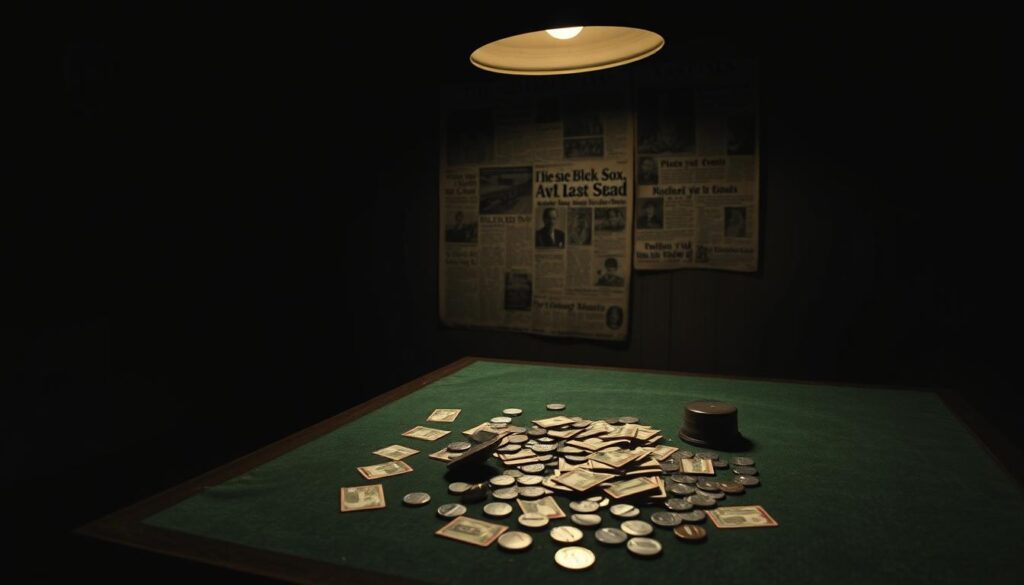
Kenesaw Mountain Landis’ Iron Fist
Baseball’s new commissioner arrived like a human tornado in a three-piece suit. Landis’ first decree? Ban all eight White Sox players for life, regardless of trial outcomes. Imagine Bud Selig handing down steroid suspensions with this energy: “There’s no room in baseball for ambiguity—or paychecks.” His 1921 edict became the sport’s Ten Commandments, etched in stone tablets reading “Thou Shalt Not Gamble.”
Copper League Exile in Bisbee
While Shoeless Joe became folklore, his banned teammates found purgatory in Arizona’s dust-choked Copper League. Picture Buck Weaver fielding grounders where the outfield wall was a barbed-wire fence. These weren’t Field of Dreams cameos—Gandil and friends played for mining company scrip, their World Series rings swapped for blistered hands. The Bisbee stadium became baseball’s anti-Hall of Fame, where .356 averages bought beans instead of plaques.
| Era | Punishment | Legacy |
|---|---|---|
| 1921 (Landis) | Lifetime bans | Zero-tolerance mythmaking |
| 2000s (Selig) | Suspensions & fines | Steroid-era asterisks |
Landis’ draconian measures worked—sort of. Gambling scandals vanished… until Pete Rose came along. But the baseball gambling history lesson stuck: stain the game’s purity, and you become a cautionary tale told through clenched teeth. The Black Sox didn’t just lose careers—they became baseball’s original sin, their exile proving America’s pastime had become a religion with its own hell.
Public Perception: Media and Literary Treatments (“Eight Men Out”)
The Black Sox scandal didn’t just change baseball. It became America’s first viral true crime drama. It had antiheroes, unreliable narrators, and enough moral gray areas for a Coen brothers movie. While gamblers made money in 1919, future generations would profit from books, films, and the American redemption story of turning cheaters into tragic heroes.
From Asinof to Sayles: The Scandal’s Second Life
Eliot Asinof’s 1963 book Eight Men Out didn’t just tell the story of the memorable baseball series. It shaped our view of the scandal as a Greek tragedy. His research showed players arguing over their share of the bribe money, like mobsters splitting a bill.
John Sayles’ 1988 film adaptation made this into a visual masterpiece. John Cusack’s Buck Weaver, with his clenched jaws and betrayed ideals, set the stage for every “good cop” character. D.B. Sweeney’s Shoeless Joe, swinging in misty fields, became a folk hero. This was history rewritten through Hollywood.
The brilliance lies in these portrayals coming decades before true crime podcasts. Asinof and Sayles knew audiences love complex villains. Was Jackson a willing participant or an innocent victim? The film hints, “it’s complicated”, letting us imagine our own moral choices.
Today, new takes keep reinventing the eight men out story. True crime documentaries dive into locker room politics. Broadway musicals (!) explore labor issues. Next, a true crime podcast hosted by Shoeless Joe’s ghost? Don’t bet against it.
Reforms and New Rules
Baseball has always reacted to scandals with a mix of showmanship and quick fixes. After the Black Sox scandal, owners had to find a way to regain fans’ trust. They decided to create a powerful figure, like a superhero, to oversee the game.
The Commissioner Era Begins
In 1921, Kenesaw Mountain Landis became the first commissioner. He was like a judge and a PR expert all in one. His role was to have absolute authority to clean up baseball. This move was ironic, given the owners’ history of treating players poorly.
Landis introduced several changes:
- Lifetime bans for players involved in gambling (bye-bye, Shoeless Joe)
- Centralized control over player contracts
- A new image for owners as protectors of the game’s integrity
Jump forward to 2005, when steroid hearings took place. Congress questioned players like McGwire and Sosa. But owners were making money quietly. This pattern shows that Labor strikes baseball when management needs someone to blame.
Today’s reforms remind us of 1921:
- Drug tests focus on players, not management
- Salary caps are seen as fair, but really help owners
- Penalties are harsh, making Landis look lenient
The same system that banned the Black Sox ignored steroids in baseball history until Congress stepped in. It seems that moral leadership is only applied when it’s convenient, like an umpire’s call after drinking.
Further Reading/Viewing Recommendations
Baseball’s biggest scandal needs more than just stats and court records. Eliot Asinof’s Eight Men Out is a deep dive into the scandal. John Sayles’ movie adds drama to the Chicago trial.
For a financial angle, check out Bill Lamb’s Scandal on the South Side. It breaks down the money side of the scandal in detail.
Want to explore “what ifs”? Gene Carney’s Burying the Black Sox offers a look at different outcomes. Kevin Cook’s Ten Innings at Wrigley connects the scandal to the steroid era, showing how juiced balls can cause more trouble.
But skip Field of Dreams if you’re not into philosophical baseball. Instead, watch the 1966 Thirtysomething episode with Ken Burns interviewing Shoeless Joe’s ghost. It’s like historical fiction with great visuals.
For real sources, check out the 1921 Chicago Herald-Examiner coverage. Their reports mix true crime with ancient drama, including Cicotte’s emotional confession. But remember, baseball’s first scandal is as messy as wet infield dirt.