
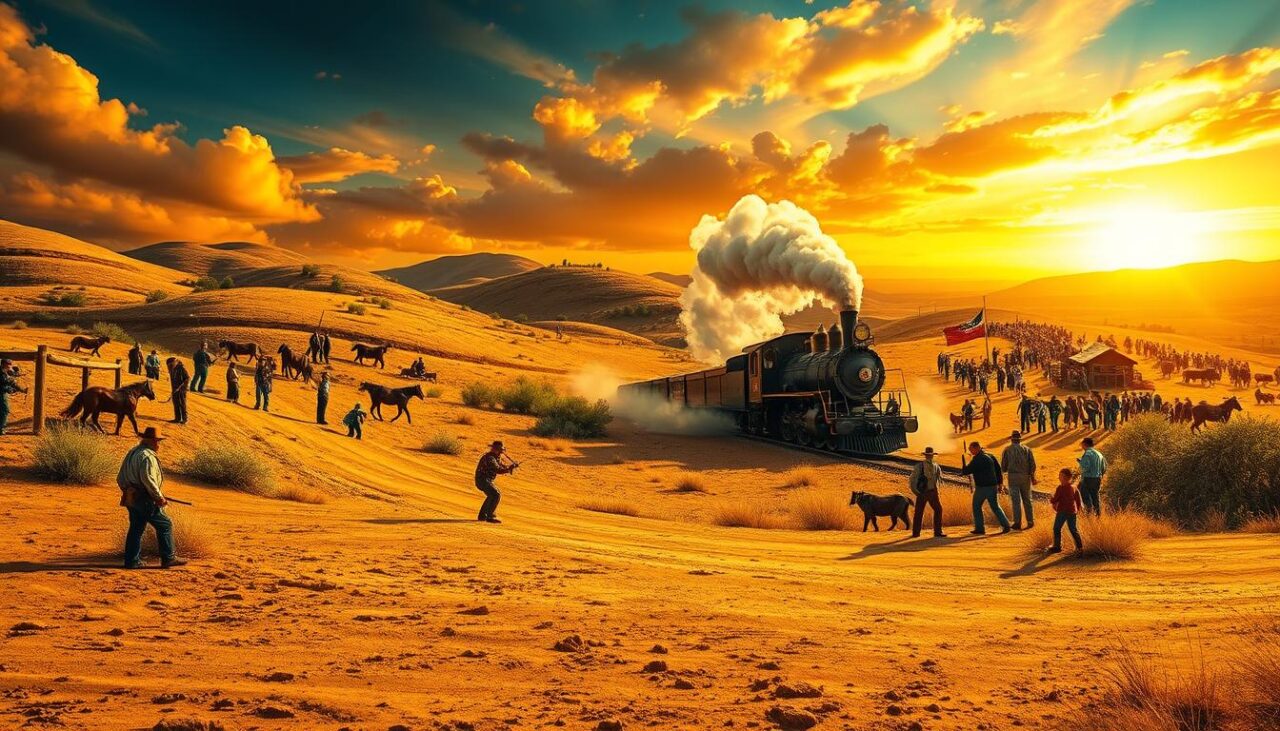
Let’s start by burning the rulebook. Forget Cooperstown’s cherry-tree fantasies – America’s pastime wasn’t born from Abner Doubleday’s imagination. It was forged by rough-handed New York clerks and California fortune seekers. The Knickerbocker Club’s 1845 regulations? Merely codified what miners already practiced with makeshift bats and gold dust-stained balls.
Here’s the curveball: Civil War soldiers did more than battle rebels. They turned blood-stained fields into diamonds, their leather mitts passing between Union and Confederate lines like clandestine peace offerings. By 1866, you’d find professional nines in Portland swinging bats where lumberjacks once cleared forests – a full decade before the city paved its streets.
This wasn’t mere sport. It was cultural conquest disguised as recreation. As railroads snaked westward, so did box scores and batting averages, becoming the Trojan horse of American unification. The proof? Check the timeline of team migrations that later reshaped the modern MLB map – same playbook, different century.
So next time you hear “Casey at the Bat,” remember: Mighty Casey’s strikeout mattered less than the dirt-stained soldiers and frontier entrepreneurs. They turned a regional oddity into a national religion. The 19th century didn’t just play ball – it built America’s first shared language, one stolen base at a time.
Early Geographical Limits of MLB
Imagine a baseball game where the seventh-inning stretch was filled with real dangers, not just bad singing. In 1876, the National League started, but it only went as far as St. Louis. This was 19th century baseball at its most basic: a sport trying to decide if civilization ended at the Mississippi River.
| Team | 1876 Location | 2024 Status |
|---|---|---|
| Boston Red Stockings | Massachusetts | Atlanta Braves |
| Chicago White Stockings | Illinois | Chicago Cubs |
| Cincinnati Red Stockings | Ohio | Defunct (1876) |
| Hartford Dark Blues | Connecticut | Defunct (1877) |
| St. Louis Brown Stockings | Missouri | St. Louis Cardinals |
Owners were hesitant to expand westward. They worried about losing money by going beyond the Mississippi. The dead ball era was not just about old baseballs. It showed a game that held onto local roots tightly.
Three main reasons kept MLB’s reach small:
- Railroad travel was tough, like a 20-inning game
- Owners feared empty seats in the West
- Players worked as cowboys during the off-season
But, the idea of growing was already there. Railroad bigwigs like Jay Gould saw baseball as a way to show their power. By 1883, the St. Louis Browns drew big crowds. The dead ball era was soon to end, but that’s a story for the 1950s…
The 1950s-1960s Relocations: Dodgers, Giants, et al
Baseball’s map changed a lot after World War II. It wasn’t just about moving teams. It was about business and money. The Dodgers and Giants moved in 1958, changing everything.
This wasn’t just about moving teams. It was like moving big trees to make way for new ones. The idea of rivalries changed, too. It wasn’t just about baseball anymore.
Breaking Coastal Barriers
The Giants moved to San Francisco at midnight. But the Dodgers’ move to LA was just as big. They both moved for one reason: money.
Brooklyn fans lost Ebbets Field. But Walter O’Malley had a plan. He turned Chavez Ravine into a baseball park with lots of parking.
O’Malley’s California Gambit
Walter O’Malley’s move was bold. He got free land and money from LA. He even used Jackie Robinson’s fame to attract fans.
Here’s what O’Malley did:
- Got free land from LA’s housing authority
- Received a $2 million “moving bonus”
- Used Jackie Robinson’s fame to attract fans
This move changed baseball forever:
| Franchise | 1957 Attendance | 1962 Attendance | TV Revenue Increase |
|---|---|---|---|
| Brooklyn Dodgers | 1,028,258 | N/A | – |
| LA Dodgers | N/A | 2,755,184 | 327% |
| NY Giants | 629,179 | N/A | – |
| SF Giants | N/A | 1,592,906 | 241% |
Robinson’s debut made integration a must. But the West Coast move made it a business plan. The Giants’ talent from the Dominican Republic soon outshone New York’s.
Pacific Coast League & Regional Leagues
While MLB owners focused on East Coast money, the real baseball excitement was out west. The Pacific Coast League was more than just games. It was a cultural event where miners and Hollywood stars played together.

The Western Circuit’s Golden Age
The PCL started in 1903, blending sports with entertainment. The Salt Lake Bees drew 15,000 fans in 1911, beating the New York Highlanders’ weekend series. Players like “Iron Man” McGinnity lived by the motto: work hard, play harder.
Three things made the PCL stand out:
- Geography: 3,000 miles from MLB’s nearest team
- Climate: Year-round playable weather
- Showmanship: Seventh-inning vaudeville acts
From Semi-Pro to Showcase
The 1909 season showed the PCL’s entertainment value. Games between Bisbee’s miners and Tucson’s farmers drew more fans than Broadway. Owners sold more than just baseball; they sold regional pride and whiskey.
| Team | Avg Attendance | Notable Draw |
|---|---|---|
| San Francisco Seals | 8,200 | Pre-game fireworks |
| New York Giants | 6,500 | John McGraw’s tirades |
| Los Angeles Angels | 7,800 | Movie star cameos |
| Philadelphia Athletics | 5,900 | Connie Mack’s suits |
This wasn’t just minor league baseball. It was a sports entertainment complex. The PCL treated every game like opening night. When MLB looked west, they found a party that had been going on for decades.
The American & National League Expansions
Baseball grew fast in the 1960s, but it was more than just growth. It was a battle for TV viewers, with money and rule changes leading the way. This wasn’t just adding teams; it was a fight for territory.
Creating the Modern Map
The 1961 move of the Washington Senators was a big deal. It was like MLB was saying, “We’re here to stay.” They used TV markets to decide where to put teams, not just city limits.
| Year | Teams Added | Strategic Play | Cultural Impact |
|---|---|---|---|
| 1961 | Angels, Senators | West Coast beachhead | Sunset Strip meets box scores |
| 1969 | Royals, Expos, Padres, Pilots | Midwest/Canada infiltration | Poutine meets peanuts |
The 1969 Royals in Kansas City showed the challenges of expansion. It was like trying to put together IKEA furniture without instructions. Teams had to make do with what they had.
Expansion Draft Growing Pains
The designated hitter rule started in 1973, causing a big divide. Some saw it as a betrayal, while others thought it was progress. New teams had to mix and match players, hoping for the best.
Did you know the ’69 Royals cost $5.5 million? Today, that’s like buying a pitcher’s pinky toe. That’s how much money didn’t go as far in the world of MLB expansion teams.
City Identities and Fan Cultures
Baseball didn’t just map cities—it became them. While MLB franchises polished their civic mythologies like Cooperstown trophies, Negro leagues baseball teams were stitching communities together with raw talent and railroad grit. The real story? Fan cultures emerged not from boardroom focus groups, but from factory whistles, church picnics, and segregated bleachers.
From Bleachers to Branding
Let’s dissect the marketing playbook. The Cardinals’ “Gateway to the West” imagery? Pure borrowed swagger from Kansas City Monarchs barnstormers who actually built Midwest baseball fandom. Houston’s 1962 Colt .45s had a mascot that was a tone-deaf ode to frontier violence, lasting just one season. Some branding attempts age like milk; others, like the Monarchs’ legacy, become cultural bedrock.
- Bus leagues vs. bullet trains: Cubs-Cardinals animosity brewed in pre-interstate taverns, not Instagram feud
- Monarchs vs. MLB: KC’s Black fans rallied behind Satchel Paige while white teams enforced color lines
- Route 66 rivalries: Diners along America’s mother road hosted more heated baseball debates than Cooperstown ever could
These clashes shaped regional identities sharper than any expansion draft. When a St. Louis factory worker trash-talked a Chicago stockyard buddy over Schlitz beers, they weren’t just arguing sports—they were drawing cultural battle lines. What’s more American than that?
Labor, Economics & the Move West
Forget covered wagons – baseball’s westward expansion rode in on armored Brinks trucks. The sport’s growth wasn’t driven by dreams of the West. Instead, it followed money like a bloodhound on a scent.
Cash Rules Everything Around Me
The real home plate in modern baseball isn’t rubber – it’s a dollar sign. Curt Flood’s lawsuit in 1972 opened the door to free agency. This change turned players into prospectors and owners into casino operators.
| Labor Event | Player Salary Impact | Team Valuation Spike |
|---|---|---|
| 1976 Free Agency | +412% (1976-1980) | +225% |
| 1994 Strike | -34% (Lost Wages) | +18% Post-Strike |
| 2022 CBA Agreement | +33% (Min Salary) | +400% (Media Rights) |
This financial arms race changed how teams moved. They didn’t ask “Where will we be loved?” but “Where can we build luxury suites?” The Dodgers moved to LA for media control, not sunshine.
Strike Zone Politics
The 1994 MLB labor strike was a $1 billion game of chicken. Owners canceled the World Series, showing they’d burn their product before sharing profits. Players became walking ATMs, and fans were left with empty beer cups.
Today’s baseball economics are complex. Regional sports networks create huge revenue streams. Player contracts have opt-out clauses that would impress a prenup lawyer. And the sport keeps expanding west – for the love of money, not the game.
The Significance for Integration and Diversity
Let’s break the myth that baseball’s integration story starts and ends with Brooklyn. Jackie Robinson’s 1947 debut is well-known, but the West Coast was already changing the game. It was like America’s first multiverse, with MLB stuck in segregation while regional leagues wrote new history.
Color Lines and Foul Poles
Robinson didn’t just break MLB’s color barrier. He showed its hypocrisy. While he faced racism in Brooklyn, the Pacific Coast League had Japanese-American players during WWII. San Francisco’s Fresno Cardinals started Kenichi Zenimura in 1942, five years before Robinson.
This shows progress came from the margins, not the top.
Latin American Pipeline
The Caribbean was the real game-changer. The New York Giants started recruiting Dominicans like Ozzie Virgil Sr. in the 1950s. They were looking for talent, not being progressive. Today, baseball’s role in American immigration is huge, thanks to Santo Domingo.
| Integration Milestone | MLB | Pacific Coast League |
|---|---|---|
| First Black Player | 1947 (Robinson) | 1948 (John Ritchey) |
| First Japanese Player | 1964 (Masanori Murakami) | 1942 (Kenichi Zenimura) |
| Dominican MLB Debut | 1956 (Ozzie Virgil Sr.) | N/A |
Today’s lineups show diversity is not just a goal but a reality. The Dodgers’ 2023 lineup had players from six countries. This isn’t just about diversity. It’s about talent beating prejudice. Jackie Robinson baseball was not just right. It was necessary for the game’s success.
Books on Baseball’s Expansion
Forget dusty trophy cases – the real artifacts of MLB’s growth live between book covers. While stadiums rise and fall, these texts preserve the messy, human drama behind baseball’s march across America. Let’s crack open the library.
Required Reading for Diamond Scholars
Want to understand how MLB outran its northeastern roots? Start with Monica Nucciarone’s demolition of the Cartwright myth. It’s CSI: Cooperstown meets Deadwood. Her forensic analysis proves baseball’s origin story needs more fact-checkers and fewer bronze plaques.
| Book | Author | Focus | Hot Take |
|---|---|---|---|
| “Lords of the Realm” | John Helyar | Labor Wars | Steinbrenner’s playbook meets Machiavelli |
| “The Western League” | Steve Rushin | Minor League Roots | Field of Dreams meets Dust Bowl diaries |
| “SABR’s Expansion Era” | Various | 1960s Growth | Scholarly rigor with box score poetry |
Hidden Gems of the Genre
Skip the ghostwritten superstar memoirs. The real juice? Try “Bus Leagues” – oral histories from 1950s minor leaguers. It makes today’s luxury suites look soft. Or hunt down SABR’s regional pamphlets, where retired statisticians rage against revisionist history like Twitter trolls with better sources.
Pro tip: Follow the footnotes. That obscure citation about Walter O’Malley’s moving trucks? That’s where the real history of MLB hides – in the margins where academics duel over parking revenue stats from 1957.
Modern Era: The MLB Globalization
Major League Baseball is now more like a global business than America’s favorite sport. Gone are the days of hot dogs and seventh-inning stretches. Today, baseball dreams start in Dominican academies and end in high-paying deals in big cities. But is this baseball globalization spreading the game’s spirit or just making money?
Beyond Borders
The MLB has more international academies than Starbucks in the Caribbean. These places are like sports factories and cultural centers all in one. They churn out players fast, like iPhones on an assembly line.
Think about this: 30% of 2023 Opening Day rosters came from outside the U.S. The Dominican Republic alone sent more players than 28 states.
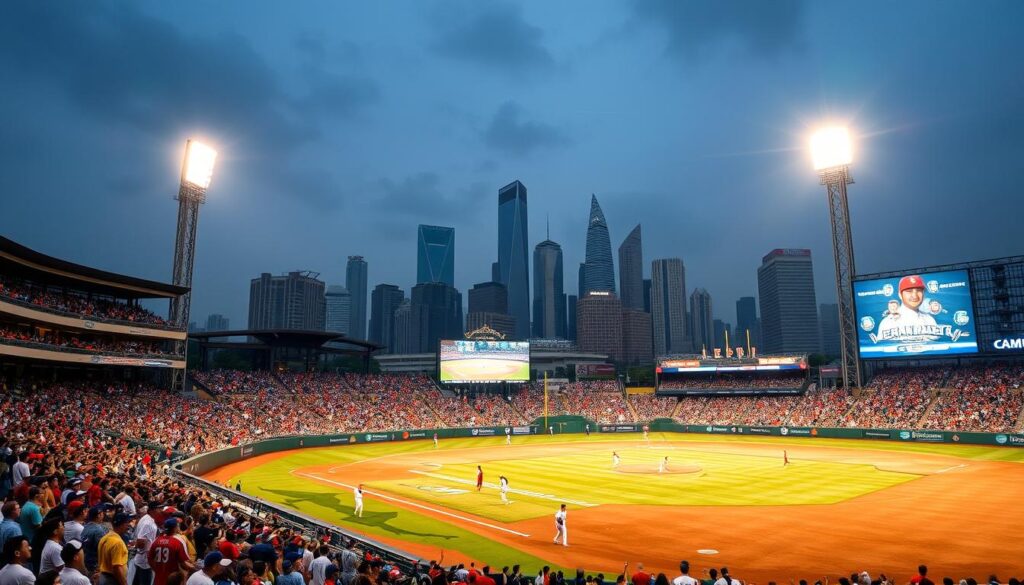
Shohei Ohtani’s $700 million deal and Nicaragua’s first MLB training facility show the game’s growth. The World Baseball Classic has become a source of national pride, with its own stories and rivalries.
- Puerto Rico’s team waving flags banned in official IOC competitions
- Cuban defectors facing former teammates in Miami showdowns
- Japanese pitchers perfecting their craft in Arizona’s Cactus League
But for every heartwarming “world comes together” moment, there’s a darker side. Cuban prospects might risk their lives to play, facing coyotes and danger. MLB scouts must balance helping players with the risk of exploitation. Is this talent pipeline a blessing or a curse for developing nations?
Conclusion
Baseball’s westward expansion is a fascinating story. It started with covered wagons and now reaches fans in 4K on Mars. From Jackie Robinson’s historic moment to the unique garlic fries in Oracle Park, it shows our ability to change and grow.
The game has evolved from reflecting Manifest Destiny to questioning globalization. It asks if we share cultures or impose our own. Minor league towns like Amarillo and Spokane keep the spirit alive with affordable hotdogs and karaoke.
The Dodgers’ huge value contrasts with Little League’s grassroots heroics. The game’s history, from the Giants’ move to Tampa Bay’s split seasons, shows a battle between capitalism and community.
What happens when technology decides the game? The sound of a bat in Phoenix’s Chase Field is a reminder. The expansion never stopped; it just changed with technology. VR batting cages and foam fingers all point to the same goal: that sacred 17-inch slab of rubber.
Home plate remains unchanged. The rest of the game is just geography.