
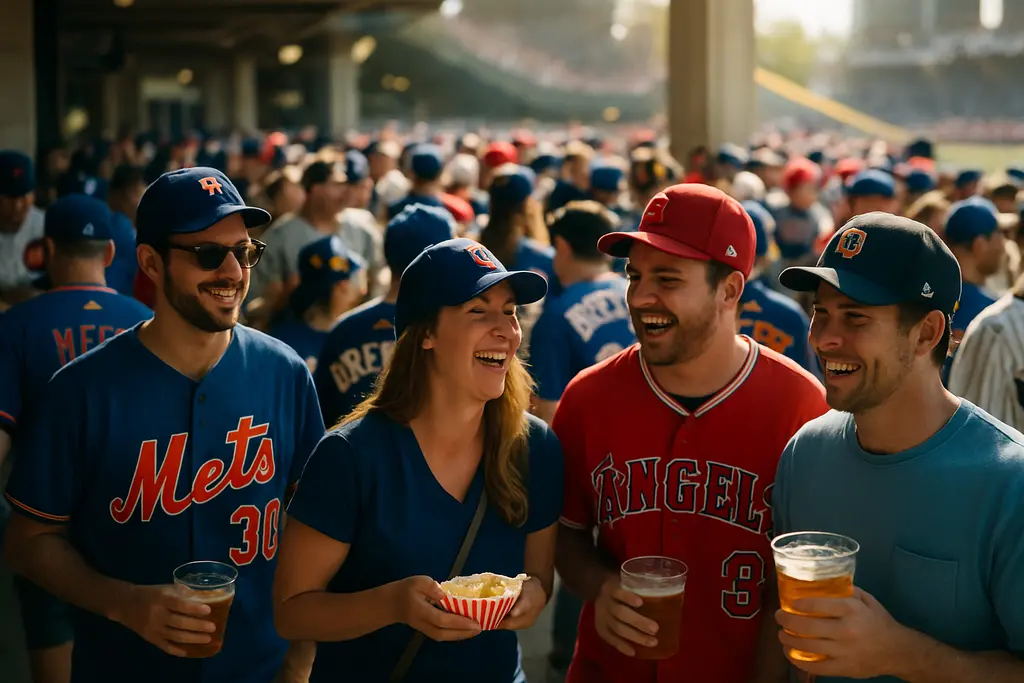
NLDS Attendance became a sharper measurement problem on October 3, 2026, when the Dodgers and Braves opened their Division Series at 1:00 p.m. PT in Los Angeles. The announced crowd was strong, but the afternoon conditions made the in-stadium picture more complicated than a single gate number. Heat, sun exposure, short planning windows, and staggered national television slots all shaped how full the park looked and how comfortable it felt.
The opener at Dodger Stadium drew an announced attendance of 50,194, with the ballpark described in the research as having a capacity of about 53,000-plus. That is roughly a near-capacity crowd on paper. Yet reporting from the game also described triple-digit heat concerns, shade issues, and plenty of empty seats visible in sun-exposed sections during the 1:00 p.m. PT start, according to AP coverage of the NLDS opener. That gap between announced attendance and visual attendance is central to evaluating afternoon postseason scheduling.
NLDS Attendance And The Afternoon Window
Why NLDS Attendance Looked Different On Site
Announced attendance and occupied-seat appearance do not always answer the same question. Announced attendance captures tickets distributed or sold under MLB and club reporting practices. The television view, crowd noise, and seat-level comfort reflect who made it through traffic, work obligations, school schedules, weather, and concessions lines, then chose to remain in a particular section.
For Los Angeles on October 3, 2026, the Dodgers-Braves figure of 50,194 suggested that demand for the game remained high. That matters because Dodger Stadium is one of MLB’s largest venues, and a crowd near 50,000 would be a major attendance total in most markets. The issue was not simple fan indifference. The issue was that a 1:00 p.m. local start created a different attendance test than a night game would have created.
Heat, Shade, And Seat Choice
In practical terms, the sun changed the value of some seats. A ticket in an exposed section during a hot afternoon may not produce the same in-game behavior as a comparable ticket at night. Fans may arrive later, stand in shaded concourses, move to cooler locations, or leave seats temporarily. That can make the ballpark appear less full even when the announced crowd is high.
For NLDS Attendance, that distinction matters because the Division Series is supposed to showcase high-intensity local environments. If a premium market posts a strong announced crowd but loses some visual density because of heat and sun, the scheduling question becomes less about raw demand and more about whether the start time allowed that demand to show up clearly inside the park.
Wild Card Evidence From Key Markets
Atlanta And Houston As Comparisons
The attendance pressure did not begin with the NLDS. On September 29, 2026, Atlanta hosted Game 1 of a Wild Card Series at 2:00 p.m. local time and drew 30,127 fans to Truist Park, far below the 41,108-seat capacity noted in the research. That was about 73.2 percent utilization. On the same date, Houston drew 34,011 to Daikin Park for a 4:00 p.m. start against a listed capacity of 41,168. The Washington Post reported that afternoon Wild Card crowds in Atlanta and Houston reflected the difficulty of selling weekday playoff inventory on short notice, and it also noted that only 6 of 26 afternoon Wild Card games since MLB expanded the postseason field to 12 teams in 2022 had reached or exceeded capacity, according to The Washington Post’s attendance report.
| Date | Market | Game Window | Attendance | Capacity Context |
|---|---|---|---|---|
| September 29, 2026 | Atlanta | 2:00 p.m. local | 30,127 | 41,108 capacity; about 73.2 percent |
| September 29, 2026 | Houston | 4:00 p.m. local | 34,011 | 41,168 capacity; below capacity |
| September 30, 2026 | Atlanta | Game 2 | 37,150 | Improved from Game 1; still below capacity |
| September 30, 2026 | Houston | Game 2 | 36,015 | Improved from Game 1; still below capacity |
| October 3, 2026 | Los Angeles | 1:00 p.m. PT | 50,194 | Near 53,000-plus capacity; empty seats visible in exposed areas |
Capacity Utilization Signals
The two-day pattern in Atlanta and Houston is useful because attendance rose on September 30, 2026, but did not reach capacity in either park. Atlanta increased from 30,127 to 37,150. Houston increased from 34,011 to 36,015. That change suggests that postseason demand existed, but the constraints around afternoon playoff attendance were not fully solved by the second game.
The evidence supports a cautious read: weekday afternoon playoff games can suppress realized attendance in markets that otherwise support postseason baseball. It does not prove that every afternoon slot will underperform. Los Angeles still announced more than 50,000 for the NLDS opener. But it does show that attendance analysis must separate team popularity from the friction created by workday timing, school calendars, short notice, and weather.
Local Constraints Behind The Empty Seats
Workday And School Conflicts
Afternoon playoff baseball places unusual demands on local fans. A 2:00 p.m. start in Atlanta requires many ticket holders to leave work before the game, travel to the ballpark, clear entry, and manage family or school responsibilities during standard weekday hours. A 4:00 p.m. start in Houston may help slightly for some schedules, but it still collides with commutes and late-day work obligations.
These issues become sharper in spread-out metro areas. Travel time is not a minor variable. A fan may have the ticket and still face a real constraint if the game time is confirmed only a few days before first pitch. In that setting, attendance is not just a measure of interest. It is also a measure of logistical flexibility.
Short Notice And Planning Costs
Short notice affects several fan groups at once. Local season-ticket holders may need to adjust work schedules. Families may need child care. Out-of-market fans may need flights, hotels, or time off. Corporate buyers may need to distribute tickets quickly enough for clients or employees to use them. None of those burdens can be seen directly in the box score, but they can appear in the empty seats that remain visible after first pitch.
That is why the early-round postseason has a different attendance profile from a regular weekend series. The stakes are higher, yet the planning window can be narrower. For teams, that creates a pricing and operations challenge. For MLB, it creates a presentation challenge because the postseason product depends not only on the game quality but also on how the stadium atmosphere reads to television viewers and players.
Scheduling Trade-Offs For MLB
National Windows Versus Local Turnout
MLB’s postseason format requires multiple games to be placed into national broadcast windows. Staggering game times can prevent overlap and give each series a cleaner television slot. That logic is understandable. It also means some markets receive afternoon starts, even when the local attendance case would be stronger at night.
The 2026 evidence shows the trade-off. Los Angeles delivered a large announced NLDS crowd despite an early afternoon start and heat concerns. Atlanta and Houston, in the preceding Wild Card round, showed how weekday timing can leave large blocks of capacity unused. Those facts can coexist. A market can be strong, a fan base can be engaged, and an afternoon start can still reduce the number of people in seats at first pitch.
Why Analytics Should Treat Attendance As Layered Data
A better analytical frame treats postseason attendance as layered data. The first layer is announced attendance. The second is capacity utilization. The third is visual occupancy by inning and section. The fourth is environmental context, including heat and shade. The fifth is planning friction, including notice, work schedules, school hours, and regional travel patterns.
That framework would not require unsupported claims about fan motivation. It would simply keep analysts from reading one number too broadly. A near-capacity announced crowd at Dodger Stadium did not erase the visible effect of sun-exposed seating. A lower crowd in Atlanta did not, by itself, prove weak postseason interest. Both outcomes reflected the interaction between demand and access.
Readers comparing sports attendance patterns across leagues can explore a wealth of information at My All Time Best, providing a connected reference to understand these dynamics better, while the MLB-specific evidence here remains tied to the reported 2026 postseason attendance data.
2026 NLDS Attendance Lessons
What The Dodgers-Braves Opener Added
The Dodgers-Braves opener added a key point to the 2026 attendance discussion: even a major market with a deep postseason culture can show visible strain under an afternoon heat window. The announced figure of 50,194 was not weak. In isolation, it was a strong turnout. But the game still showed how environmental comfort and seat location can affect the live appearance of a playoff crowd.
The supported lesson from 2026 NLDS Attendance is not that afternoon playoff games fail by default. It is that afternoon starts create measurable risk. That risk can show up as lower capacity utilization, late-arriving crowds, empty seats in exposed sections, or a stadium atmosphere that looks thinner than the ticket total. For MLB and its clubs, the analytical challenge is to weigh national scheduling needs against local attendance conditions without treating every market or every time slot as interchangeable.