
By Terra Kelly | June 9, 2026
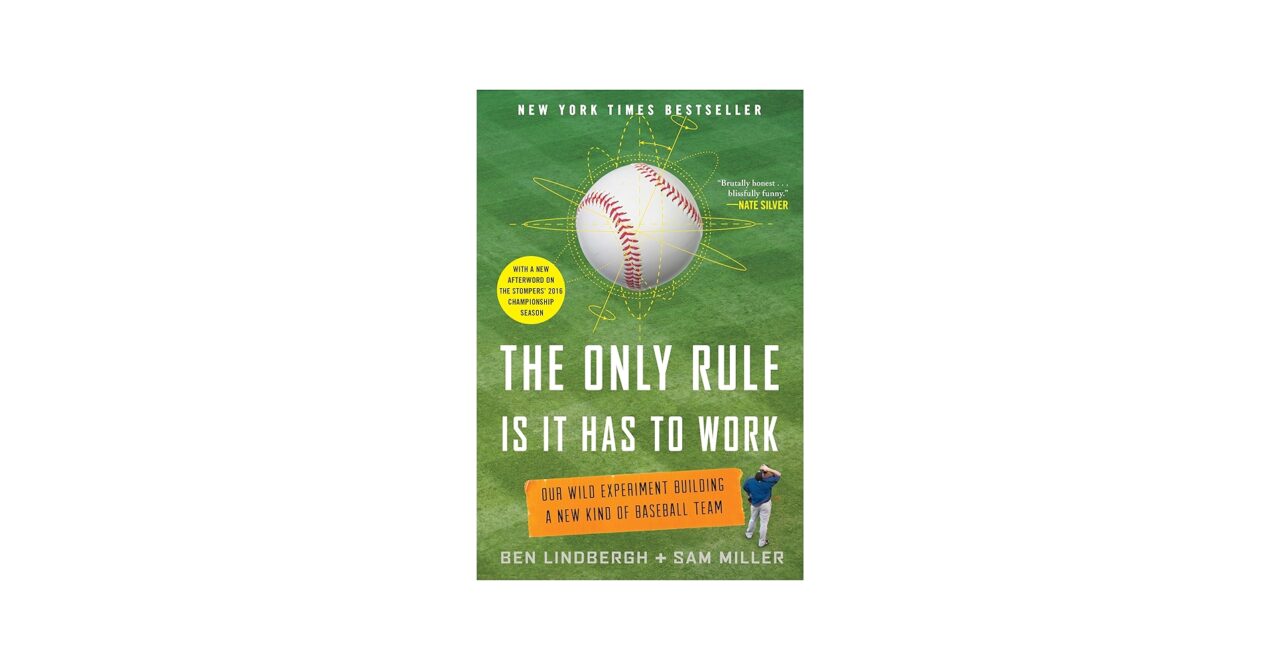
In 2026, front offices script every pitch before the game begins. Managers deploy relief pitchers in the first inning as standard practice, and infielders constantly shift based on predictive contact models. Reading Ben Lindbergh and Sam Miller’s 2016 book The Only Rule Is It Has To Work feels like examining the blueprints of this modern reality. The premise sounds like a fever dream for sports analysts. Two prominent baseball writers gained control of the Sonoma Stompers, a low-level independent league team, and attempted to run the franchise using pure statistical theory. They wanted to prove that data could overcome a lack of traditional scouting.
The experiment quickly collided with reality. Spreadsheets do not throw strikes, and algorithms do not comfort a struggling pitcher missing his family. The authors arrived in California armed with databases and profound confidence in their logic. They quickly faced the stubborn, physical reality of independent baseball. The players earned meager salaries, slept on air mattresses, and fought for their professional lives. Introducing radical defensive shifts to men desperate for traditional statistics created immediate tension in the clubhouse. This friction forms the heart of the book. You read about the clash between the objective truth of a sabermetric database and the subjective reality of a bruised human ego.
A Snapshot of an Independent League
The literature of baseball often romanticizes the minor leagues. Lindbergh and Miller strip away the sepia tone. They document the chaotic logistics of running a team operating on a razor-thin margin outside the umbrella of affiliated minor league baseball. When a player suffers an injury, the writers cannot call up a prospect from Triple-A; they scour internet forums to find a local amateur willing to drive to the stadium.
Exploring this text provides a valuable perspective for anyone researching the history and eras of the sport, particularly the independent circuit before the massive restructuring of the minor league system. The Stompers represented a wild, unregulated frontier. The authors had absolute freedom to test their theories because the franchise had absolutely nothing to lose.
Evaluating the Stompers Experiment
We can look back at the radical ideas tested in Sonoma and see how they map perfectly to the modern professional game:
| Analytical Concept | The Stompers Experiment (2015) | The Modern Reality (2026) |
| The Five-Man Infield | Viewed as a confusing, embarrassing gimmick by players and opposing managers. | Standard strategic deployment against extreme pull-hitters in late innings. |
| The Opener | Highly controversial; angered traditional starting pitchers who wanted the win statistic. | Routine pitching strategy across all levels of professional baseball. |
| Pitch Sequencing Data | Delivered via printed spreadsheets to skeptical catchers in the dugout. | Transmitted directly to catchers via electronic earpiece technology. |
The Human Cost of Algorithmic Baseball
The narrative succeeds precisely because the authors acknowledge their own blind spots. They admit when the data fails. The book captures the distinct anxiety of sitting in the grandstand, watching a mathematically correct managerial decision explode on the field. A computer model can dictate the optimal relief pitcher for a specific batter, but it cannot account for a blister on that pitcher’s throwing hand. Major sports organizations spend billions trying to quantify the human element, a pursuit thoroughly documented by sports analytics researchers at major universities. The Sonoma Stompers experiment proves that human beings act unpredictably under pressure.
Late in the season, the authors find themselves acting less like statisticians and more like amateur psychologists. They realize that making a player feel confident is often more productive than giving him a structurally perfect scouting report. This realization shifts the book from a simple math experiment to a profound study of leadership.
For fans digging into classic baseball books, this text acts as the perfect bridge between old-school managerial memoirs and modern, data-driven manifestos. The authors learn to respect the dirt just as much as they respect the data. The math worked, and the Stompers won the division, but the writers walked away with a sobering realization about the limits of their own intelligence.
Grade: A (Highly Recommended)
Best For: Fans of analytical baseball, readers curious about the grim reality of independent leagues, and anyone fascinated by the collision of statistical theory and human nature.