
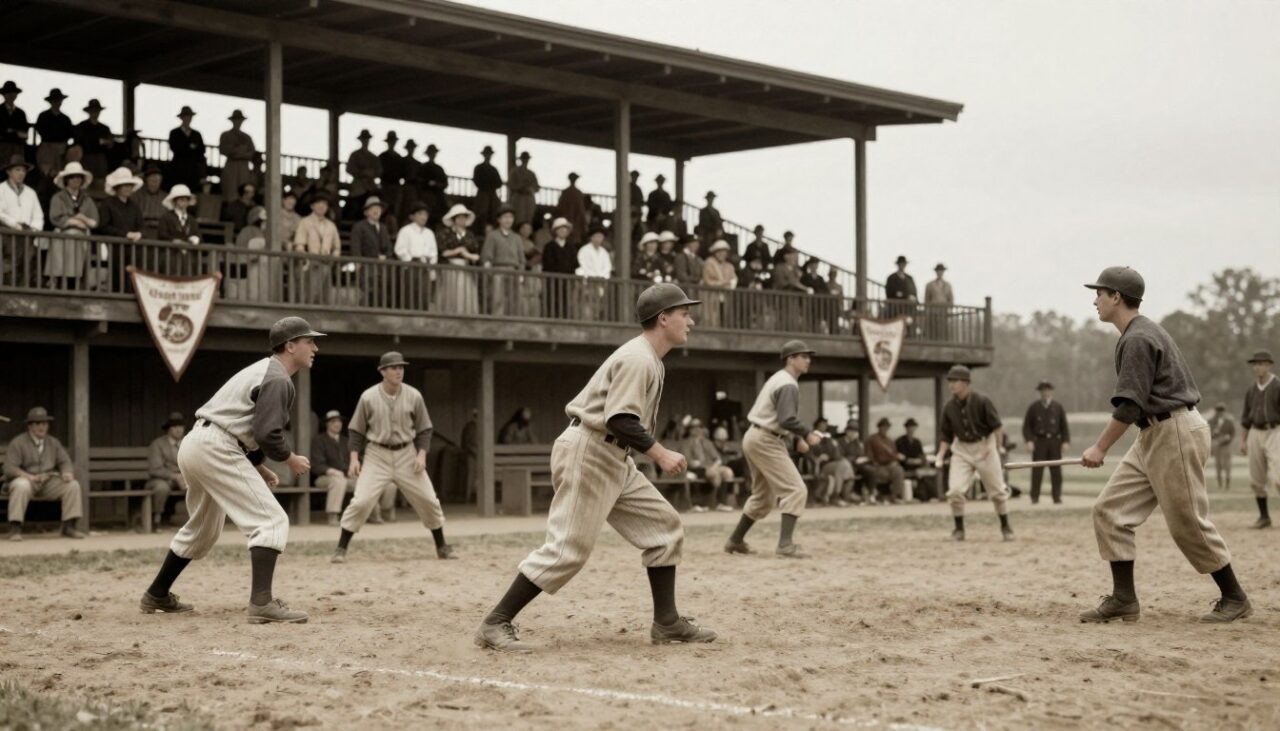
The Dead-Ball Era was a key time in Major League Baseball, lasting from 1900 to 1919. It was hard for teams to score, with an average of just 3.4 runs per game. The batting average hit a low of .239 in 1908, the lowest ever recorded.
Big ballparks made it tough for hitters to hit home runs. The baseballs were often “dead,” worn down from use. Pitchers used tricks like the spitball, making the ball hard to hit.
This led to a focus on speed and defense over power hitting. We will look at what made scoring runs so hard during this time. The Dead-Ball Era ended suddenly in 1921, with a big jump in runs and home runs. To understand this change, we need to know about the game’s conditions back then. For more, check out the rise and fall of the Deadball.
Key Players and Teams
During the Dead-Ball Era, baseball was all about strategy and skill. Athletes were celebrated for their ability to score runs through speed and hitting, not just power.
Frank “Home Run” Baker was a standout. He hit just two home runs in the 1911 World Series. Yet, he led the American League in home runs four times between 1911 and 1914. His highest season total was 12 home runs, showing how different standards were back then.
Gavvy Cravath was the era’s top power hitter, leading the National League in home runs six times. His best year was 1915, when he hit 24 home runs, a rare feat in that time.
Speedsters like Owen “Chief” Wilson were also celebrated. He set a record with 36 triples in 1912. Sam Crawford had 309 career triples, showing the importance of speed and smart base running.
The 1906 Chicago White Sox, known as the “Hitless Wonders,” won the World Series with a .230 batting average and just three home runs. Their success shows how defense and strategy could beat raw power.
Batting averages were key during this era. Ty Cobb hit .420 in 1911, and Joe Jackson hit .408. These numbers show how getting on base was valued for team success.
| Player | Key Achievement | Batting Average |
|---|---|---|
| Frank Baker | Led AL in Home Runs (4 times) | ~.300 |
| Gavvy Cravath | Led NL in Home Runs (6 times) | ~.290 |
| Owen Wilson | 36 Triples (1912) | ~.300 |
| Sam Crawford | 309 Career Triples | ~.300 |
| Ty Cobb | .420 Batting Average (1911) | .366 Career |
| Joe Jackson | .408 Batting Average (1911) | .356 Career |
Impact on Strategy and Gameplay
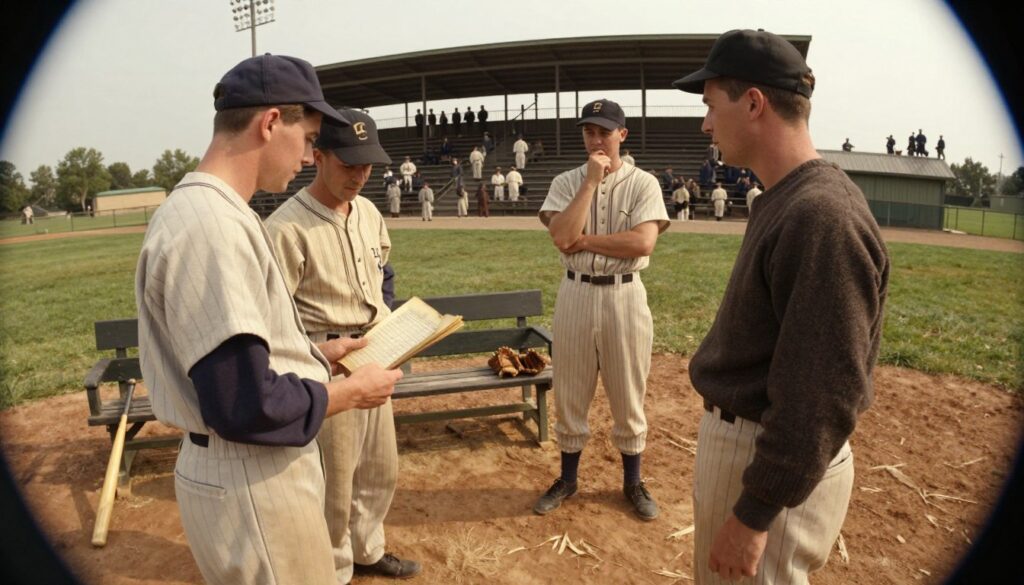
The Dead-Ball Era changed baseball strategy, focusing on tactics over brute power. Teams adopted a style called small ball or inside baseball. With the ball hard to hit for home runs, they used precise, low-risk moves to score runs.
Key strategies included:
- Bunting: A key tactic to move runners on base.
- Stolen Bases: Teams used speed, leading to record-breaking stolen base numbers.
- Hit-and-Run Plays: This strategy helped teams score by being aggressive on the basepaths.
- Baltimore Chop: A unique hit that used the hard ground to get infield singles.
Teams focused on speed and aggressive baserunning, changing the game. The goal was not to hit home runs but to make contact and move runners. Managers like Fielder Jones of the “Hitless Wonders” showed the value of defensive skill and contact hitting.
This era highlighted the importance of strategy, changing the game’s core. The Dead-Ball Era is a lesson in scoring runs without home runs, showing the creativity and ingenuity of teams back then.
Reasons for Its Decline
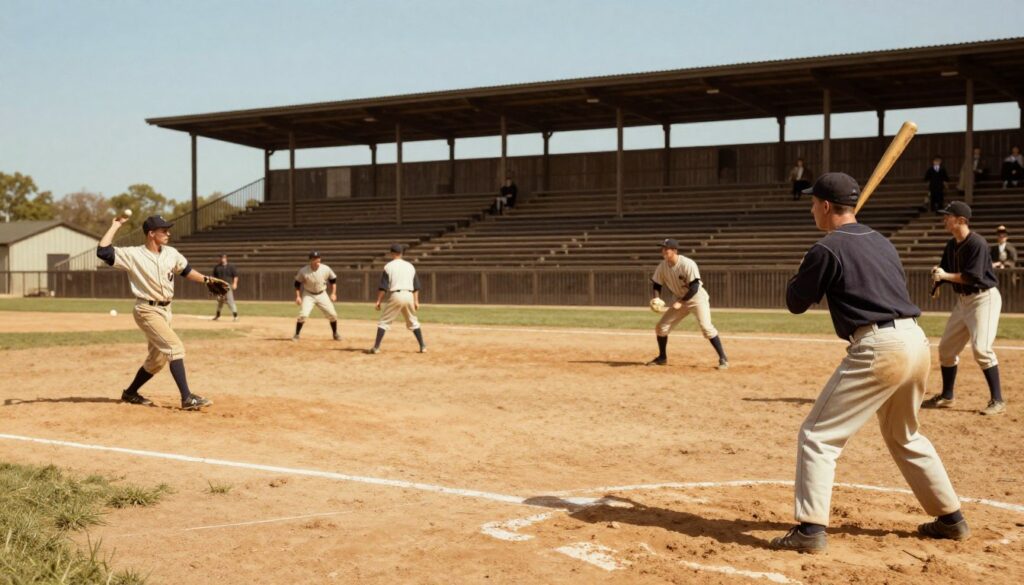
The Dead-Ball Era ended suddenly, thanks to many factors. By 1921, teams were scoring 40% more runs and hitting four times as many home runs as in 1918. This big change came from several key elements.
The introduction of the cork-centered ball in 1910 was a big factor. Even though tests showed no real difference, people thought it was new. The ban on certain pitches, like the spitball and emery ball, in 1920 also changed the game. This affected 17 pitchers, but it changed how pitchers threw.
The death of Ray Chapman in 1920 was another important event. His beaning led to a rule that made sure baseballs were clean and easy to see. This rule helped players hit better.
Babe Ruth’s home run hitting also changed the game. His style made others hit more aggressively. This was a big change from the Dead-Ball Era’s focus on making contact.
Rule changes before, like the foul strike rule in 1901 and 1903, also played a part. These rules made it harder to score, setting the stage for the Dead-Ball Era.
In summary, these changes ended the pitcher’s dominance, starting the Live-Ball Era. For more on this interesting time, check out this historical baseball analysis.
Influence on Modern Baseball
The Dead-Ball Era’s legacy is clear in today’s baseball, even with home runs getting all the attention. This era focused on speed, defense, and smart baserunning. These values are key in modern baseball, even with the rise of power hitting.
Teams use tactics like sacrifice bunts and stolen bases in close games. These strategies, born in the Dead-Ball Era, have evolved. They shape how teams build their lineups and plan their games.
Defensive innovations from this time, like better gloves and smarter fielding, have changed the game. These changes help teams measure player performance and make better decisions. The rule changes from the Dead-Ball Era, like clean baseballs and rules on pitches, are also important today.
Knowing about the Dead-Ball Era helps fans see how baseball has changed. Its influence is seen in every strategic play that scores a run. It shows how the game’s equipment, rules, and strategies can grow together, making baseball more exciting.