

Satchel Paige was more than just a great pitcher; he was a cultural icon in baseball. From 1927 to 1948, he played for many teams in the U.S. and abroad. His talent made him the highest-paid pitcher of his time, and his fastball amazed fans.
Paige was known for his trick pitches and showmanship on the mound. He would call in his outfielders and then strike out the side, showing his confidence and skill. Despite being one of the greatest pitchers of his era, he faced big challenges due to racism in baseball.
This introduction prepares us for a deeper look into his life. We’ll see his dominance on the field and how racism affected his career. Paige’s journey from the Negro Leagues to the Baseball Hall of Fame in 1971 shows his lasting impact on the sport.
Career Highlights and Achievements
Satchel Paige’s career was filled with incredible moments. He played for the Kansas City Monarchs from 1939 to 1942. During this time, he led the team to four straight Negro American League pennants. This made him one of the legendary players of his time.
In the 1942 Negro League World Series, Paige shone brightly. He won three games in a four-game sweep against the Homestead Grays. This performance showcased his skill and made him the top pitcher of his era.
On July 7, 1948, Paige turned 42 and joined the Cleveland Guardians. Two days later, he made his Major League debut. That season, he went 6-1 with a 2.48 ERA, helping the Guardians win the World Series. His success at such an old age was a testament to his talent and hard work.
Paige’s fame continued to grow. He was chosen for the Major League All-Star Team in 1952 and 1953, at ages 46 and 47. These selections highlighted his incredible longevity and skill, solidifying his status as a legendary player.
One of Paige’s most memorable moments came on September 25, 1965. At 59 years old, he pitched for the Kansas City Athletics. He faced the Boston Red Sox and retired all batters except Carl Yastrzemski, who got a double. This performance was a testament to his enduring talent and inspired many.

In summary, Satchel Paige’s career was filled with incredible achievements. His contributions to baseball, both on and off the field, continue to inspire. He is a true icon among legendary players.
Challenges and Triumphs
Satchel Paige’s life was filled with both struggles and victories. He faced many obstacles in a baseball world divided by race. The color line kept him out of Major League Baseball until 1947. This meant he missed out on being recognized as one of the greatest pitchers in history during his prime years.
When baseball integrated, Paige was in his 40s. But he showed he was among the best, proving age didn’t matter. Yet, the biggest challenge came after he retired. The Baseball Hall of Fame made rules that seemed to keep out stars from the Negro Leagues.
In July 1956, a rule change required ten major league seasons to be considered for the Hall. This rule kept Paige out, despite his incredible talent. Hall director Ken Smith knew Paige’s value but stuck to the rules, a legacy of the racism Paige faced.
Ford Frick, the baseball commissioner, said, “We can’t alter the rules for old Satchel.” This was a harsh reminder of the racism Paige faced. It showed the deep issues within baseball.
Paige’s induction into the Hall of Fame in 1971 was a victory for him and for baseball. It showed that talent and achievement should decide a player’s legacy, not rules. This moment was a victory over the racism and rules that delayed his recognition for so long.
Satchel Paige’s story teaches us about the power of perseverance. His journey shows how overcoming challenges can lead to great achievements, not just for him but for baseball itself.
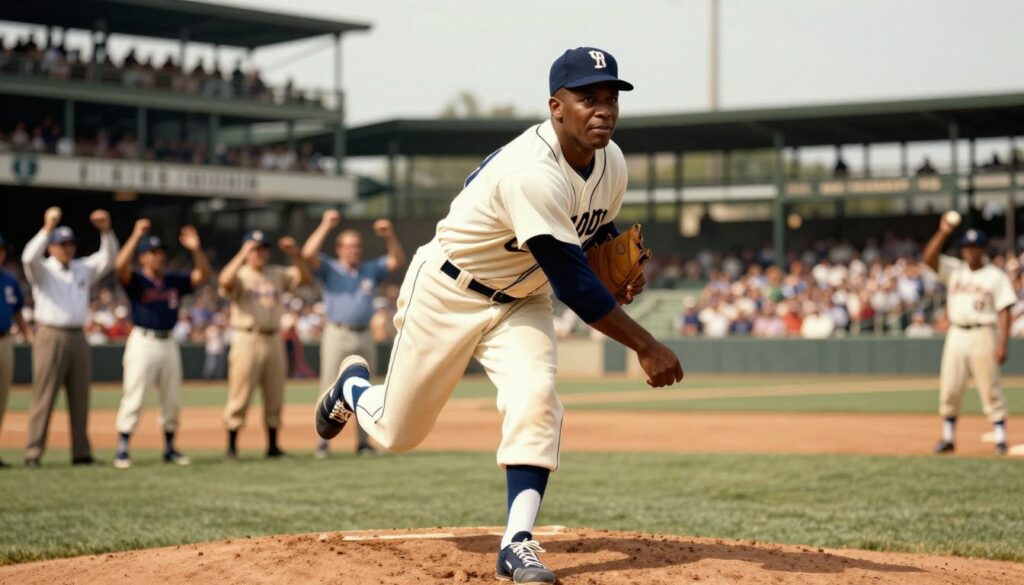
Influence on Baseball and Society
Satchel Paige’s legacy goes beyond baseball, touching the sport and society deeply. He was more than a player; he was a symbol of hope and change. His talent showed the unfairness of segregation in sports. By playing in the Negro Leagues, he proved the talent overlooked because of race.
During his Hall of Fame induction on July 25, 1966, Ted Williams made a key statement. He hoped to add Paige and Josh Gibson’s names as symbols of great Negro players. This moment was a big step in recognizing Paige’s impact and the injustices he faced.
Bob Feller, another Hall of Famer, shared similar views in 1962. He believed Paige deserved a place in the Hall of Fame. Feller said Paige’s exclusion was due to racial barriers, highlighting the need for change.
In November 1952, a poll showed 69% of people supported Paige for the Hall of Fame. This showed the growing recognition of his skills and contributions. Bill Veeck, who signed Paige in 1948, 1951, and 1956, was key in integrating baseball. His actions showed embracing diversity was good for the game.
Wendell Smith, a dedicated journalist, fought for Paige’s recognition. In 1965, he said it was wrong Paige wasn’t in the Hall of Fame yet. Smith’s work was part of a bigger effort to fight racism in baseball.
Paige’s charisma and showmanship made him a favorite in baseball. He broke racial barriers, becoming a symbol of excellence and perseverance. His influence inspired future generations to fight for equality and justice in sports and society.
In conclusion, Satchel Paige’s impact on baseball and American society is clear. He was a legendary player whose legacy inspires change and challenges the status quo. To learn more about his life and achievements, visit this link.
Remembering His Legacy
Satchel Paige’s legacy is a symbol of excellence in baseball. His induction into the Baseball Hall of Fame in 1971 was a big moment. It recognized his talent and the Negro Leagues’ contributions.
One of the most memorable moments was in 1965. At 59, Paige pitched in a rocking chair. A nurse applied liniment to his arm. This act captivated the audience and showed his charisma.
In that game against the Boston Red Sox, he faced many batters. He struck out all but one, proving his extraordinary skill.
Paige’s stats are impressive. Joe DiMaggio went 0-for-8 against him. DiMaggio was known for his hitting, but Paige’s talent was unmatched.
Beyond his achievements, Satchel Paige opened doors for Black players. His story inspires talks about equality and recognition in sports. Remembering Satchel Paige, we celebrate a legacy that goes beyond the game.