
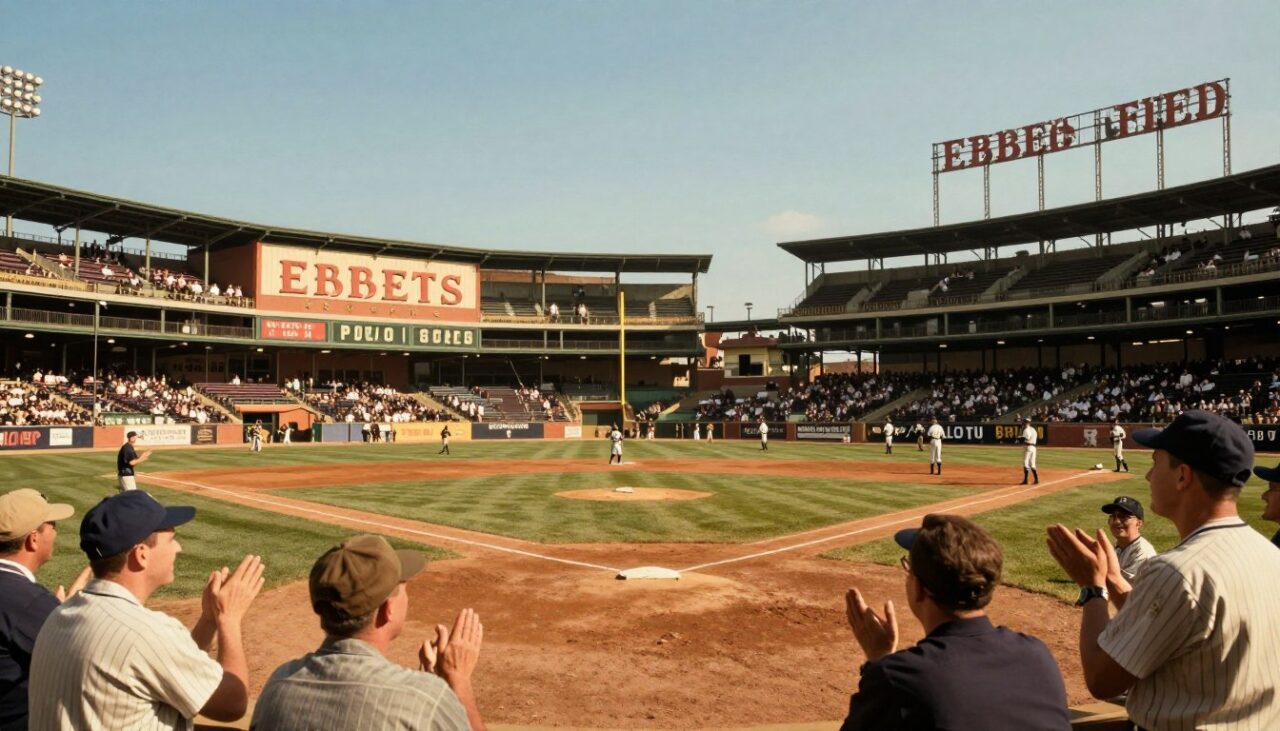
Baseball is filled with stories, and Ebbets Field and the Polo Grounds are two of the most famous. Ebbets Field was built by Charles Ebbets in 1912. It cost $775,000 and opened in April 1913. It quickly became a beloved home for the Dodgers.
The Polo Grounds, on the other hand, started in 1885. The New York Giants, then called the Gothams, made it their home. It had a unique horseshoe shape and a long center field, about 470 feet from home plate.
The rivalry between the Dodgers and Giants began long ago. Their first World Series meeting was in 1889, when Brooklyn was its own city. This rivalry shaped New York’s baseball scene.
Ebbets Field and the Polo Grounds are more than just stadiums. They are key to understanding baseball’s history. Their unique designs and rich stories make them unforgettable.
Cultural and Community Impact
Ebbets Field and the Polo Grounds did more than host baseball games. They shaped the culture of their neighborhoods. In the late 1940s, Brooklyn’s African-American population grew. General Manager Branch Rickey signed Jackie Robinson, breaking Major League Baseball’s color barrier.
Jackie Robinson faced a lot of discrimination but didn’t give up. He became the Rookie of the Year in 1947. His journey inspired many and led Brooklyn to its only World Series win in 1955. This moment showed how sports can bring about change.
The fans of the Dodgers, known as “Dem Bums,” were incredibly loyal. They supported their team through many losses, including five World Series matchups against the Yankees. This loyalty made Ebbets Field a beloved community space.
The Polo Grounds also played a big role in the community. It hosted games between city teams when the Giants were away. It also hosted Negro League games, giving Black athletes a place to play during segregation.
On April 14, 1943, over 35,000 fans came together for a charity game at Yankee Stadium. This game helped the Civilian Defense Volunteer Office. It showed how these ballparks brought people together for important causes.
Ebbets Field and the Polo Grounds were more than sports venues. They were part of New Yorkers’ daily lives. Their loss was a big moment in baseball history and community identity.
To learn more about baseball’s cultural significance, check out this project or explore the cultural impact of baseball.
Memorable Events and Games
Baseball history is filled with moments that have shaped the sport. Classic ballparks like Ebbets Field and the Polo Grounds have seen unforgettable events. These moments are etched in the memories of fans everywhere.
The 1951 National League pennant race was dramatic. The Brooklyn Dodgers had a 14-game lead but collapsed. Bobby Thomson’s walk-off home run, known as the “Shot Heard ‘Round the World,” is a moment that fans remember deeply.
Willie Mays’ catch in the 1954 World Series is another iconic moment. He caught a 470-foot blast to center field, making it known as “The Catch.” This play showcased Mays’ talent and the Polo Grounds’ electric atmosphere.
In 1955, the Dodgers won their first World Series, defeating the New York Yankees. This victory was a long-awaited triumph for Dodgers fans, marking a significant moment in baseball history.
Gil Hodges tied the record for most National League grand slams in September 1957 at Ebbets Field. This achievement was a highlight before the ballpark closed.
The 1936 World Series at the Polo Grounds was attended by notable figures like Mayor Fiorello LaGuardia and Governor Herbert Lehman. These events showed the deep connection between baseball and the community.
The Dodgers played their last game at Ebbets Field on September 24, 1957, defeating Pittsburgh 2-0. The Giants lost their last game at the Polo Grounds on September 29. These games marked the end of an era for these historic ballparks.
| Event | Date | Significance |
|---|---|---|
| Bobby Thomson’s Home Run | October 3, 1951 | Known as the “Shot Heard ‘Round the World” |
| Willie Mays’ Catch | October 16, 1954 | Iconic defensive play in World Series |
| Dodgers’ World Series Win | October 4, 1955 | First championship for the Dodgers |
| Gil Hodges’ Grand Slam Record | September 1957 | Tied record for National League grand slams |
| Final Game at Ebbets Field | September 24, 1957 | End of an era for the Dodgers |
Reasons for Their Demise
The closure of iconic venues like Ebbets Field and the Polo Grounds marked a significant shift in baseball history. The downfall of these classic ballparks was not just about sports. It was a complex mix of politics, economics, and community sentiment.
At the heart of this story is the bitter conflict between Dodgers owner Walter O’Malley and New York’s powerful Parks Commissioner, Robert Moses. O’Malley wanted to replace the old Ebbets Field with a new stadium. He proposed a new ballpark at Atlantic and Flatbush Avenues, aiming to improve the fan experience.
But, Brooklynites sent countless letters and telegrams to the city, asking for approval of this project. Unfortunately, Moses refused to support O’Malley’s vision. Frustrated and seeing better financial opportunities elsewhere, O’Malley decided to move the Dodgers to Los Angeles.
At the same time, Giants owner Horace Stoneham was struggling with the Polo Grounds. He also decided to join O’Malley in California, moving his team to San Francisco. This move was like a second Gold Rush, but it was a big loss for fans who loved these classic ballparks.
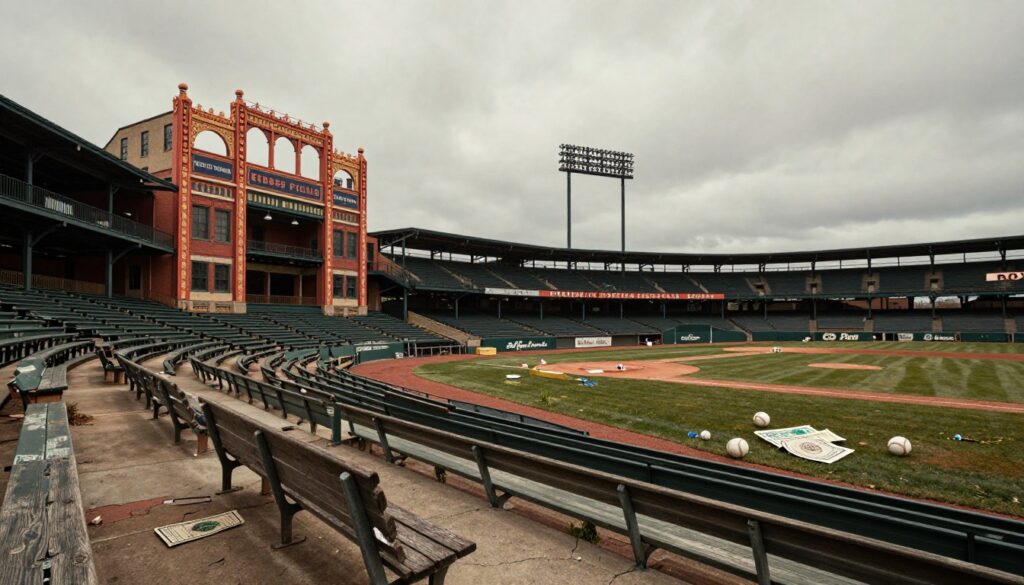
The aftermath was tough. Ebbets Field was demolished in 1960, marked by a baseball-painted wrecking ball. Today, the site is the Ebbets Field Apartments, with only a small plaque to remember the past.
The Polo Grounds had a short life after its move to the Mets in 1963. It was demolished in 1964. Now, a housing complex stands where the Polo Grounds once stood, with only a massive staircase from Coogan’s Bluff left as a reminder of its past glory.
Preserving Their Legacy in Modern Times
The sounds of Ebbets Field and the Polo Grounds are alive in baseball fans’ hearts. These ballparks are more than buildings; they are the Lost Jewels of the Game. Today, the Ebbets Field Apartments stand where history was made.
A small plaque at the site reminds us of its past. It’s a nod to the unforgettable moments that happened there.
At the Polo Grounds, only a staircase remains. It leads down from Coogan’s Bluff. Fans once cheered for legends like Willie Mays here.
The New York Mets started their journey in 1963 at the Polo Grounds. This marked a new chapter in New York’s baseball history.
Books like Roger Kahn’s “The Boys of Summer” keep the 1955 Brooklyn Dodgers alive. Jackie Robinson’s courage and determination inspire many. The 2020 season’s silence echoed the quiet of Ebbets Field and the Polo Grounds after they closed.
Modern efforts to preserve these ballparks include podcasts like the Love of the Game Auctions Podcast. These stories and memorabilia connect new fans with baseball’s past. From Ebbets Field’s turquoise seats to its orange girders, these tales keep the ballparks’ spirits alive.
The legacy of Ebbets Field and the Polo Grounds lives on. It’s in the memories of fans and the heart of baseball history. Their stories continue to inspire, reminding us of the magic they once held.