
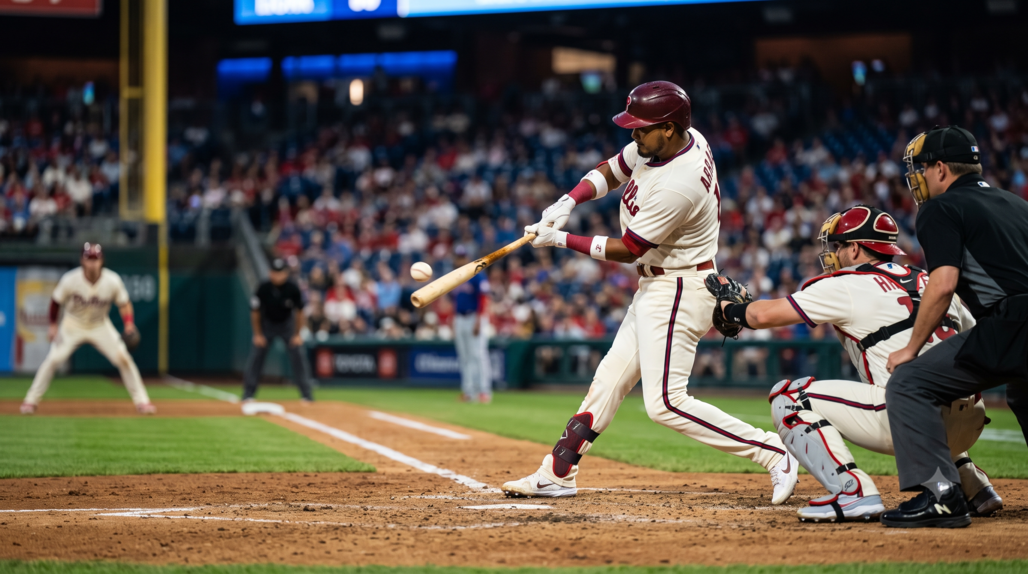
Luis Arraez going to the Philadelphia Phillies is more than a deadline upgrade for a club chasing October contact. It is a trade that reopens one of baseball’s oldest arguments: what does batting average still mean? On Aug. 3, 2026, the Phillies acquired Arraez and right-hander Caleb Kilian from the San Francisco Giants, with right-handers Ramon Marquez and Marty Gair going back to San Francisco. Arraez arrived as a three-time batting champion, a free agent to be, and the rare modern hitter whose public identity still begins with average. That makes his move to Philadelphia feel like a current transaction with an old baseball soul.
Why Arraez Makes The Batting-Average Debate Feel Alive Again
Baseball has spent much of the last generation teaching fans to look beyond batting average. On-base percentage, slugging percentage, OPS, wRC+, chase rate, exit velocity, hard-hit rate, barrel rate, expected stats, and run-value models have all changed the way hitters are discussed. Then Arraez steps into the middle of a playoff race and makes the old number feel impossible to ignore.
The Phillies did not acquire him because he looks like a modern power hitter. They acquired him because he almost never gives away an at-bat. The Good Phight’s deadline analysis listed the deal as Arraez and Kilian to Philadelphia for Marquez and Gair, and described Arraez as a hitter bringing elite bat-to-ball ability to a Phillies lineup that already had loud power. That contrast is the point. Philadelphia did not need another hitter whose value begins with home-run threat. It needed a different offensive rhythm.
Arraez entered the trade conversation as one of the sport’s clearest contact specialists. The Wall Street Journal’s post-deadline feature called him a three-time batting champion who, in another era, would have been treated like a superstar, while pointing out the modern complication: his low walk rate can make an elite average translate into a merely strong on-base profile. That sentence captures the entire debate.
A .320 hitter used to carry an almost automatic cultural authority. Today, the sport asks what comes with that average. Does he walk? Does he slug? Does he defend? Does he run? Does he fit the roster? Arraez is valuable because he forces all those questions to coexist with the old thrill of watching a hitter put the ball in play.
Philadelphia Bought A Different Kind Of October At-Bat

The Phillies’ lineup already had stars who could change a game with one swing. Bryce Harper and Kyle Schwarber represent the kind of middle-order danger that makes a pitching staff plan carefully before a series begins. Arraez changes the picture in a quieter way. He creates pressure by refusing to disappear inside strikeout-heavy innings.
That matters in October because postseason baseball often turns on contact quality, sequencing, and who can survive difficult pitching. A club built only around power can look explosive for three innings and trapped for the next six. A hitter like Arraez does not guarantee runs, but he changes the texture of an inning. He can move the ball, extend a rally, break defensive comfort, and put a pitcher into the stretch without requiring a mistake pitch.
The Phillies’ move also brings positional consequences. The Good Phight noted that Arraez’s arrival created defensive reshuffling, including Bryce Harper moving back to the outfield. That is where the old batting-average argument becomes practical rather than nostalgic. A team can admire Arraez’s contact skill and still have to answer where he plays, how the defense adjusts, and whether the offensive gain is worth the movement around him.
That is why this trade fits booksonbaseball.com better as a baseball-history argument than a simple deadline recap. The site’s recent Tarik Skubal Dodgers trade story framed an ace pitcher as a classic deadline archetype. Arraez is the hitter version of that idea. He is a modern player carrying an old baseball argument into a new roster.
The Phillies did not just trade for a bat. They traded for a style of hitting that keeps demanding a historical hearing.
How Arraez Connects To Baseball’s Contact-Hitting Lineage
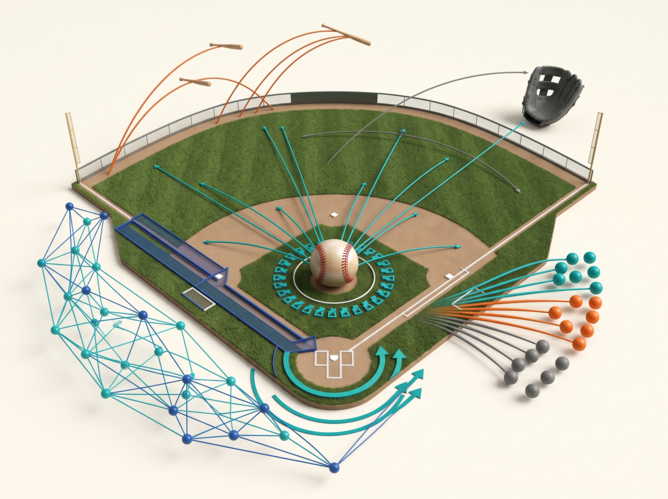
Arraez’s appeal begins with a simple fact: he has already won three batting titles. MLB.com’s account of his 2024 National League batting title noted that he won the American League batting crown with Minnesota in 2022, won the National League title with Miami in 2023, and then became the first San Diego Padres player to win a batting title since Tony Gwynn in 1997. That is a serious historical sentence. It puts Arraez in a line of hitters whose value is rooted in the art of the hit.
Tony Gwynn is the easy comparison because of the Padres connection and the pure-hitting reputation. Yet Arraez also recalls a larger baseball bookshelf. Rod Carew, Wade Boggs, Ichiro Suzuki, Gwynn, Pete Rose, and other contact-centered hitters forced fans to think about hitting as craft rather than an explosion. They made the single feel like evidence of control. They turned the bat into a tool for precision.
Modern baseball has not removed that beauty. It has made it harder to price. A hitter who sprays singles and doubles can look almost rebellious in a game shaped by velocity, strikeouts, and damage. Arraez’s swing decisions and barrel control make him feel like a preserved technique from another era, but his trade value is judged by 2026 standards.
Baseball-Reference’s major league batting champions list is useful here because it shows how much symbolic weight the title still carries. Batting champions are remembered as yearly witnesses to a specific skill: who could get hits most consistently across the long season. Analytics may have changed how teams value that skill, but the title still reads cleanly to fans because it belongs to baseball’s oldest statistical language.
Arraez keeps that language alive. Every trade involving him becomes a test of whether the sport still honors the number that once defined hitting excellence.
Why The Giants’ Side Shows The Modern Calculation
San Francisco’s side of the trade makes the argument sharper. The Giants signed Arraez before the season, then moved him at the deadline after falling out of the race. MLB.com’s Giants coverage from February described him as a three-time batting champion signed to a one-year deal and noted that Buster Posey, the Giants’ president of baseball operations and a former batting champion himself, had placed value on contact ability. By August, that short-term bet had become a deadline asset.
That sequence tells the modern story. Arraez’s skill was valuable enough to sign, market, play, and trade. It was not valuable enough for an out-of-contention club to keep at the deadline with free agency ahead. That is baseball’s current logic in one player’s season. Contact hitting can matter deeply, but roster timelines still decide where the player belongs.
The San Francisco Chronicle’s deadline coverage identified Ramon Marquez as the most intriguing prospect in the return for the Giants, with Marty Gair also part of the package. That return makes sense if the Giants viewed Arraez as a high-average rental whose greatest value came from a contender needing immediate offense. The Phillies needed October at-bats. The Giants needed future pitching inventory.
This is where Arraez differs from the contact legends of older eras. A batting champion once felt like a franchise anchor by definition. Arraez has become one of baseball’s most movable stars. Minnesota traded him to Miami. Miami later traded him to San Diego. San Francisco signed him, then traded him to Philadelphia. The repeated movement does not make him less fascinating. It makes him more revealing.
A hitter built around batting average can still be celebrated. He can still be acquired for a pennant race. He can still be the center of a national conversation. Yet teams remain cautious about how much of their future to attach to that skill alone.
What Batting Average Still Explains And What It Misses

Batting average survives because it explains something real. It tells fans how often a hitter turns an at-bat into a hit. That matters. Hits move runners, change innings, stress defenses, and create rhythm. A lineup with too many empty at-bats can look lifeless even if its underlying power numbers remain respectable.
Arraez’s value begins there. He gives the Phillies a hitter who can meet the ball, cover pitches, spoil pitcher plans, and change the feeling of an inning. He also gives fans a player whose game is easy to watch and understand. In a sport full of advanced measurements, there is still something direct about a hitter who keeps collecting hits.
Batting average misses plenty, too. It does not distinguish a single from a home run. It does not fully capture walks. It does not measure defensive value. It does not tell a team whether a hitter’s contact is loud enough to survive postseason positioning and elite velocity. This is why Arraez creates argument rather than consensus.
| What Batting Average Shows | What Modern Evaluation Still Asks |
|---|---|
| How often a hitter records a hit | Whether he reaches base enough overall |
| Contact consistency across a season | How much power comes with the contact |
| A clear historical comparison point | Defensive fit and roster flexibility |
| A fan-friendly hitting identity | Run value against elite pitching |
| Bat control and hit frequency | Whether the profile ages well |
This is not a weakness in the story. It is the story. Arraez is valuable because he proves batting average still speaks. He is debated because batting average no longer speaks alone.
Why This Trade Belongs On Baseball’s Bookshelf
The best baseball trades are not always the biggest trades. Some become memorable because they expose a question the sport has been asking for generations. Arraez to the Phillies does that. It asks whether a batting champion still feels like a star in a game that has learned to measure so much more.
For Philadelphia, the answer is practical. Arraez gives the Phillies a contact hitter for a lineup that needed variation. His arrival changes the shape of innings and gives the club a different weapon for October. The Phillies did not need him to solve every offensive question. They needed him to make their offense harder to pitch through.
For San Francisco, the answer is transactional. A one-year batting champion became a way to acquire pitching. That does not disrespect Arraez. It shows the modern cost-benefit system that surrounds players, even players with old-school brilliance.
For readers of baseball history, the trade is richer than either team’s immediate plan. Arraez carries the memory of batting titles, contact craft, Tony Gwynn comparisons, and the long argument over whether hitting is best understood through average, on-base skill, slugging, or complete offensive value. He is a modern player who makes an old statistic feel alive without pretending the rest of the statistical record no longer matters.
That is why Luis Arraez to the Phillies revives baseball’s old batting-average argument. He does not end the debate. He gives it a new uniform, a pennant race, and a Philadelphia crowd ready to cheer every clean single like the old number still has something to say.