
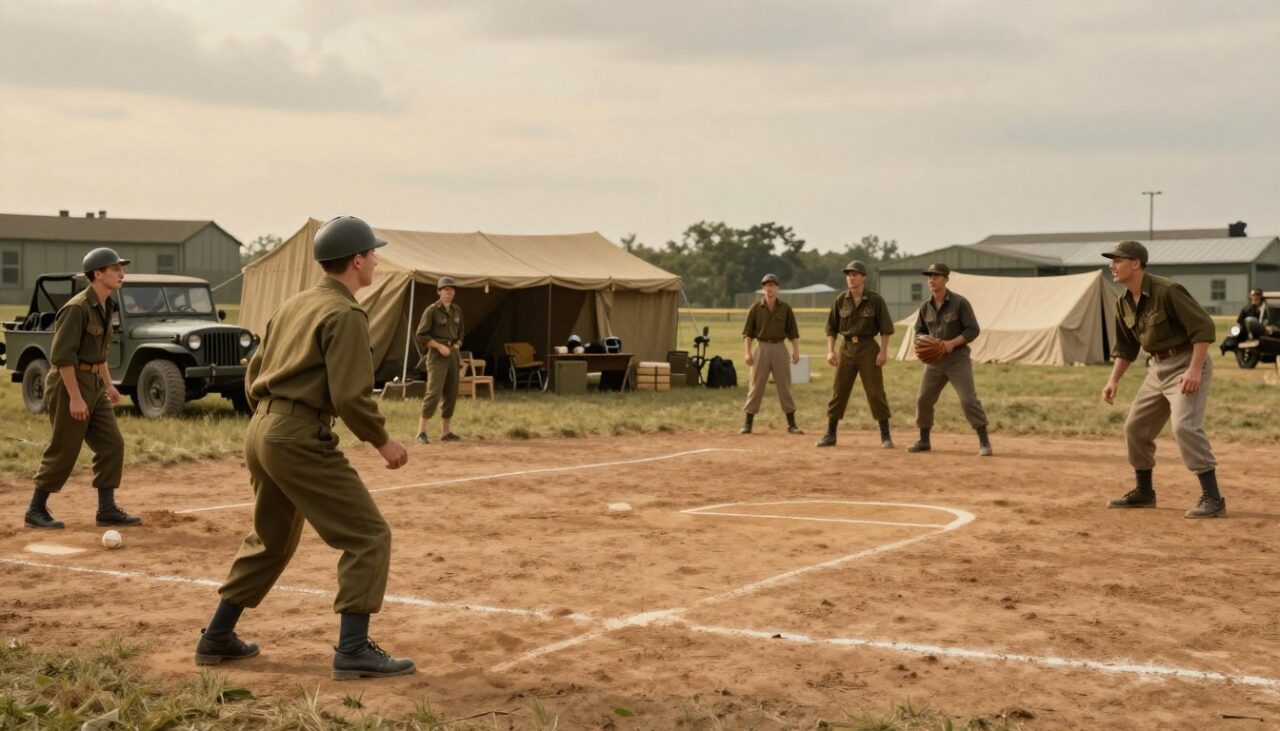
Baseball is often called “the American game.” This was true even more during World War II. The sport became a key part of military life, bringing a sense of home to soldiers.
Stars like Ted Williams and Bob Feller played a big role. But it wasn’t just them. Everyday people also played, showing the game’s power to unite.
In September 1945, a G.I. World Series in Germany showed baseball’s impact. The OISE All-Stars played the 71st Division. This event showed how baseball brought hope and reminded Americans of their values.
To learn more about baseball’s role in American history, check out this article on baseball’s significance.
Key Players and Personnel in Service
World War II saw many baseball players become key figures. Their stories show the history and impact of baseball during a crisis. Hank Greenberg, the MVP of the Detroit Tigers, is a prime example. He enlisted after Pearl Harbor, giving up his prime years for his country.
Pete Gray, a one-armed outfielder, also made a big impact. Born without a right arm, Gray’s determination to play professionally inspired many. His story is a symbol of resilience during wartime.
Harry O’Neill, a major leaguer, made the ultimate sacrifice. His story is told at Gettysburg College’s Kirchhoff Field. It reminds us of the human cost of war.
Many athletes, like Ted Williams and Bob Feller, put their careers on hold to serve. Williams joined the Navy, and Feller the Army. Their actions inspired fans across the nation.
Sgt. Sam Herman from Pennsylvania is another inspiring figure. He enlisted after high school and served in the Army. Herman played baseball for the 13th Field Artillery Brigade after the war. His story shows how the war and baseball were intertwined.
The history and impact of baseball in WWII are complex. It’s a story of courage, sacrifice, and love for the game.
| Player | Team | Service Branch | Notable Achievement |
|---|---|---|---|
| Hank Greenberg | Detroit Tigers | Army | Enlisted after Pearl Harbor |
| Pete Gray | Various | N/A | One-armed outfielder |
| Harry O’Neill | Various | N/A | Killed in action |
| Ted Williams | Boston Red Sox | Navy | Served during WWII |
| Bob Feller | Cleveland Indians | Army | Served during WWII |
Impact on Leagues and Teams
World War II had a big impact on baseball, changing teams and players. Many players left to join the military, leaving teams short-handed. They had to find players who were not fit for duty or were older.
Despite the challenges, baseball kept going. It showed how important the game was for American morale. President Franklin D. Roosevelt thought about stopping the game but decided it was too important for morale.
The quality of play did drop during the war. But the spirit of the game stayed strong. The Negro Leagues also saw changes, with talented Black players showing their skills despite segregation.
John Klima pointed out the connection between baseball and World War II. The war changed baseball at all levels, from local games to the major leagues. It opened new opportunities for players, changing their careers and the sport forever.
| Aspect | Before WWII | During WWII | After WWII |
|---|---|---|---|
| Player Availability | Full rosters with top talent | Significant talent drain | Gradual return of veterans |
| Quality of Play | High-level competition | Declined due to replacements | Improvement as players returned |
| Public Perception | National pastime | Symbol of hope | Resurgence in popularity |
Cultural and Moral Influence
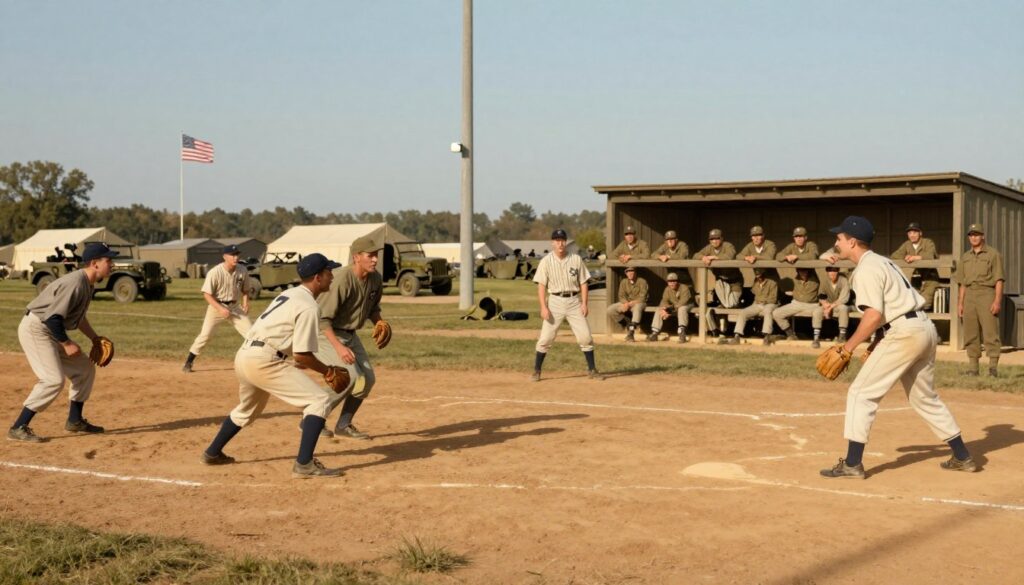
After World War II, sports and society values became clear. The 1945 G.I. World Series showed how baseball was more than just a game. It was a symbol of American values, showing unity and strength.
The series was held in Nuremberg, a city linked to Nazi propaganda. The OISE All-Stars, a team with players from the Negro Leagues, played. This was two years before Jackie Robinson joined Major League Baseball. It showed how war could push for change.
50,000 people watched, including American soldiers and German civilians. The games were a way to share American culture. The OISE All-Stars’ win in Game 5 was a moment that meant a lot to everyone.
This part looks at the history and impact of baseball in wartime. It shows how baseball spread American values and helped society move forward. For more on the Negro Leagues, check out this article here.
Transition Back to Post-War Baseball
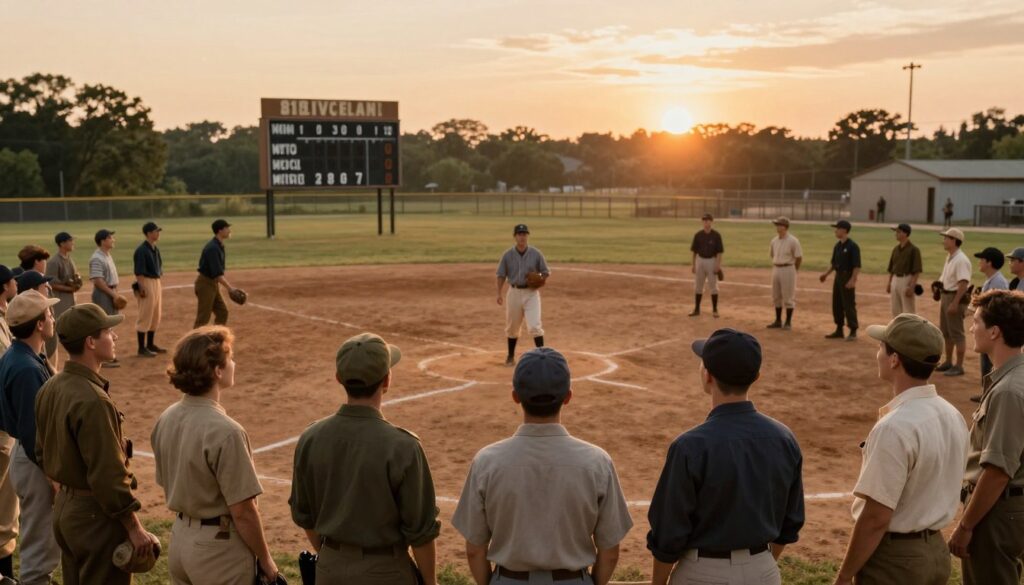
After World War II, baseball saw big changes. Stars like Ted Williams and Bob Feller came back, bringing their military experiences. They found a game changed by war.
The 1945 GI World Series showed Black and White players could work well together. This led to Jackie Robinson’s historic debut in 1947. Their experiences taught the value of teamwork and resilience.
Sgt. Sam Herman’s war experience influenced his baseball career. He played for the New York Giants and Yankees. His World War II baseball uniform is now at the Gettysburg National Military Park.
John Klima said, “There were a lot of heroes.” Their stories add to baseball’s rich history. Their wartime experiences shaped their careers and the sport’s future. For more, visit Baseball at the Frontlines.