
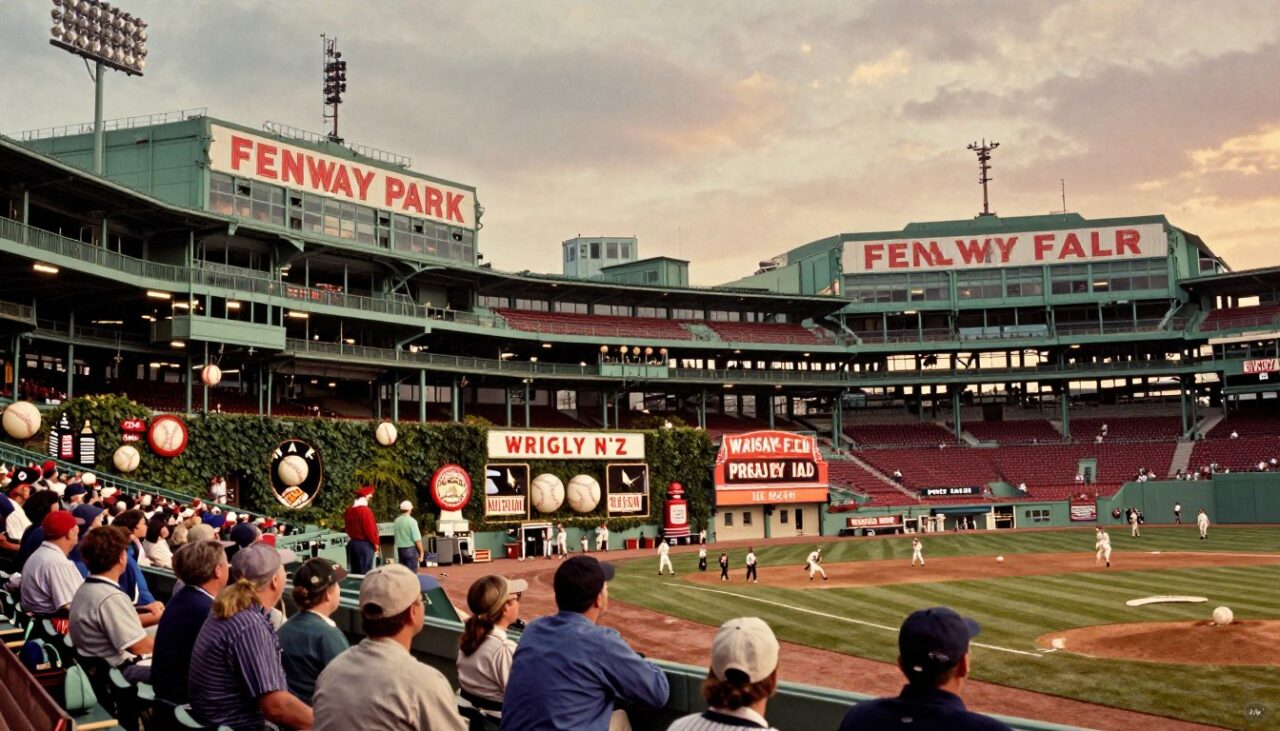
Baseball has a rich history tied to iconic ballparks. Two venues stand out: Fenway Park, opened in 1912, and Wrigley Field, opened in 1914. They are more than stadiums; they are cultural landmarks of American sports architecture.
These parks were built during baseball’s “Golden Age.” They were designed to be intimate and welcoming. The shift from wooden grandstands to permanent structures changed how fans watched the game. This era, from 1909 to 1923, saw urban ballparks bring the action closer to fans.
The unique features of these parks, like the famous left-field wall and brick façades, show their historical importance. They highlight a time when baseball was more community-focused, unlike today’s commercialized stadiums.
As we explore their histories, we’ll see how these parks shaped baseball fans’ experiences. They became key parts of the national story of the sport.
Surviving Changes and Renovations
Fenway Park is a shining example of how historic places can change and stay true to themselves. Over time, it has seen many updates but kept its unique look. The original brick walls, special windows, and cozy seats are all there, keeping the park’s spirit alive.
Many modern stadiums have come and gone, but Fenway stands out. The Red Sox wanted to build a new stadium for $665 million. But, they needed over $300 million from the public and had to take over nearby land.
Save Fenway Park! was formed to fight this plan. They suggested adding more seats and luxury areas without building a new stadium. This way, the park could stay the same, keeping the Green Monster and brick walls.
Wrigley Field has also gone through big changes. The 1060 Project started in 2014 to update the park. It added new player areas, video boards, and fixed the marquee while keeping the old charm.
Fenway and Wrigley Field show that you can update a park without losing its soul. They prove that keeping the old charm is key to a park’s success. These iconic places continue to delight fans today.
Cultural Significance and Fan Experience
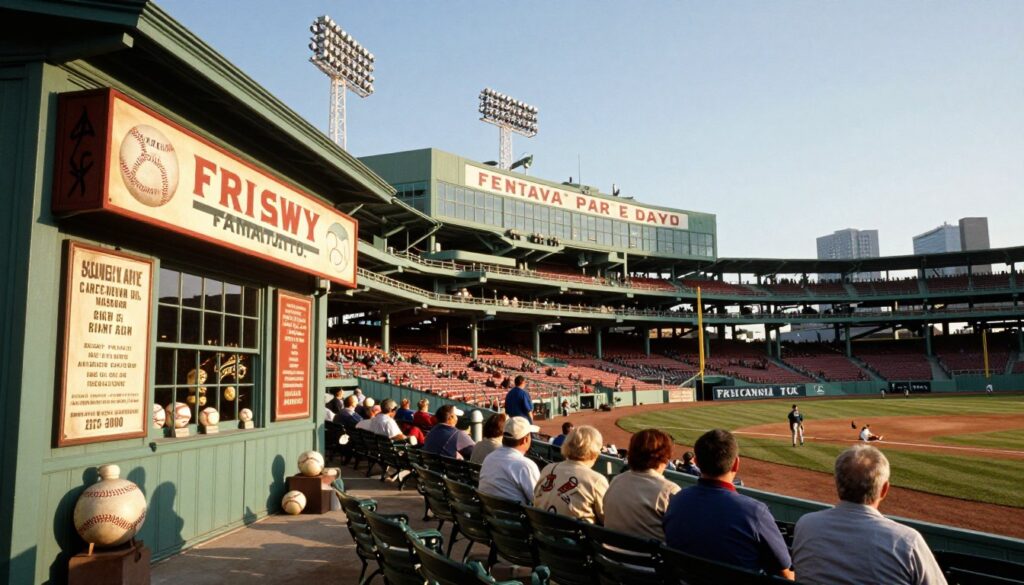
Fenway Park and Wrigley Field are more than sports venues. They capture the essence of their cities. For Red Sox fans and baseball lovers, Fenway Park is a national treasure. It attracts visitors from everywhere, showing the beauty of America’s pastime.
The “Fenway Factor” makes the park special. It’s a mix of history, design, and emotional connection. This draws fans, even when the team isn’t doing well. Fenway is Massachusetts’ top tourist spot, thanks to the Red Sox and the Convention & Visitors Bureau.
Wrigley Field is a key part of Chicago’s Lakeview neighborhood. Its unique scoreboard, rooftop seats, and lively Wrigleyville community offer more than just a game. Fans come for the whole experience, not just the game.
Both parks are places where families come together. They keep the game’s spirit alive, away from big corporate logos. The old-school scoreboards and the energy of the crowd connect us to baseball’s past.
These ballparks are not just sports places; they’re community treasures. They show us that baseball is about community, shared moments, and love for the game. For more on their cultural importance, check out musical cultural context and a Cubs game, or memorable baseball series.
Famous Moments
Fenway Park and Wrigley Field have seen unforgettable moments in baseball history. These iconic ballparks are more than venues. They are the heart of the sport, hosting legendary players and events that fans love.
At Fenway Park, Babe Ruth left a lasting impact. He played for the Red Sox before joining the Yankees, changing baseball forever. Ted Williams hit .406 in 1941, a feat that fans remember. Another moment was when Carlton Fisk hit a home run in the 1975 World Series, creating a lasting memory for Red Sox fans.
The 2004 American League Championship Series was a dramatic comeback against the Yankees. It broke the “Curse of the Bambino” and led to the Red Sox’s first World Series title in 86 years. These moments are part of the Fenway Park history that fans cherish.
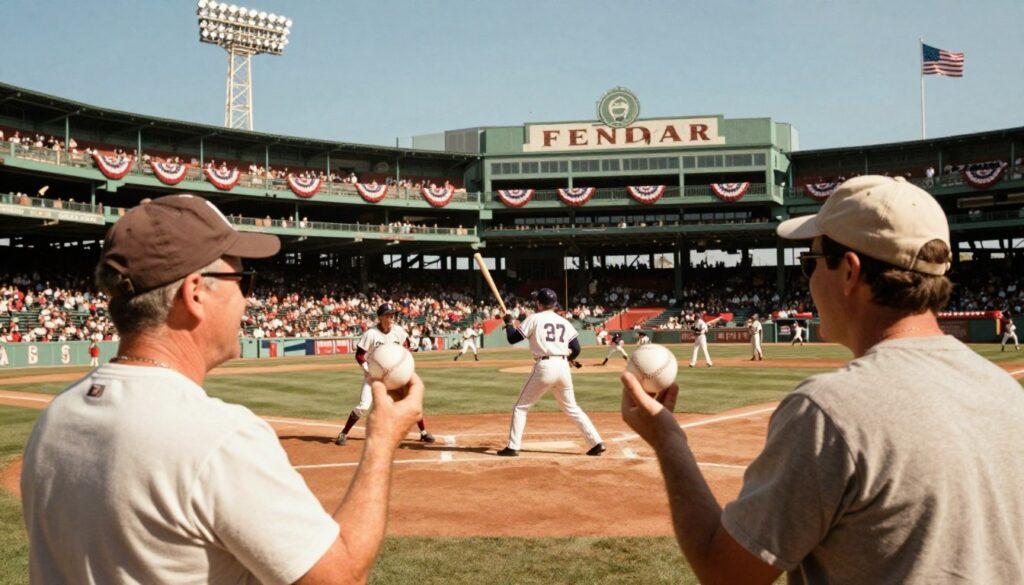
Wrigley Field also has its share of memorable events. Ernie Banks, known as “Mr. Cub,” brought joy with his 500 home runs. The legendary Kerry Wood struck out 20 batters in a single game in 1998, a record for pitchers.
The Cubs won the World Series in 2016, ending a 108-year drought. Game 7 of that series is a highlight in Wrigley Field’s history. Wrigley Field also hosted its first night game in 1988, changing baseball in Chicago.
Both Fenway Park and Wrigley Field are like living museums. The walls and grass hold memories of the past. The invisible murals created by legends make every visit special, making these ballparks more than just places to watch a game.
| Moment | Player | Year | Significance |
|---|---|---|---|
| Babe Ruth’s Sale | Babe Ruth | 1919 | Changed the course of baseball history |
| Ted Williams’ .406 Season | Ted Williams | 1941 | Last player to hit over .400 in a season |
| Carlton Fisk’s Home Run | Carlton Fisk | 1975 | Iconic moment in World Series history |
| Kerry Wood’s 20 Strikeouts | Kerry Wood | 1998 | Record-setting performance |
| Cubs’ 2016 World Series Win | Chicago Cubs | 2016 | Ended 108-year championship drought |
Future Prospects of These Iconic Ballparks
The future of Fenway Park and Wrigley Field looks bright. They face challenges but are adapting well. Fenway Park and Wrigley Field mix old charm with new comforts.
Fenway Park has added new seats and wider concourses. These changes show how to keep history alive for fans today. Wrigley Field’s 1060 Project has also improved the fan experience while keeping its unique feel.
Newer stadiums are taking cues from Fenway and Wrigley. They focus on urban design and unique layouts. Keeping these parks up requires effort from owners and cities.
Structural checks and making them easier to get around are key. Fenway and Wrigley are more than places to watch games. They are beloved parts of history.
These parks evolve, keeping their essence alive for fans. As sports change, Fenway and Wrigley will stay important. They ensure baseball’s spirit lives on for future fans.