
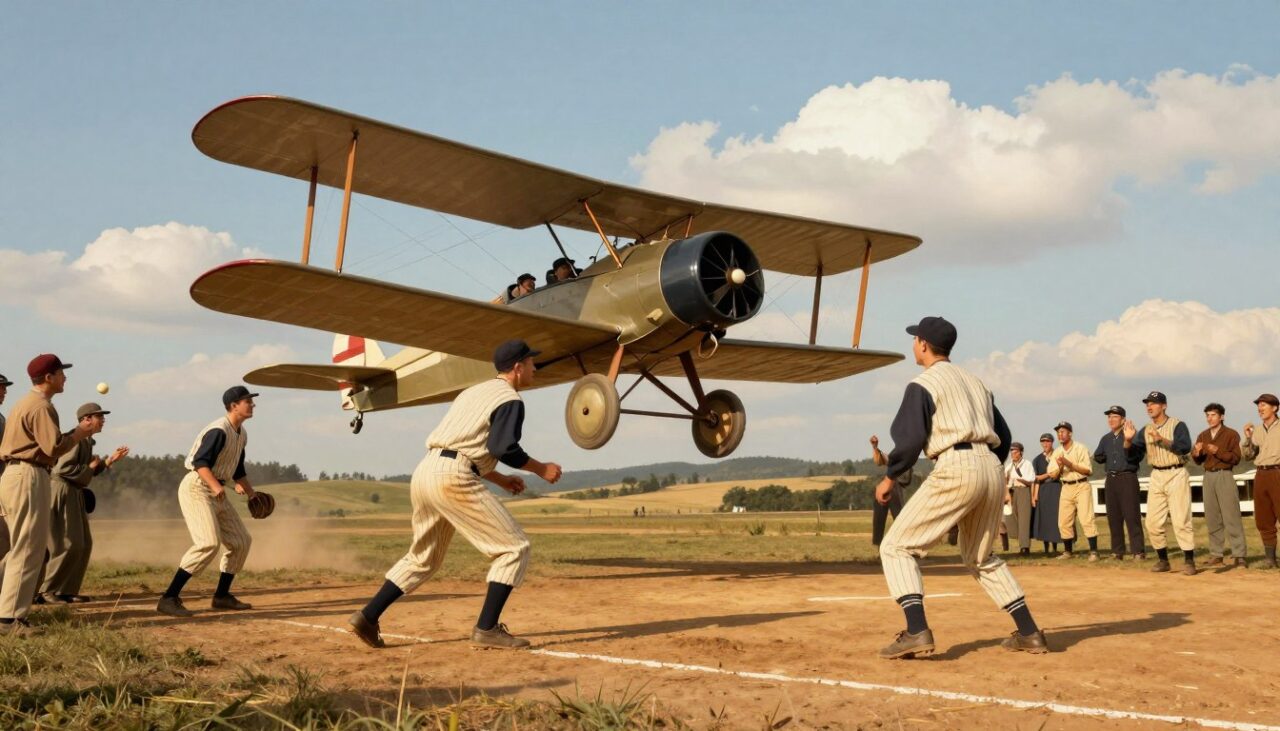
Barnstorming baseball started in the early 1900s. It brought big league players to small towns across America. They showed off their skills during the off-season. It was more than a game; it was an experience that drew in communities.
Picture this: baseball stars formed their own teams and went to rural areas. They played in makeshift fields. For fans, these events were as exciting as a circus or a concert. The barnstormers became local legends, leaving lasting memories.
This tradition helped players earn extra money and connect with fans up close. It turned simple games into cultural events. Today, barnstorming’s legacy lives on through historical tours that honor baseball’s rich history.
Key Players and Teams Involved
The world of barnstorming baseball was filled with legendary players and teams. Stars like Babe Ruth and Lou Gehrig captivated fans across the nation. Their talent drew massive crowds and left a lasting impact on the sport.
Stars from the Negro Leagues also made their mark. Players such as Satchel Paige and Josh Gibson showed off their skills. They played for integrated audiences, breaking racial barriers before the major leagues did.
Dizzy Dean was known for his colorful personality and pitching. He, along with Bob Feller, helped popularize the sport. These players formed ad-hoc teams with catchy names, traveling to compete in various games.
- Babe Ruth – Iconic slugger who drew crowds wherever he played.
- Lou Gehrig – Renowned for his hitting and sportsmanship.
- Satchel Paige – Legendary pitcher known for his remarkable skills.
- Josh Gibson – A powerful hitter and star of the Negro Leagues.
- Dizzy Dean – Charismatic pitcher who captivated audiences.
The historical tours these players undertook filled their pockets and created a shared baseball mythology. Fans from Kansas to California saw the skills they had only read about. For more insights, visit this detailed resource.
Impact on Baseball’s Popularity
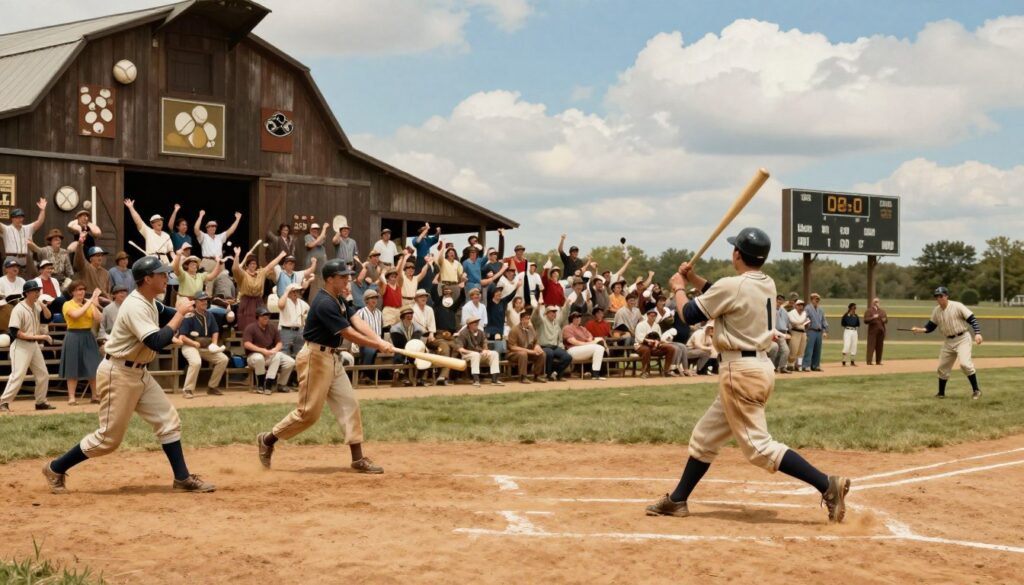
Barnstorming baseball changed how fans watched the game. It turned casual fans into true supporters. This grassroots effort was a big hit before TV and radio were common.
Star players visiting small towns made fans feel close to the game. Places that rarely saw big league talent got to see amazing games. This made many fans for life.
Barnstorming also helped baseball become more inclusive. Seeing white and black stars like Satchel Paige and Josh Gibson showed everyone’s talent. This helped change how players and fans thought about the game.
Key impacts of barnstorming on baseball’s popularity include:
- Increased Visibility: Players showed off their skills everywhere, reaching more people.
- Community Engagement: Fans in local areas felt a personal bond with the game and its stars.
- Integration Advocacy: White players started to push for African-American athletes in Major League Baseball.
The Cleveland Indians signing Larry Doby in 1947 and Satchel Paige later was a big step. It came from the respect and connections made during barnstorming. This mixing of fans and talent made baseball bigger and more diverse.
To learn more about baseball history in the U.S., check out this link.
Decline and Reasons
As America modernized, the allure of barnstorming baseball waned. The practice’s decline was due to several reasons. Major league teams expanding westward made traveling exhibitions less exciting. Teams like the Athletics moved to Kansas City in 1955, and the Dodgers and Giants went to California in 1958.
Technology was a major factor. Radio broadcasts and later TV allowed fans to watch games at home. This made barnstorming tours less necessary, as fans could see their favorite players on TV.
Major League Baseball (MLB) also put limits on barnstorming. Players needed approval to go on these tours. Owners wanted to control when and how players could earn extra money. They allowed barnstorming only until October 31, supposedly for safety but also to limit earnings.
With less time and demand, the financial appeal of barnstorming dwindled. These tours, once a highlight for fans, vanished. The end of barnstorming baseball shows how modernization changed how Americans enjoyed their favorite sport.
Nostalgia and Influence on Modern Tours
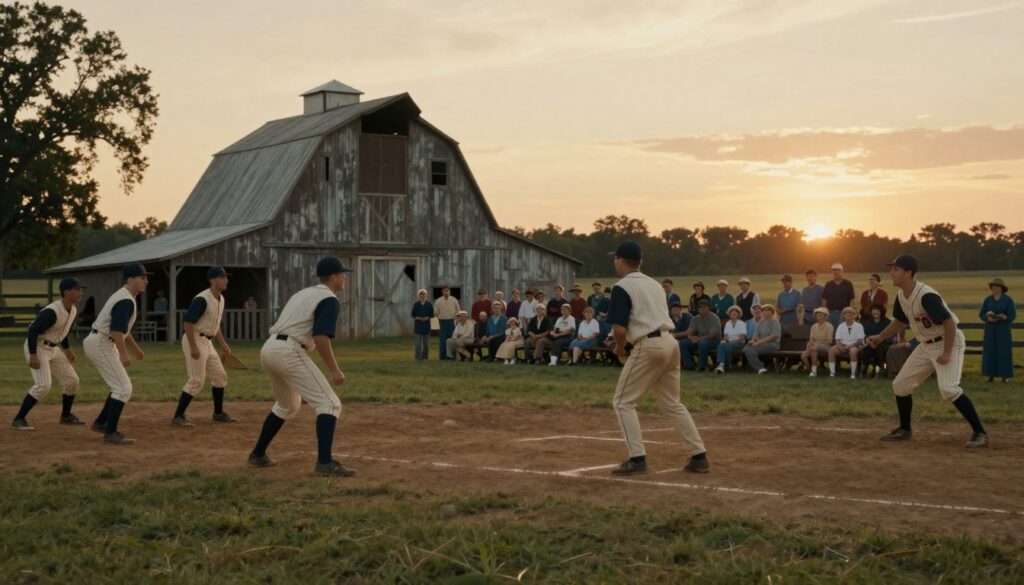
The spirit of barnstorming baseball is alive today, even if it’s not the same as before. Fans now seek the connection that barnstorming once gave. Teams like the Savannah Bananas bring this spirit back, mixing fun with the game.
Baseball can tap into this nostalgia. Hosting off-season games with star players in smaller places could bring back the excitement. These events could mix competition with stories, giving fans a special experience. Stories about baseball legends would make fans feel closer to the game.
Looking back at barnstorming’s impact shows its value for today’s baseball. MLB can make unforgettable experiences by focusing on players’ personalities. This approach keeps the game exciting during the off-season and honors baseball’s history.
Adding barnstorming elements to modern tours can spark new interest in baseball. The mix of entertainment and real fan connections could start a new chapter in baseball’s history.