
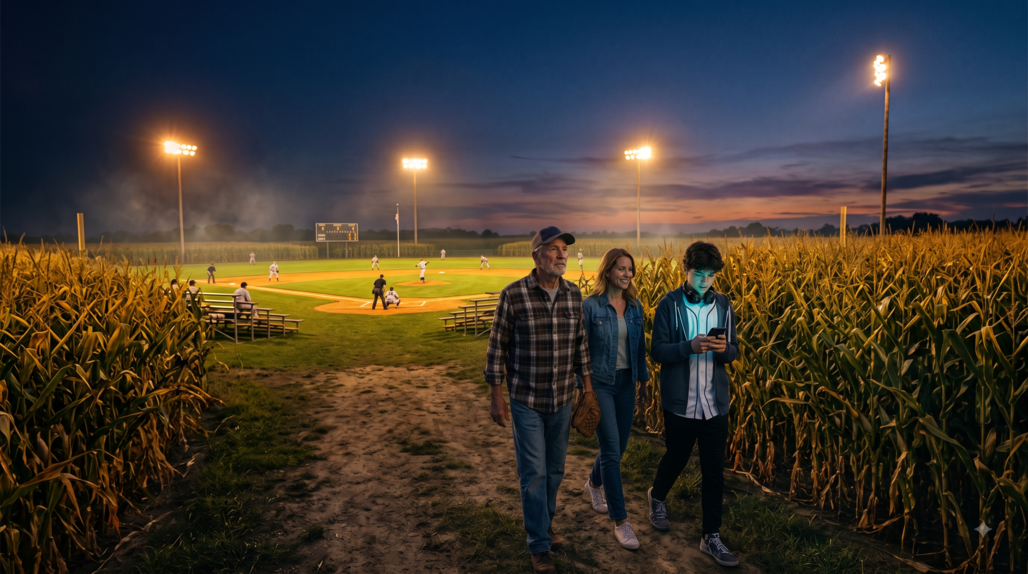
The 2026 MLB at Field of Dreams Game is not just another neutral-site regular-season experiment. It is a carefully built baseball memory machine, staged in Dyersville, Iowa, streamed by Netflix, dressed in retro Phillies and Twins uniforms, and surrounded by Hall of Famers who make the event feel like a live baseball bookshelf. On Thursday, Aug. 13, 2026, the Philadelphia Phillies and Minnesota Twins are scheduled to play at the refurbished Field of Dreams site, with first pitch set for 7:30 p.m. ET. The strange power of the game is that it uses one of baseball’s most sentimental settings to answer a very modern question: how does the sport sell nostalgia when the audience is no longer gathered around the same television screen?
Why Dyersville Still Carries Baseball’s Most Useful Dream
The Field of Dreams site works because it is not a normal ballpark. It is not famous for World Series history, a dynasty, a retired number, or a franchise’s long civic relationship with one city. It is famous because a 1989 film turned an Iowa cornfield into a symbol of baseball memory. That makes Dyersville different from Fenway Park, Wrigley Field, Yankee Stadium, Dodger Stadium, or any modern venue built around revenue design. The site is not valuable because of what happened there in the standings. It is valuable because of what fans have been taught to feel there.
That is why MLB returning to Dyersville in 2026 matters for booksonbaseball.com. The event sits at the intersection of baseball literature, film, history, fathers and sons, ghosts, uniforms, and modern media. The game is rooted in Field of Dreams, which came from W.P. Kinsella’s novel Shoeless Joe, a book that helped turn baseball into a language for memory, longing, and reconciliation. The movie made that emotional language visible to millions of viewers.
MLB’s official announcement described the 2026 game as the third edition of MLB at Field of Dreams and confirmed that the Twins and Phillies would meet at the refurbished site in Dyersville. It also placed the event in a longer sequence of non-traditional MLB games, including Fort Bragg in 2016, Omaha in 2019, Rickwood Field in 2024, and the Speedway Classic at Bristol Motor Speedway in 2025. That list matters because MLB has learned that place can function like a second scoreboard. A game can count in the standings and still be staged as a historical argument.
Dyersville gives baseball a rare advantage. It lets MLB sell memory without needing to invent a new myth. The myth is already there, waiting in the corn.
How Netflix Changes The Meaning Of The Nostalgia
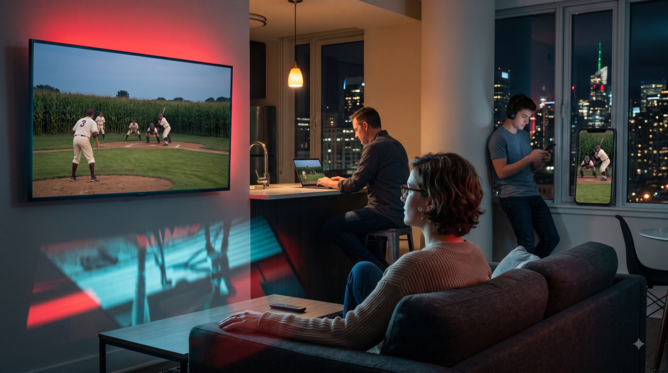
The most modern part of the 2026 Field of Dreams Game is not the staging. It is the distribution. Netflix carrying the game live turns baseball nostalgia into streaming content, which is a very different kind of cultural event than a national broadcast in an earlier era.
MLB’s Field of Dreams return announcement framed Netflix as part of the event’s reach, with the game available to fans around the globe from Dyersville. That is an important shift. The old Field of Dreams image is intimate: a small field, a family story, a local road, a game appearing out of corn. The new delivery system is global: a streaming platform placing that intimacy inside an international entertainment catalog.
That tension is exactly what makes the game interesting. Baseball nostalgia used to depend heavily on shared linear moments: a national broadcast, a radio call, a newspaper recap, a family watching at the same time. Streaming breaks that model. It can widen access, but it also changes the ritual. The 2026 game asks whether a platform built for on-demand habits can still carry the ceremonial feel of a live baseball night.
Netflix also changes the audience question. A traditional baseball broadcast mostly speaks to people already trained to watch baseball. A streaming event can reach casual viewers who may know Field of Dreams better than they know the Phillies’ bullpen or the Twins’ current roster. That is the commercial logic. The cultural risk is that baseball becomes a backdrop for its own nostalgia, with the game itself competing against the scenery, uniforms, celebrity feel, and pregame ceremony.
The challenge for MLB is to make the game feel like baseball first and content second. Dyersville can do that if the setting supports the competition rather than swallowing it.
Why Phillies-Twins Gives The Game A Useful Historical Shape
The Phillies and Twins are not random choices. They give the 2026 Field of Dreams Game two franchises with deep historical textures, regional identities, and visual throwback potential. Philadelphia brings one of the National League’s oldest baseball lineages, a fan base built around memory and grievance, and a current roster with nationally recognizable stars. Minnesota brings the Twins’ own layered history, from Washington Senators roots to Minnesota’s World Series chapters and Hall of Fame figures such as Rod Carew, Tony Oliva, Harmon Killebrew, Kirby Puckett, Joe Mauer, Bert Blyleven, Paul Molitor, and Jim Kaat.
MLB’s uniform reveal emphasized that both teams would wear special throwbacks for the game. The Phillies’ look drew from their 1939-41 uniforms, while the Twins’ uniforms leaned on their Minnesota and franchise heritage. The Field of Dreams uniforms matter because this event is built as much through visual memory as through baseball strategy.
Uniforms are not neutral in a game like this. They tell viewers what kind of memory MLB wants activated. A throwback uniform says the game is not only Phillies-Twins in 2026. It is also an invitation to think about deadball echoes, radio-era aesthetics, old baseball cards, sepia photographs, and the way teams borrow the past to make a regular-season game feel heavier.
That is why this topic fits the same booksonbaseball.com lane as the recent Luis Arraez batting-average debate. Arraez revived an old statistical argument inside a modern deadline trade. The Field of Dreams Game revives an old emotional argument inside a modern streaming product. Both stories show how baseball keeps using the past to explain the present.
The Phillies-Twins matchup gives MLB enough current competitive relevance to avoid pure museum baseball. The trick is keeping that balance.
How Hall Of Famers Turn A Game Into A Living Baseball Library
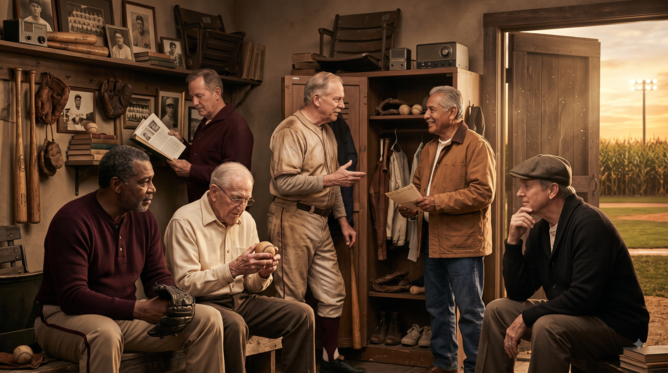
The 2026 event’s Hall of Fame presence gives the game its strongest bookshelf quality. MLB’s Aug. 12 preview reported that more than 25 Hall of Famers were scheduled to take part in the pregame ceremony, with names tied to both franchises and the broader history of the sport. For Phillies fans, Mike Schmidt, Steve Carlton, and Scott Rolen bring different eras of Philadelphia greatness into the same field. For Twins fans, Joe Mauer, Rod Carew, Bert Blyleven, Paul Molitor, Jim Thome, and Jim Kaat help turn the ceremony into a franchise-memory procession.
That kind of ceremony can feel excessive when done badly. At Dyersville, it makes sense. The whole site is built around the idea that baseball’s past can walk back into view. The Field of Dreams premise is not subtle: old players return, old wounds reopen, and the field becomes a place where memory becomes physical. A Hall of Fame ceremony at this location is not decoration. It is part of the grammar.
Still, the best version of the event should resist treating nostalgia as a soft-focus blur. Hall of Famers are not only names for applause. They are arguments about eras. Schmidt represents a kind of power and patience that still plays in modern hitting debates. Carlton represents the old ace mythology. Carew represents contact artistry. Mauer represents the catcher as hometown franchise figure. Blyleven represents durability, curveball craft, and the long Hall of Fame argument over how pitchers are evaluated.
That is what makes the event useful for baseball readers. A pregame line of legends is not just a ceremony. It is a chance to watch baseball history become organized by place. The cornfield creates the stage. The Hall of Famers provide the chapters.
Why Baseball Keeps Building Games Around Place
MLB’s recent non-traditional games reveal a clear strategy. The league has learned that venue can make a regular-season game feel less ordinary. Rickwood Field connected MLB to the Negro Leagues and Birmingham baseball memory. Bristol Motor Speedway turned baseball into a scale experiment. Fort Bragg connected the sport to military setting. Omaha linked MLB to the College World Series atmosphere. Dyersville connects the sport to literary and cinematic nostalgia.
The common idea is that baseball can use place to create meaning before first pitch. That is both smart and risky. Smart because baseball’s everyday schedule is long, repetitive, and sometimes hard to distinguish in the middle of August. Risky because too much event packaging can make the competition feel secondary.
The 2026 Field of Dreams game details show how much MLB is leaning into the full event frame: Dyersville, Netflix, Phillies-Twins, retro uniforms, Hall of Famers, and a national nostalgia setting. The goal is not only to play a game. The goal is to make a game feel like cultural programming.
Baseball is unusually suited to this because the sport is already place-heavy. Fans speak about ballparks the way readers speak about settings in novels. Fenway has a mood. Wrigley has a mood. Dodger Stadium has a mood. The Oakland Coliseum had a mood. Kauffman Stadium has a mood. Dyersville has a mood even though it is not a franchise home. That gives MLB a powerful storytelling tool.
The question is how often the tool can be used before it becomes routine. Field of Dreams works because it still feels scarce. If every month has a heritage spectacle, the spectacle loses weight. Baseball nostalgia needs silence around it. It needs space.
What The Streaming Era Does To Baseball Memory
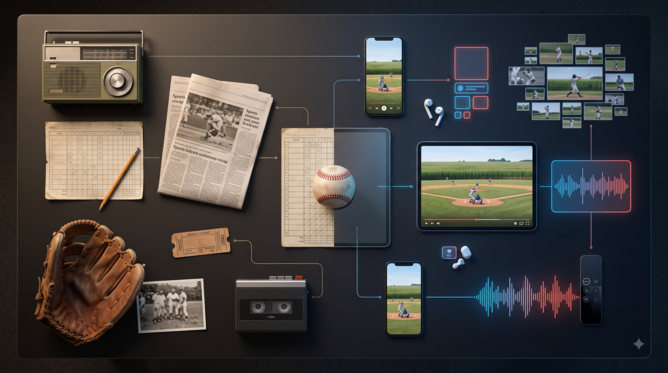
The old baseball memory system was local and slow. A fan heard a game on radio, read a box score the next morning, saved a scorecard, remembered a voice, and built a private archive. The modern memory system is faster and more fragmented. A great moment becomes a clip. A uniform becomes a social post. A Hall of Famer’s entrance becomes a shareable scene. A game on Netflix becomes part of a platform’s sports experiment.
The 2026 Field of Dreams Game sits directly inside that change. It asks whether baseball’s most sentimental imagery can survive the speed of streaming culture. The answer is probably yes, but only if the event preserves enough baseball specificity. Nostalgia without detail becomes generic. Baseball nostalgia works best when it names people, uniforms, ballparks, innings, dates, swings, pitches, and places.
That is why the Phillies and Twins matter. That is why Dyersville matters. That is why the Hall of Famers matter. That is why the uniforms matter. The game needs concrete baseball details to avoid becoming only a brand mood.
| Nostalgia Element | 2026 Modern Frame | Why It Matters |
|---|---|---|
| Dyersville, Iowa | Refurbished Field of Dreams site | Turns a movie setting into a live MLB venue |
| Phillies vs. Twins | Regular-season game on Aug. 13 | Gives the spectacle standings value |
| Retro uniforms | 1930s and franchise-history visual cues | Makes memory visible on the field |
| Hall of Famers | Pregame ceremony with more than 25 legends | Connects current players to baseball’s older chapters |
| Netflix stream | Global live distribution | Moves baseball nostalgia into modern media habits |
That table is the event in miniature. Each old element has a modern counterpart. The power of the game comes from the friction between the two.
Why This Game Belongs On Baseball’s Bookshelf
The 2026 Field of Dreams Game belongs on baseball’s bookshelf because it is about more than a night in Iowa. It is about how baseball curates memory in an era when attention is scattered, broadcasts are fragmented, and nostalgia has become one of the sport’s most valuable resources.
A normal Phillies-Twins game would be evaluated through pitching matchups, lineup decisions, playoff odds, bullpen usage, and late-summer form. This game carries those baseball questions, but it also carries a larger cultural frame. It asks what happens when an MLB regular-season game becomes a sequel to a novel, a film, a ballpark myth, a Hall of Fame gathering, a uniform project, and a streaming experiment.
That is why the Netflix piece is not a side note. It is central. The 1989 film imagined baseball as a bridge to the past. The 2026 game tests whether that bridge can be carried by one of the defining media platforms of the present. It is a cornfield game built for a streaming age.
The risk is obvious. Nostalgia can become packaging. It can flatten history into a warm glow. It can use Hall of Famers as scenery and throwback uniforms as merchandise. The opportunity is just as real. A well-staged game can remind viewers that baseball history is not trapped in books, museums, or old broadcasts. It can be activated for one night, with real players and real stakes, if the sport respects the details.
That is what makes Dyersville useful again in 2026. It lets baseball perform its own memory while still playing a game that counts. The Phillies and Twins will decide the score. Netflix will carry the stream. The Hall of Famers will carry the ghosts. The field will carry the argument that baseball’s past is not finished with the present.