
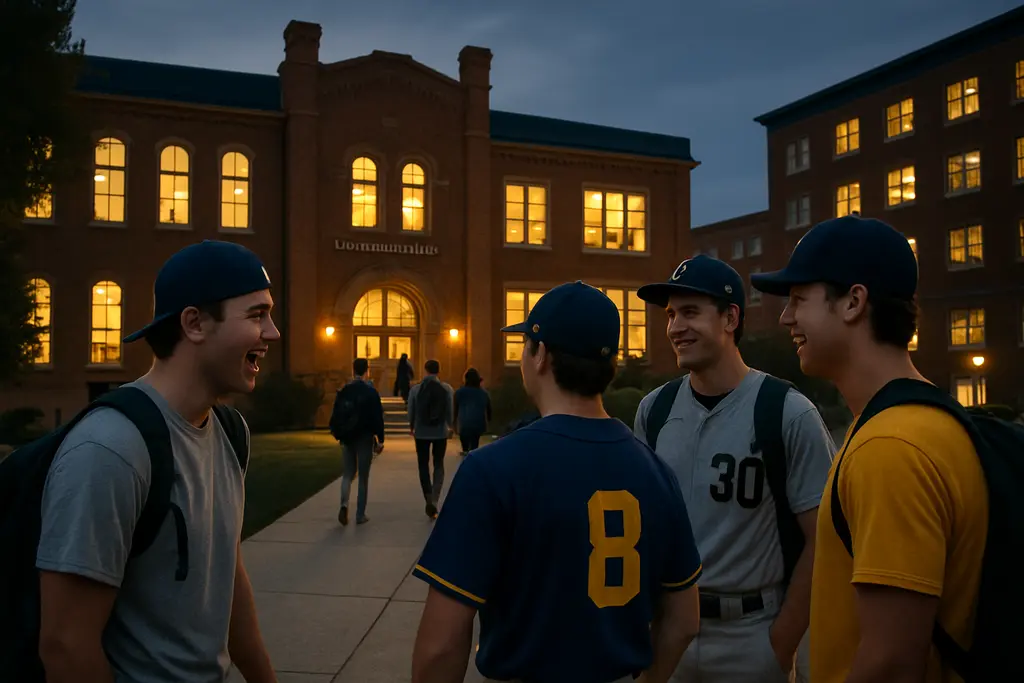
The WVU Biomechanics Lab has become one of the more instructive player-development stories in college baseball because its value is not limited to one roster, one coaching staff, or one set of professional visitors. Opened on March 24, 2025, the WVU Baseball Biomechanics and Performance Center gave West Virginia a permanent indoor setting for studying how pitchers throw, how hitters move, and how data can be translated into coaching language.
For a baseball biographer, the center is best read as part of a long arc in the sport: the movement from observation alone toward measured evidence. Coaches have always watched hands, hips, stride length, release point, and balance. What has changed in Morgantown is the ability to pair those observations with Trackman readings, force-plate data, motion-capture systems, high-speed cameras, and analysis tools inside an 8,200-square-foot facility, according to West Virginia University Athletics.
How The Center Was Built
WVU Biomechanics Lab Origins
The WVU Biomechanics Lab did not arrive as a loose collection of gadgets around a batting cage. The research notes describe a purpose-built baseball operation costing roughly US$4 million to US$5 million to build and outfit, with a lead donation from WVU alumnus Ken Kendrick. That funding matters in player development because biomechanics work requires more than a camera and a spreadsheet. It requires controlled space, repeatable testing, trained staff, and a feedback loop between the people collecting data and the coaches making decisions.
West Virginia also hired Courtney Semkewyc, PhD, in May 2025 as a full-time biomechanist and service assistant professor. Her position connected the lab’s daily operation with both baseball coaching and sport-science research. That staffing point is central. Many baseball programs can buy technology; fewer can assign someone to interpret it, maintain testing standards, and turn findings into usable instruction for athletes who still have to compete under pressure.
Tools Behind The Assessments
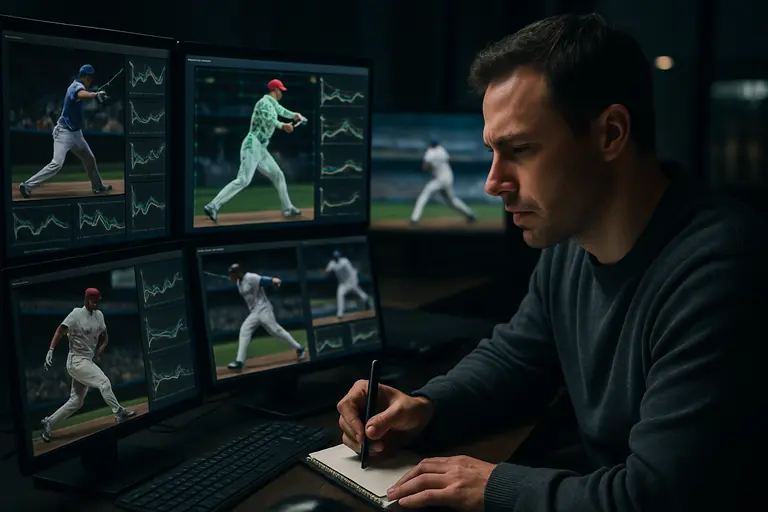
The lab’s listed equipment explains why it can serve pitchers and hitters without treating them as the same kind of athlete. Trackman can help measure ball flight and release traits. Force plates can show how a player uses the ground. Motion capture and high-speed cameras can record body positions and sequencing that are difficult to judge in real time. Data-analysis tools then place those measurements into a format coaches and players can revisit.
That does not mean every mechanical change is automatically correct. Baseball movements are individual, and performance depends on more than laboratory readings. The most credible use of the center is as an evidence source: it can identify what a player is doing, compare that pattern with a reference group, and give coaches a clearer basis for deciding whether a drill, strength plan, or delivery adjustment is justified.
Player Development From College To MLB
WVU Biomechanics Lab In Daily Work
The WVU Biomechanics Lab is especially relevant because it serves both West Virginia players and outside professional players. For WVU’s own roster, the facility has been tied to pitching evaluations, hitting assessments, recruiting support, and recurring check-ins. During fall 2025, the staff used motion-capture assessments every three weeks with pitchers and compared their mechanics to MLB averages through color-coded metrics. That kind of schedule suggests the lab was not being used as a one-time showcase but as part of a training calendar.
One cited example from the research notes is graduate student pitcher Reese Bassinger, who led West Virginia with 30 pitching appearances in spring 2026. His lab data helped inform training and mechanical adjustments. On the hitting side, sophomore Gavin Kelly posted a .418 batting average and a 1.179 OPS over 32 games and 134 at bats in the 2026 season, while the lab supported hitter work through exit velocity, launch angle, force-plate readings, and swing-path analysis. Those numbers should not be treated as proof that the lab caused the results. They do show how performance data and on-field production were being discussed within the same development system.
Why Big Leaguers Visited Morgantown
The professional connection gave the center a wider profile. Since opening, the facility hosted current MLB players including Paul Skenes, James Wood, and Trey Lipscomb for mechanical assessments and adjustments, as reported by The Washington Post. Their visits are significant for two reasons. First, major leaguers usually have access to advanced resources through their clubs, so a trip to Morgantown indicates the center offered a form of evaluation considered useful by elite players. Second, those visits exposed WVU students to professional-caliber movement profiles and feedback sessions.
The same report described the academic side as expanding by fall 2026, with about 10 students working in the lab per day and two graduate assistants involved. Student participants came from areas such as sport management, sport and performance psychology, and biology. That mix is not incidental. Modern player development is no longer only a coach and an athlete standing on a mound. It often includes biomechanics, strength training, motor learning, mental skills, and player communication. WVU’s model places students near that intersection while the baseball program benefits from extra hands and developing expertise.
What The Data Can And Cannot Prove
Pitching Risk Signals
Pitching analysis is the area where caution is most necessary. The research notes state that the center uses motion-capture and force-plate data to identify markers such as elevated elbow torque, shoulder stress, or less efficient ground-force usage. Those readings can guide mechanical changes intended to reduce stress. Still, no single lab session can guarantee injury prevention. UCL injuries and shoulder issues involve workload, strength, fatigue, prior history, mechanics, recovery, and chance.
The center’s strongest claim is not that it can remove risk. Its more defensible value is that it can show coaches and players patterns that may deserve attention before those patterns become entrenched. If a pitcher is creating unusually high stress during a delivery, the staff can test whether a change in stride, trunk timing, arm path, or lower-body force use produces a more efficient pattern. That is a coaching advantage, but it remains one piece of a larger health and performance plan.
Hitting And Recruiting Uses
For hitters, the lab’s value lies in matching swing intent with measurable movement. Exit velocity and launch angle are familiar terms, but force-plate and motion data can help explain why those batted-ball results appear. A player may create bat speed through efficient sequencing, or he may reach similar results with movement that is hard to repeat. Coaches can then decide whether to protect a player’s natural pattern or adjust it.
Recruiting is another practical use. WVU has a documented tradition of producing draft talent, with 112 players selected in the MLB Draft historically by 2025, including 44 since 2013. First-round selections included JJ Wetherholt in 2024, Alek Manoah in 2019, and Chris Enochs in 1997. The lab gives the program a concrete development asset to discuss with recruits, but its appeal depends on credibility. Players and families are more likely to trust a system when the staff can show how evaluation works, how often data is collected, and how results lead to training decisions.
- Pitchers: motion data, force use, release traits, stress indicators, and periodic mechanical tracking.
- Hitters: exit velocity, launch angle, ground-force patterns, swing path, and movement sequencing.
- Students: daily applied learning in sport science, baseball operations, and data communication.
- Professional visitors: mechanical assessments and feedback sessions during or after MLB competition periods.
WVU Biomechanics Lab
The WVU Biomechanics Lab now sits at the center of a larger Morgantown baseball story. West Virginia reached its first College World Series berth in 2026 and finished the 2025-26 season with a school-record 44 wins under coach Steve Sabins. The research notes say members of the program credited part of that competitive rise to the lab’s effect on preparation and performance. That attribution should be handled with care. A postseason run depends on talent, health, coaching, schedule, execution, and player response. A lab can help refine preparation, but it does not take an at-bat with the bases loaded or command a fastball on a cold night.
Its importance is better understood through structure. WVU linked Athletics, the School of Sport Sciences, and BioPrecision LLC, which was founded in February 2026 to broaden access to the lab’s tools and services across youth, college, and professional levels. That structure suggests the center was designed not only for one college season but for a wider baseball-development pipeline.
Readers interested in exploring related sports development stories can check out Dashers Hockey, which is a part of the same network, though the focus here is specifically on baseball advancements in Morgantown. The enduring question for West Virginia is not whether technology alone can produce major leaguers. It is whether the program can keep turning measurements into better coaching conversations, safer decisions, and clearer player plans. On the evidence available as of September 7, 2026, the center has already changed how WVU teaches baseball and how some professional players seek feedback between starts, series, and seasons.