
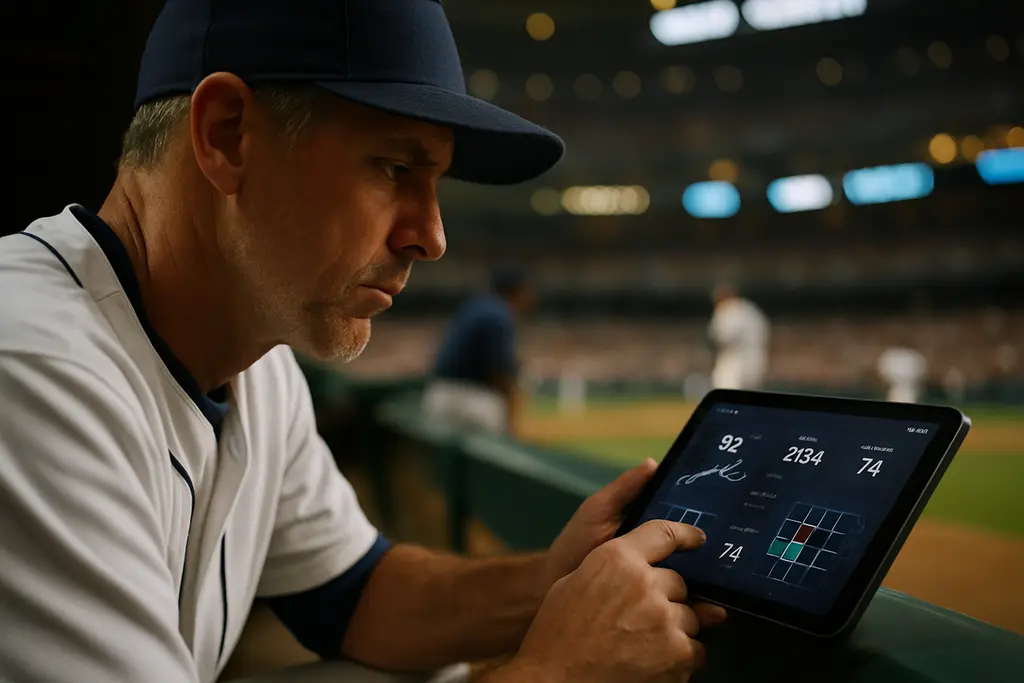
Angels pitching analytics became the central issue in Anaheim on August 11, 2026, when the club made a midseason staff change that was framed less as a routine firing and more as a statement about how pitchers should be taught. The move came with the Angels already buried in the standings, but its meaning reaches beyond one poor record. It exposed a long-running tension in modern baseball: experience still matters, but clubs increasingly expect coaches to convert data into usable plans for individual pitchers.
Angels Pitching Analytics And The August 11 Break
On August 11, 2026, interim general manager John Mozeliak fired pitching coach Mike Maddux, bullpen coach Dom Chiti, and assistant pitching coach Darryl Scott. The stated issue was not simply poor results. Mozeliak cited insufficient use of available technology and analytics, according to The Washington Post. That distinction matters because it places the decision in the same category as many modern baseball overhauls: not just who teaches, but how information moves from front office to field.
Why The Coaching Change Was Different
Maddux arrived in Anaheim with a long major league coaching record, so the change was not a simple rejection of experience. It was a rejection of a process the Angels no longer considered sufficient. When a club says technology and data are not being used well enough, it is pointing to the connection between reports, pitch design, sequencing plans, defensive positioning, catcher preparation, and between-start adjustments.
That does not mean every pitcher should be managed by spreadsheet output. The useful version of Angels pitching analytics is more practical than that. A pitcher needs to know which fastball shape works best at the top of the zone, which secondary pitch pairs with it, and when a hitter’s swing path creates a matchup advantage. The coach’s job is to simplify that material without stripping it of meaning.
What Angels Pitching Analytics Changed
The Angels named Tim Leveque, previously the pitching coach at Double-A Rocket City, as interim pitching coach. Michael Wuertz became interim bullpen coach. That combination suggested a bridge between player development and the major league staff. In modern organizations, that bridge can be decisive because pitchers often reach the majors with data-driven routines already in place. If the major league staff teaches a different language, the transition can slow.
Leveque’s early task was not to remake an entire staff in days. It was to make the information clearer. That is often the first measurable step in a pitching reset. Clubs can buy tracking systems, hire analysts, and produce detailed reports, but those tools only matter if pitchers understand which adjustments apply to their next outing.
Why The Rotation Response Deserves Caution
The early run prevention after the coaching change was striking. Under Leveque, Angels starters posted a 1.51 ERA across 65⅔ innings from August 11 through August 23, 2026, with seven quality starts in that span. Their road trip ERA during that stretch was 0.84 across 32 innings, according to MLB.com. Those numbers were real, but they also came in a short window.
The Sample Size Problem
Baseball history warns against treating two strong weeks as proof of a complete fix. A starting rotation can look different because of opponent quality, batted-ball fortune, defensive support, bullpen timing, weather, or simple command improvement. ERA is meaningful, but over a brief period it can hide whether the underlying process has changed.
The better question is whether pitchers repeated better plans. Did they reduce noncompetitive pitches? Did they attack the zone with offerings that fit their movement profiles? Did catcher targets and pitch selection appear more connected? Those are the signs that a club has changed its method rather than merely enjoyed a hot streak.
What Early Gains Can Still Tell Us
Caution does not make the early results irrelevant. A staff that posts that kind of short-term improvement after a clear teaching change gives analysts something to study. If the Angels simplified plans, that can show up in more first-pitch strikes, fewer waste pitches, and cleaner sequencing. If they changed pitch usage, it can show up in fewer predictable counts and better alignment between pitcher strengths and hitter weaknesses.
For Angels pitching analytics, the useful lesson is not that data automatically solved the rotation. It is that data may have become easier for pitchers to apply. The distinction is central. The best pitching departments do not flood players with information. They choose the information most likely to affect the next pitch.
How The Shift Fits A Broader Organizational Reset
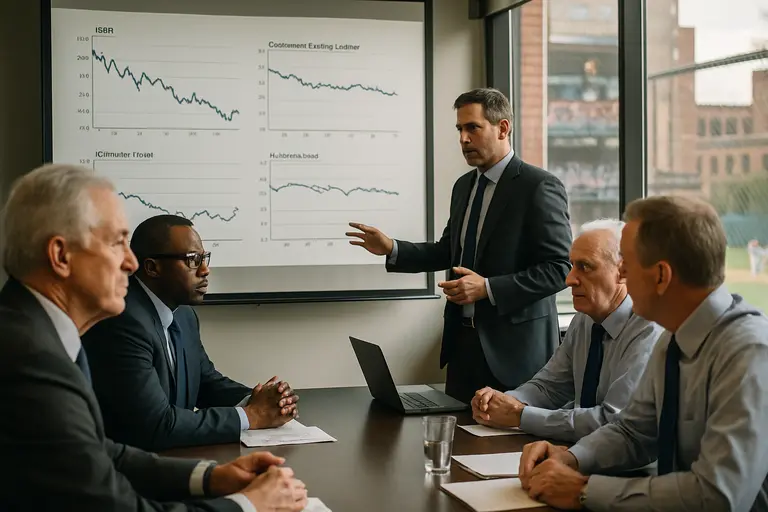
The Angels’ pitching change also fits a broader pattern in baseball operations. Teams that fall behind in player development often try to correct the problem at multiple levels: scouting, draft process, minor league instruction, major league coaching, and research and development. A major league pitching coach can affect usage and preparation, but the foundation usually begins earlier.
That is why Leveque’s background at Double-A Rocket City is notable. The move placed someone with recent player-development experience into the major league dugout. In a system trying to connect minor league instruction with major league execution, that background can matter. It does not guarantee results, but it suggests the Angels wanted a more consistent teaching chain.
Player Development As The Real Test
A short burst from the rotation can help morale, yet the longer test is whether young pitchers improve without losing what made them prospects. Development is not only about adding velocity or changing grips. It is also about building repeatable routines, understanding which misses are acceptable, and learning how to adjust when hitters stop chasing.
The Angels have had young arms in and around the rotation picture, including Reid Detmers, George Klassen, Ryan Johnson, and Walbert Ureña. Any data-centered plan for them would need to be individual. A four-seam pitcher with carry should not be taught the same plan as a sinker-slider arm. A pitcher with command concerns may need a narrower menu than a pitcher with multiple reliable shapes.
Baseball’s Wider Teaching Pattern
This kind of reset is not unique to Anaheim. Across the sport, organizations have tried to shorten the distance between analysts and uniformed staff. The same issue appears in farm-system reviews, including our analysis of the Nationals minor-league overhaul, where staffing, technology, and player development all had to be judged together rather than in isolation.
For readers who track sports culture across this publishing network, Copeland Hills Golf offers a complementary view, illustrating how sports venues can develop a distinct identity through enhancing player experiences, optimizing facility use, and fostering community connections.
What Angels Pitching Analytics Can Prove Next
The next phase is less dramatic than the firings, but more important. The Angels need to show that the new pitching process can survive scouting adjustments from opponents. Once hitters see new patterns, they respond. Once pitchers face stress innings, the plan is tested. A better system should hold up not by staying fixed, but by giving pitchers clear options when the first plan fails.
The organization also has to separate staff evaluation from short-term ERA. A stronger process should be visible in preparation, communication, minor league carryover, and pitcher-specific plans. If those pieces improve, the Angels can claim progress even before the standings fully reflect it. If the numbers cool and the teaching becomes scattered, the August change will look more like a temporary jolt than a durable correction.
Angels pitching analytics should be judged by repeatability. The early returns after August 11, 2026, were encouraging, but the historical record of baseball resets is clear: lasting gains come from alignment between front office ideas, coaching language, and player trust. Anaheim’s staff shake-up made the new direction public. The harder work is proving that pitchers can carry it from one start to the next.