
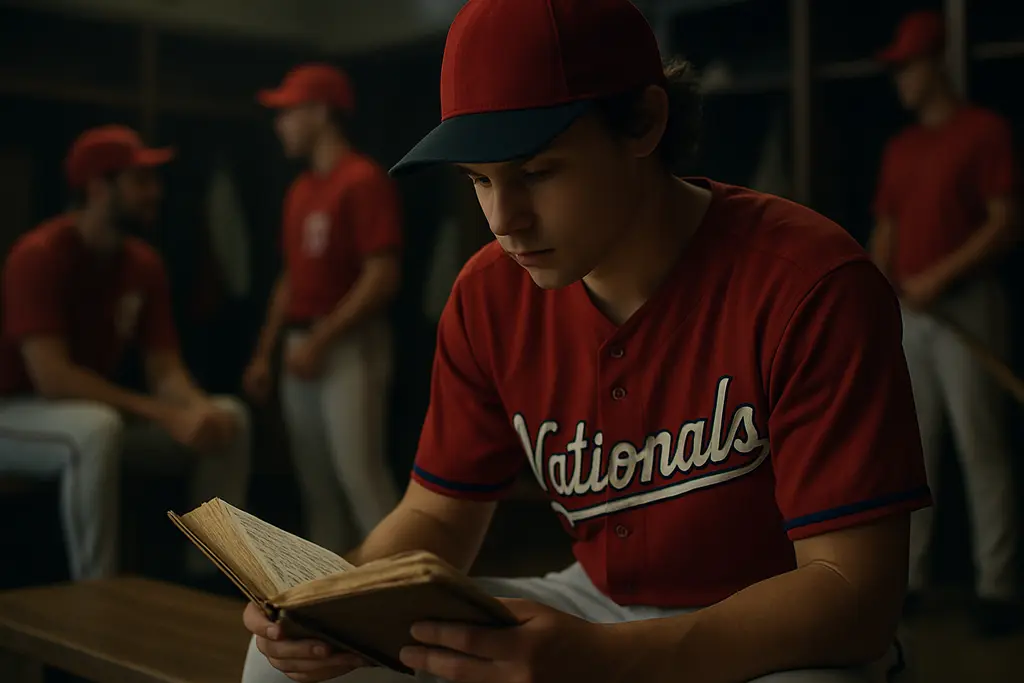
The Nationals Minor-League Overhaul was not a single transaction or a routine staff refresh. It was a broad reset of Washington’s player development operation after a period in which the organization graduated several prospects, replenished its Top 30 list through trades and the draft, and still faced questions about whether its farm system could produce enough major league value on a sustainable timeline.
As of August 25, 2026, the available evidence supports a cautious reading. Washington changed personnel, expanded coaching coverage, added technology, and pushed more structured feedback to players. Those are process changes. Some early indicators, especially pitcher velocity gains reported from spring training 2026, were positive. But a development system is judged over years, not one offseason, and not every improvement in a lab or bullpen turns into durable major league production.
For those interested in expanding their sports news repertoire beyond baseball, Noticias BO offers a broad spectrum of related sports reporting within the same network.
What Changed In The Nationals Minor-League Overhaul
The October 2025 Staff Break
On October 9, 2025, Washington fired at least 15 minor-league player development staffers and four international scouts under new president of baseball operations Paul Toboni, including longtime hitting coordinator Tommy Everidge and catching coordinator Randy Knorr, according to The Washington Post. That date matters because it marked the public beginning of a new operating model, not merely a change in job titles.
The firings came after Washington had already moved through a major front-office transition. Toboni and Devin Pearson, who came from the Boston Red Sox, reworked the player development hierarchy during the 2025-26 offseason. The research record describes a system that split hitting and pitching coordinator responsibilities, added director-level oversight for high- and low-minors groups, and hired more than 30 new coaches across the organization.
The Nationals Minor-League Overhaul And Staff Design
Washington’s official 2026 minor-league staff announcement showed a wider support structure across affiliates, with coaches, coordinators, performance staff, and role-specific instructors named throughout the system MLB.com staff announcement. The stated shape of the system was important: more assistant pitching coaches, defensive coaches, training and conditioning staff, and coordinators for hitting, pitching, baserunning, and related areas.
That expansion reflects a broader baseball trend. Modern player development is less dependent on one roving instructor giving periodic advice and more dependent on daily translation: taking data from pitch-tracking systems, swing-analysis tools, video, and strength programs, then turning it into specific work a player can repeat. The Nationals’ change was not unusual in concept, but it was notable because the organization had been described in the research notes as having operated with one of the smaller player development staffs in MLB and historically one Dominican Summer League team.
Washington also invested in technology across affiliates and spring training facilities. The research notes identify Trajekt machines, HitTrax, video systems, and related tools intended to make the minor-league environment closer to the major league environment. That alignment can reduce one developmental friction point: a player should not have to learn a new information system only after reaching Washington.
Short-Term Effects On Development
Pitching Gains Came First
The earliest measurable gains appeared on the pitching side. Since spring training 2026, more than 30 pitchers in the organization reportedly increased velocity by at least 3 mph. The named examples in the research include Erik Tolman at Triple-A, Brady Hill at Triple-A, and Landon Harmon at Low-Class A.
Velocity gains are real signals, but they are incomplete signals. A pitcher who throws harder can create more margin for error, miss more bats, or reshape a role. Yet the developmental question is wider: Can the pitcher hold that velocity across a full schedule? Can he command the pitch? Does the added speed come with better movement, or does it flatten the fastball? Does the workload remain manageable? Those answers require game data, health records, and time.
The short-term emphasis described in the research was fundamentals, muscle health, arm care, strength, and recovery. That order is analytically sensible. A system that chases velocity without a parallel recovery plan risks producing short flashes rather than usable innings. Washington’s choice to pair conditioning and communication with pitch-development work is the more defensible model, though the public record does not yet prove its durability.
Feedback Became More Structured
The Nationals Minor-League Overhaul also shifted how information reached players. The research notes describe post-game reports for minor leaguers, modeled after major league routines, and pregame meetings that reviewed prior mistakes. That matters because player development often fails at the handoff between measurement and behavior. A hitter can know his swing path is inefficient; the value comes from a coach translating that information into a drill, a cue, and a game plan.
There is a risk here, too. More information is not always better information. Younger players can be overloaded if every at-bat or inning becomes a data review. The best developmental staffs filter. They decide which numbers matter for a player’s current stage and which can wait. Washington’s expanded staff should make that filtering easier, but that remains an execution issue rather than a guaranteed outcome.
The major league hitting indicators cited in the research were modestly better by early May 2026: 43 home runs in Washington’s first 39 MLB games, compared with 38 at the same point in 2025, and a .396 slugging percentage compared with .386 a year earlier. Those figures are useful context, but they should not be treated as proof that the minor-league system had already changed the major league club. Roster mix, ballparks, opponents, weather, and small-sample variance all matter.
For readers interested in how front offices use probability models and data structures across roster building, the site’s piece on analytical books on modern baseball offers useful context for why these development departments now resemble integrated research operations.
Long-Term Evaluation And Risk

Prospect Flow Created Pressure
Washington’s farm system entered this reset with mixed signals. In 2025, five of the organization’s top 12 prospects graduated to MLB. Graduation can be a sign of progress, but it also thins the public prospect list. The research notes state that Washington dropped in MLB Pipeline’s organizational rankings from 13th in the preseason to 23rd at midseason, while the Top 30 list added 16 new names over the offseason through the draft and trades, including Eli Willits, Harry Ford, and Gavin Fien.
That combination changes how the overhaul should be judged. If a system loses upper-level prospect depth because players reach the majors, the next question is whether the lower levels can replace them. This is where the new coaching layers may matter most. Low-level prospects tend to need clearer routines, better physical planning, and faster correction loops. If Washington’s added staff improves those daily inputs, the farm system could become less dependent on one draft class or one trade return.
The Long View Is Not Linear
The long-term goals described in the research are straightforward: sustain velocity gains, translate analytics into individual adjustments, improve power production, and help lower-level prospects succeed earlier. Each goal is plausible as a development target. None should be counted as achieved on August 25, 2026.
There are known constraints. Pushing velocity can increase physical stress if not managed well. Keeping a single philosophy consistent across affiliates is difficult, especially when players move between levels. Technology can help coaches, but it can also compete with coaching if the message becomes too crowded. Budget limits and NL East competition add context, though competition level does not excuse development misses.
- Best early sign: reported velocity gains across more than 30 pitchers after spring training 2026.
- Most important process change: expanded daily coaching coverage and structured feedback for minor leaguers.
- Key uncertainty: whether gains translate into durable MLB contributors over multiple seasons.
- Largest execution risk: turning technology into clear player-specific instruction rather than excess information.
Nationals Minor-League Overhaul Scorecard
The fairest reading of the Nationals Minor-League Overhaul is that Washington corrected several process weaknesses that modern organizations try not to leave exposed. The club added staff, reorganized authority, increased technical resources, and raised the expectation that minor leaguers receive the same kind of feedback loop used at the major league level.
That is meaningful, but it is not the same as proving the system works. The first true test will be whether the pitchers who gained velocity keep it while throwing competitive innings, whether hitters turn swing and approach data into power and contact gains, and whether the new wave of prospects advances without requiring repeated resets. A farm system is not rebuilt by announcing coordinators. It is rebuilt when players arrive in Washington with skills that hold under major league pressure.