
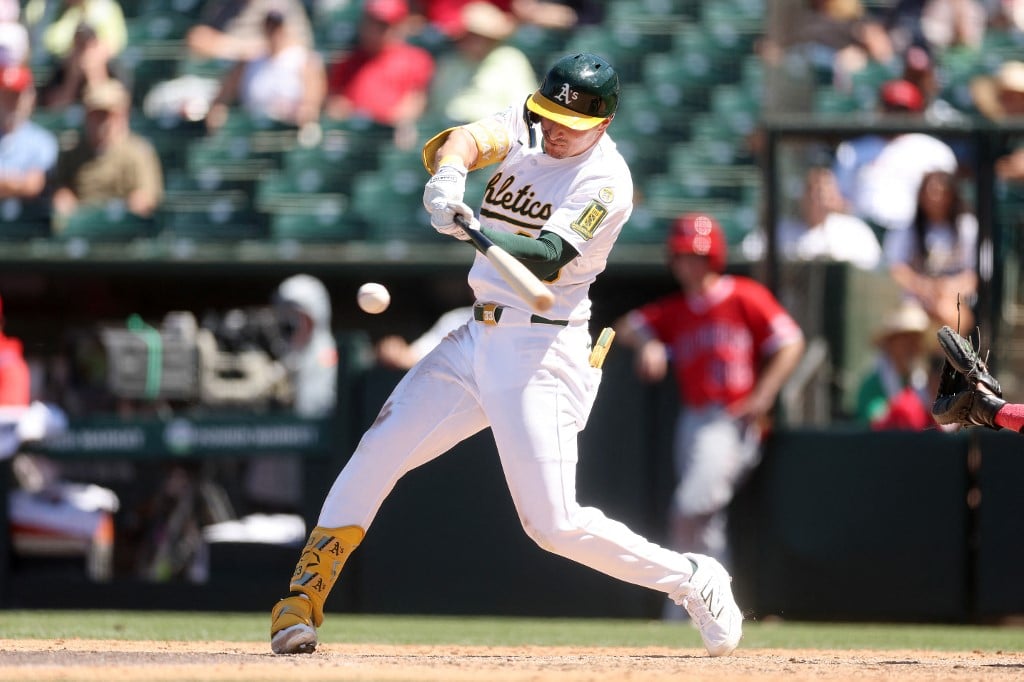
JJ Bleday turned an August night in Arizona into the kind of baseball line that can survive long after the standings around it are forgotten. On August 22, 2026, the Cincinnati Reds outfielder doubled in the first inning, tripled in the third, singled in the fifth and homered in the sixth against the Arizona Diamondbacks at Chase Field. Cincinnati won 11-5, and Bleday completed his first career cycle across his first four plate appearances.
The MLB report on Bleday’s cycle identified it as the fourth cycle in the majors during the 2026 season and Cincinnati’s first since Elly De La Cruz accomplished the feat on June 23, 2023. For a baseball-history reader, the attraction goes deeper than rarity. A cycle turns one game into a self-contained piece of baseball writing: four different kinds of hits, four entries in a scorebook and a permanent line connecting one player to more than a century of recorded games.
The Cycle Turns A Modern Game Into A Historical Entry
Modern baseball produces extraordinary individual performances every week, yet many are difficult to separate from the statistical environment around them. A four-hit night can disappear into a season total. A home run can become one of dozens. Advanced metrics can identify exceptional contact that never becomes an enduring cultural reference.
The cycle works differently. Its structure gives the performance a beginning, progression and ending that readers immediately recognize. Bleday opened his night with a double, reached third on his next hit, added the single and entered the sixth inning needing the home run. His 370-foot drive supplied the final piece.
That sequence makes the box score readable as a story rather than merely a statistical record.
Bleday joined Pete Crow-Armstrong, Bryce Harper and Tristan Peters as 2026 players to hit for the cycle. Four examples in one season do not make the feat routine. Each one becomes attached to a player, ballpark, opponent and date. Baseball’s long schedule creates thousands of individual games, yet the cycle automatically places a small number of them into a recognizable historical category.
That is one reason the event fits booksonbaseball.com better than a standard Reds-Diamondbacks recap. The score mattered on August 22. The sequence may matter much longer.
Cincinnati’s Cycle History Gives Bleday A Much Older Baseball Neighborhood
MLB described Bleday’s performance as the 12th cycle in Reds history. The franchise’s cycle record reaches far beyond the modern highlight era.
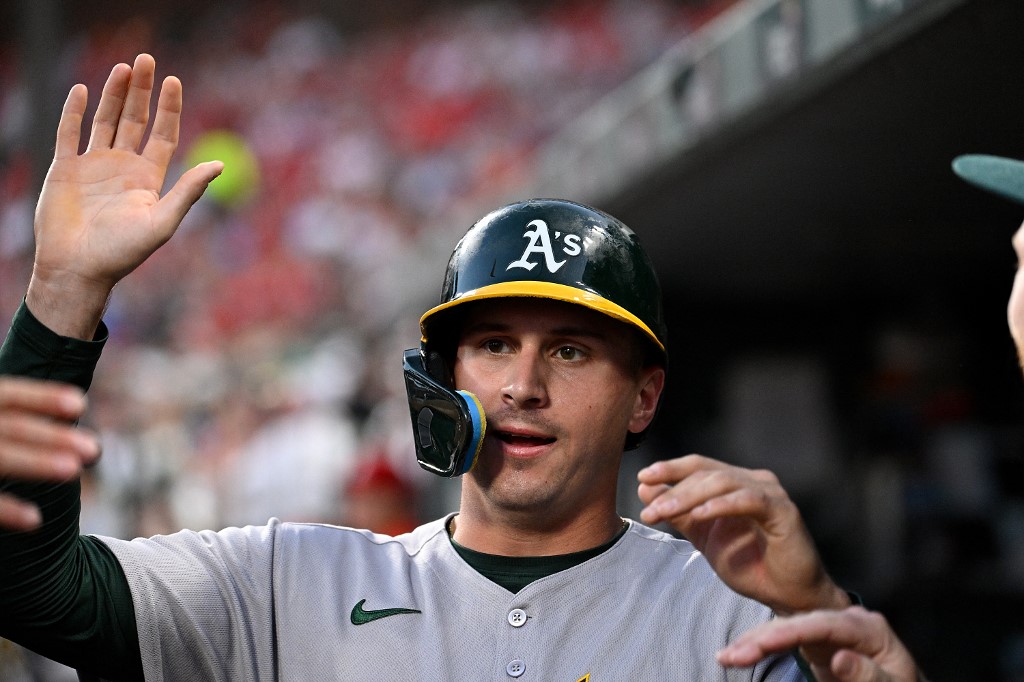
Names in MLB’s Reds cycle history stretch across radically different versions of professional baseball. John Reilly accomplished the feat in the nineteenth century. Heinie Groh did it in 1915. Harry Craft followed in 1940, Frank Robinson in 1959 and Eric Davis in 1989. De La Cruz brought the achievement into the Statcast generation in 2023.
Bleday now occupies the next entry.
The historical connection is especially striking since almost everything surrounding those performances changed. Ballparks changed. Gloves changed. Pitching staffs changed. Travel, training, equipment, television, player contracts and front-office evaluation changed. The basic vocabulary of the cycle survived.
That durability is part of baseball’s unusual relationship with its records. A reader cannot compare every statistical category from 1890 with one from 2026 without context, but a single, double, triple and home run remain instantly recognizable.
Books On Baseball recently explored a similar connection between memory and the current game through the 2026 Field of Dreams baseball story. Bleday’s cycle accomplishes something related without retro uniforms, cornfields or a deliberately nostalgic event. The history appears naturally through the game itself.
The Order Of Bleday’s Hits Made The Box Score Better
Cycles do not have to occur in any particular order. That freedom creates one of the event’s best storytelling features: the missing hit becomes increasingly obvious as the game progresses.
Bleday’s sequence was double, triple, single and home run. The difficult triple arrived early. By the end of his third plate appearance, he needed the hit most capable of creating a dramatic visual ending.
The sixth-inning home run provided it.
MLB’s Statcast data measured the drive at 102.8 mph off the bat with a 370-foot projected distance. Those numbers give a 2026 reader details that an earlier generation could never have recorded with the same precision. They describe the contact, yet the old-fashioned scoring language still tells the central story: HR.
That mix is one of the most appealing features of contemporary baseball history. Statcast can document how a historic event occurred without replacing the traditional categories that made the event historic.
A fan reading about Frank Robinson’s 1959 cycle cannot retrieve every modern tracking measurement from his swings. A fan studying Bleday can examine exit velocity, pitch type and launch angle. Both performances still fit on the same historical list.
Bleday’s Career Context Makes The Moment More Than A Curiosity
The strongest baseball stories rarely come from statistics alone. Player context changes how a line in the record book feels.
Bleday reached the majors with Miami in 2022, spent the next three seasons with the Athletics and joined Cincinnati in free agency on December 27, 2025. By August 20, 2026, he had appeared in his 100th game as a Red. His MLB player record shows a career that had already moved through several organizations before this particular night found him.
The timing gave the cycle another layer. Bleday entered the Arizona series after a difficult stretch at the plate and had recorded only two RBIs during August before the performance. One game did not erase the rest of his month, but it created a permanent counterpoint to it.
Baseball biographies are filled with those strange asymmetries. A player can struggle for weeks and produce one afternoon that remains searchable decades later. A season can be uneven and still contain a game worthy of a chapter heading.
That is why career storytelling needs something beyond cumulative totals. The totals describe how much a player produced. Individual games describe what it felt like to follow him.
A Cycle Still Reads Cleanly In Baseball’s Data-Heavy Era
Baseball now asks fans to process more information than any previous generation could have carried on a traditional scorecard. Exit velocity, barrel rate, expected statistics, pitch shape, defensive positioning and workload measurements can turn a single plate appearance into a dense analytical object.
Sports audiences encounter similar specialization far beyond baseball. Someone moving between statistical tools and different sports can go from a Statcast page to fantasy projections or a market-comparison resource discussing reduced juice NFL odds from BetAnything. Those systems serve very different purposes, but their growth illustrates how much numerical information surrounds modern sports consumption.
Bleday’s cycle offers a useful contrast.
No advanced model is required to explain why it belongs in the record book. A child keeping score for the first time can grasp the achievement. A historian studying nineteenth-century baseball can recognize the same four categories. Statcast adds texture, but the essential description remains wonderfully compact.
Single. Double. Triple. Home run.
That simplicity gives the cycle unusual staying power in an era that frequently measures athletic performance through increasingly narrow data points.
Baseball Books Need Games That Can Become Stories
A baseball history site cannot live entirely in the distant past. Current games are constantly producing the material that future histories will organize, compare and reinterpret.
Bleday’s cycle is a useful example. On August 22, it was breaking MLB news. A week later, it becomes part of Cincinnati’s season record. Years from now, it may appear in a Reds history, a player biography, a discussion of cycles or a book about unusual games from the 2020s.
The transition from news to history happens quickly in baseball.
Scorecards contribute to that process. So do newspaper accounts, official game logs, photographs, video archives and the increasingly detailed measurements collected from every pitch. None can predict which moments future readers will care about most. Certain achievements make a strong case immediately.
The cycle is one of them.
Why Bleday’s Cycle Will Remain Worth Reading
Cincinnati’s 11-5 victory at Chase Field will eventually become one of hundreds of final scores attached to the 2026 Reds season. Bleday’s four-hit sequence has a better chance of escaping that anonymity.
It carries the ingredients baseball history repeatedly rewards: rarity, a clear sequence, a recognizable statistical structure, an individual career story and a connection with players from distant eras.
Bleday did not need to break a career record or reach a round-number milestone. He simply collected every major type of hit before his fifth plate appearance arrived.
That was enough to put August 22, 2026, into a different category.
Baseball books have always depended on games that become more interesting once the final out has disappeared. Bleday’s cycle already looks like one of them.