
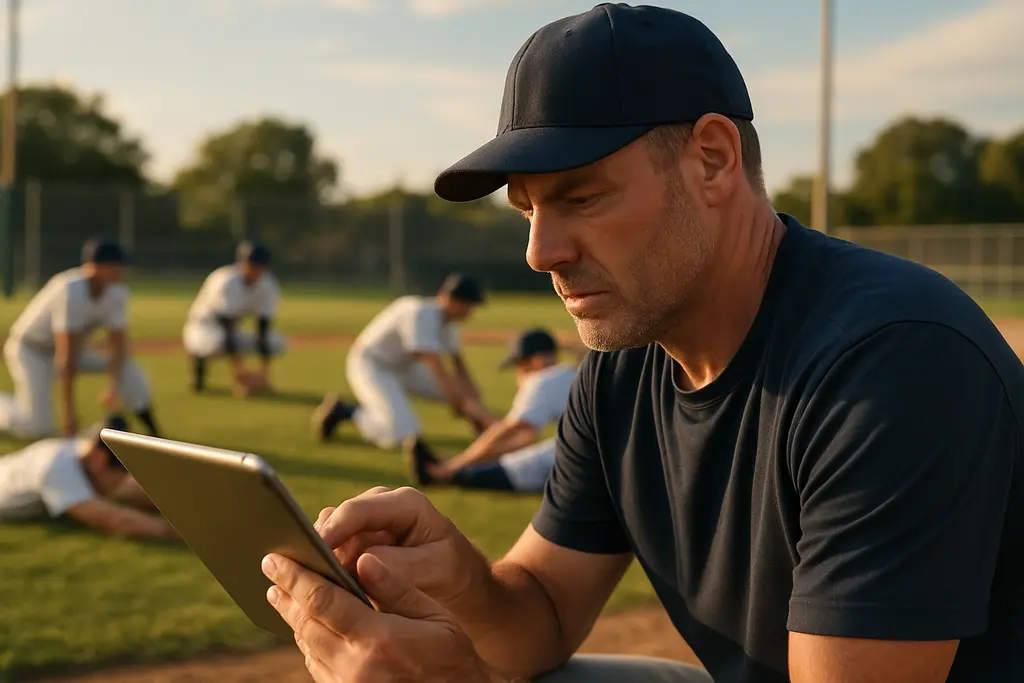
Baseball Biomechanics has moved from a niche sport-science tool into a practical part of player development, and West Virginia University offers a clear case study. The WVU Baseball Biomechanics and Performance Center opened on March 21, 2025, as an indoor, 8,200-square-foot facility built to measure pitching, hitting and movement patterns with technologies that include TrackMan, force plates and motion capture, according to WVU Athletics.
The biography here is not of one player, but of a development system. WVU’s investment shows how college programs have started to treat athlete evaluation as an integrated process: coaches still teach, players still compete, but movement data can make training conversations more specific. That does not make every datapoint decisive. It does mean that a pitcher’s delivery or a hitter’s force pattern can be reviewed with more evidence than a coach’s eye alone can provide.
Why Baseball Biomechanics Now Runs Through WVU
What WVU Built In Morgantown
The center’s reported construction cost was $4 million, funded by WVU alumnus Ken Kendrick. That detail matters because infrastructure often signals a program’s long-term priorities. An indoor facility with ball-tracking, force-measurement and motion-capture tools allows a staff to gather comparable information across sessions rather than relying only on outdoor practice conditions. WVU has described the site as a year-round training resource, including winter use when cold weather can limit field work.
For a northern college program, that indoor capacity has a baseball purpose beyond convenience. Repetition under controlled conditions can help staffs compare delivery changes, swing work and training responses over time. The facility profile lists technology tied to both mound work and hitting work, which suggests the center was designed as a full player-development space rather than a pitching-only lab.
Baseball Biomechanics In The Training Room
The practical value of measurement comes from translation. A force plate does not coach by itself. A motion-capture system does not decide whether a pitcher should change his delivery. The staff has to connect the data to a drill, a workload plan or a mechanical cue that the athlete can apply. That is where the value of Baseball Biomechanics depends on the quality of interpretation, not just the cost of the equipment.
This is also where caution belongs. A college facility can measure variables tied to movement efficiency, timing and force transfer, but public information does not prove that one facility caused a specific player’s statistical improvement. Player outcomes still reflect recruiting, coaching, health, strength training, competition level and individual adjustment. The stronger claim is narrower and more supportable: WVU created a setting where coaches and athletes can evaluate movement with higher-resolution feedback than traditional practice alone provides.
How The Data Changes Player Development
Pitching Signals Without A Diagnosis
Pitching development is the most obvious place to see the appeal of biomechanics. Modern pitchers are asked to throw hard, miss bats and maintain command across longer competitive calendars. Research has also made clear that performance traits and injury burden can overlap. A 2026 retrospective cohort study of 1,445 Major League Baseball pitchers from 2015 through 2025 found that higher fastball velocity, higher spin and higher strikeout rate were independently associated with greater cumulative shoulder and elbow injury burden; the study also reported associations involving pitch-to-pitch velocity changes and elbow burden, and shorter release extension and shoulder burden, in the MLB pitcher cohort study.
That finding should not be read as a simple instruction to throw slower or avoid spin. At the major-league level, velocity and swing-and-miss skills carry competitive value. The training challenge is to build performance while tracking stress indicators, delivery consistency and fatigue patterns as carefully as possible. For a college program, a facility like WVU’s can support that process by giving coaches information about how force is produced and transferred during a delivery.
The key analytical point is that biomechanics reframes the pitcher as a linked system. Ground contact, hip rotation, trunk timing, arm path and release all connect. If one part changes, another can compensate. That does not guarantee injury prevention, and public research does not allow that claim here. It does support a more measured statement: better movement data can help staffs ask sharper questions about how a pitcher creates velocity and whether his delivery is changing over time.
Hitting Work And Facility Design
Hitting development benefits from the same logic, though the public injury discussion often centers more on pitchers. Ball-tracking systems can show exit characteristics and pitch flight. Force-measurement tools can show how a hitter interacts with the ground. Motion capture can give the staff another way to study sequencing. The result is a training conversation that can connect a swing outcome to body movement and force production.
That connection matters for roster building. College staffs have limited practice time, scholarship constraints and a constant need to develop players who arrive with different skill profiles. A hitter with strong bat-to-ball ability may need a different physical plan than a hitter whose swing already produces power but has timing issues. Data does not replace scouting language; it can put numbers next to the scouting report.
Readers tracking broader sports coverage across the same network can also find related coverage at noticiasbo.com, where additional insights are offered on similar topics across various sports, but the WVU case is best understood through a baseball development lens: how a program turns measurement into training decisions without overstating what the numbers prove.
Roster Strategy Lessons From WVU’s Model
Development As A Recruiting And Retention Asset
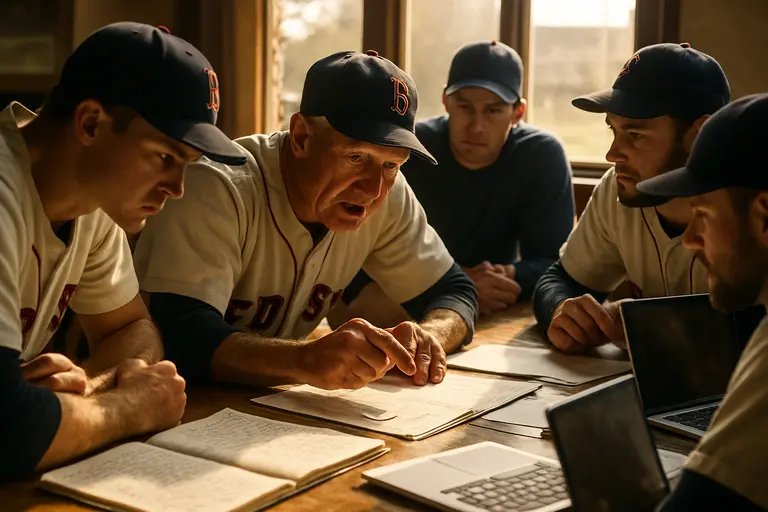
Roster strategy in college baseball has become more dependent on player development because teams cannot rely only on acquiring finished players. A facility with objective training feedback can support recruiting by showing prospects how the program evaluates movement and performance. It can support retention by giving current players a clearer path to improvement. Those are strategic advantages only if the information is used consistently and communicated well.
WVU’s center also connects to the broader trend of colleges building systems that resemble professional development environments. The presence of tracking and capture technology does not make a college program a major-league organization, but it narrows the gap in the type of information available to athletes. A related Books on Baseball analysis of the WVU biomechanics lab covers how the Morgantown facility fits into player development after its 2025 opening.
Limits Of The Evidence
The evidence should be kept in its proper lane. Publicly available information supports the facility’s size, opening date, funding, technology base and year-round purpose. It supports the broader medical and performance context that certain high-performance pitching traits are associated with greater shoulder and elbow injury burden in MLB pitchers. It does not support claims that WVU’s center prevents injuries, guarantees draft outcomes or creates one direct statistical result for any player.
That distinction is not a weakness in the analysis. It is how baseball operations departments increasingly have to think. Good organizations separate signal from noise. They use data to narrow uncertainty, not to erase it. A motion report can point toward a training adjustment; it cannot account for every variable in a player’s career. A facility can improve the quality of feedback; it cannot make development automatic.
West Virginia University Baseball Biomechanics
The West Virginia example shows why the topic belongs in any serious discussion of modern training. Baseball Biomechanics gives coaches a structured way to examine how athletes move, how they create force and how their mechanics hold up across repeated sessions. WVU’s center, opened on March 21, 2025, represents a program-level choice to place that information close to daily baseball work rather than outside it.
The best historical comparison is not to one earlier technology, but to the long shift from observation-only coaching toward evidence-aided development. Radar guns changed how velocity was discussed. Video changed how swings and deliveries were reviewed. Ball-tracking changed how pitch movement and contact quality were evaluated. Biomechanical tools extend that progression by measuring the athlete’s body during the act of playing.
For WVU, the question after September 10, 2026, is not whether the building exists or whether the technology is real; those facts are established. The more meaningful question is how consistently the program turns measurement into better training habits, clearer coaching language and more informed roster decisions. That is where the facility’s baseball value will continue to be judged: not by the presence of devices, but by the decisions those devices help improve.