
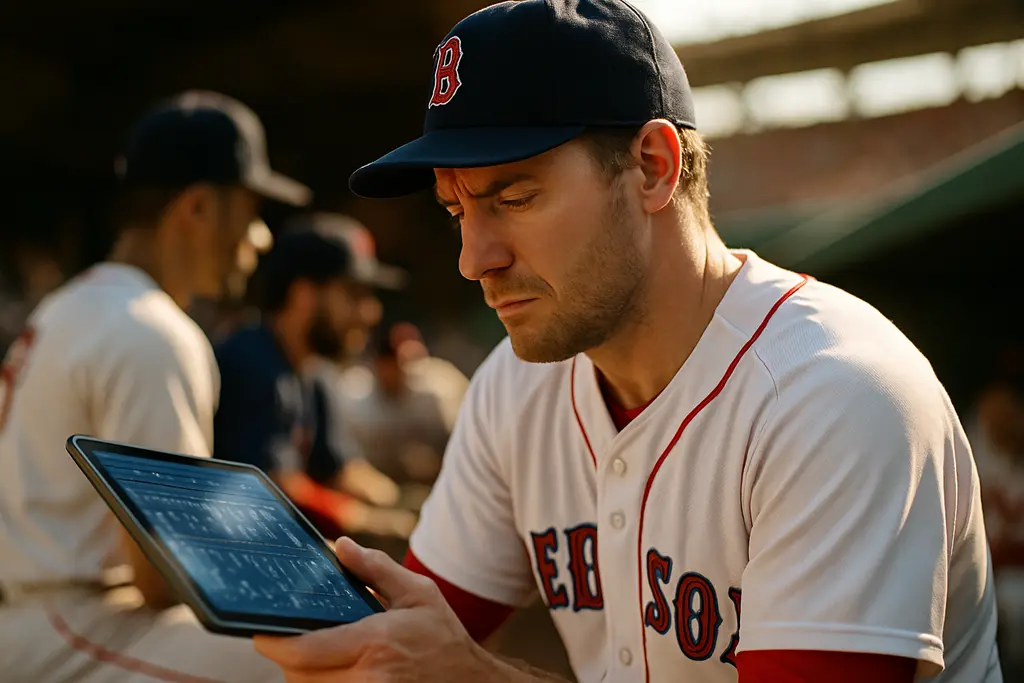
Andrew Fischer Cardinals is best treated as a fact-check, not as a direct case study of St. Louis’ emerging-talent strategy. Fischer was not drafted or developed by the Cardinals. He was selected by the Milwaukee Brewers with the 20th overall pick in the 2025 MLB Draft, a basic roster-history point that changes the entire analytical frame MLB.com reported. That does not make Fischer irrelevant to a Cardinals discussion. It makes him useful as a contrast point: a power-first college bat in Milwaukee’s system against a St. Louis organization that, based on the supplied research, has leaned into pitching development, broader draft depth, and a rebalanced prospect base after 2025.
Andrew Fischer Cardinals Case Needs Correction
The first analytical step is separating a player’s production from his organizational context. Fischer’s amateur résumé was strong enough to support a first-round profile. In 2025 at Tennessee, he hit .341/.497/.760 with 25 home runs in 65 games, and he ranked second in the SEC in both on-base percentage and slugging, according to the Brewers’ draft materials Milwaukee’s draft capsules. Those numbers point to impact power and on-base skill in a major conference. They do not point to a St. Louis development example.
Andrew Fischer Cardinals Fact Pattern
The phrase Andrew Fischer Cardinals risks blending two separate evaluation tracks. Fischer’s professional record belongs to Milwaukee’s player-development file. The Cardinals’ current model has to be judged through Cardinals-controlled players, Cardinals draft choices, and Cardinals roster decisions. As of September 15, 2026, the supplied research lists Fischer’s 2026 minor-league line across High-A and Double-A as a .273 batting average, 48 home runs, 114 RBIs, 9 stolen bases, and a 1.067 OPS in 439 at-bats. That is a loud offensive line, but it is not evidence of St. Louis’ process.
Why The Mislabel Matters
Misassigned case studies can distort how fans and analysts read front-office strategy. A successful player in another system may resemble a player a club would like to draft, but resemblance is not proof of intent, evaluation philosophy, or instruction quality. Fischer’s profile, as described in the research, is power-forward: a 60 power grade, 50 hit grade, 40 run, 45 field, and 55 arm. That tool mix suggests offensive carrying ability with less emphasis on speed and range. St. Louis’ emerging-talent signals, by contrast, have been framed around a wider system reset.
Why Fischer’s Bat Still Matters Analytically
Fischer still works as a useful comparison because his strengths are easy to measure. Power production travels well as a scouting discussion point: home runs, slugging percentage, and OPS give an immediate read on impact. His Tennessee slash line showed both damage and reach-base ability. His listed 2026 minor-league production, if read strictly from the supplied research, reinforced the power component at the professional level. The caution is that the bat-only or bat-first label can be incomplete without defensive home, swing-and-miss data, age-to-level context, and park effects. Those details were not fully supplied, so the stronger evidence remains his draft slot, college production, and listed pro output.
Power Profile Versus System Profile
A player like Fischer can be highly valuable without matching every organization’s current emphasis. The research describes him as a possible first base or third base fit, with range less prominent than his offensive tools. That is a different developmental question from building a broad pipeline of pitchers, athletes, and position players who can handle multiple roles. A power bat has to keep hitting enough to clear the defensive bar. A more balanced athlete has more fallback paths, but may not offer the same immediate offensive ceiling.
| Category | Fischer Profile | Cardinals Development Signal |
|---|---|---|
| Organization | Milwaukee Brewers | St. Louis Cardinals |
| Primary Evidence | College power and early pro production | Pitching starts, draft depth, prospect acquisitions |
| Tool Emphasis | Power-first corner profile | Arms, athletic traits, plate discipline, defensive projection |
| Use In Analysis | External comparison point | Actual organizational case study |
How St. Louis Built A Different Evidence Trail

The Cardinals’ internal evidence, as supplied, points to a reset after the 2025 season. Chaim Bloom took over baseball operations leadership after 2025, and Rob Cerfolio arrived from Cleveland to help lead a player-development and performance revamp. Those moves matter because development gains are rarely tied to one draft pick. They are more often seen through patterns: which players get opportunities, which player types are targeted, and whether the major-league club receives cost-controlled production.
Pitching Starts As A Development Marker
During the first half of the 2026 season, 81% of Cardinals rotation starts were made by pitchers who had not yet reached free agency, according to the supplied research. That is a meaningful proxy for homegrown or pre-free-agency reliance. The same research states that the rotation ERA ranked 13th in MLB at 4.09, compared with a 4.67 ERA from 2020-25 that ranked 20th. ERA is not a full pitching-development measure, but the direction is relevant: more internal starts with better run prevention than the prior multi-year baseline.
Draft Depth And Deadline Rebalancing
The 2026 draft also gave St. Louis a broader base. The supplied research states that eight early-round Cardinals picks landed among MLB Pipeline’s Top 250 prospects, with five among the Top 80. On August 3, 2026, the Cardinals also traded Dustin May, JoJo Romero, and Lars Nootbaar while adding several top prospects. That sequence fits a club rebalancing present major-league assets for future value. A related Books on Baseball review of the Cardinals draft class focuses on the same development bet from another angle.
The player names supplied in the research also show why Fischer is the wrong direct example. JJ Wetherholt was described as an electric young hitter who had done “nothing but hit,” while arms such as Liam Doyle and Tanner Franklin were identified as strong full-season performers. Those are the names that can test the Cardinals’ process. Fischer can test Milwaukee’s process, or serve as a benchmark for what a power-heavy college bat looks like after draft day.
- Use Fischer to compare power-bat risk and reward, not to grade St. Louis instruction.
- Use Wetherholt, Doyle, Franklin, and the 2026 draft class to assess Cardinals development.
- Separate acquisition strategy from player growth; both matter, but they answer different questions.
What Andrew Fischer Cardinals Misread Reveals
The useful lesson from Andrew Fischer Cardinals is about analytical discipline. A player’s statistical breakout can attract attention across fan bases, but organizational analysis has to start with control, acquisition path, and development environment. Fischer’s record supports discussion of a power bat who entered pro ball through Milwaukee. It does not support a claim that he reflects St. Louis’ emerging-talent strategy.
For the Cardinals, the supported case is different: a heavier reliance on pre-free-agency rotation arms in the first half of 2026, a leadership change after 2025, a development revamp involving Cerfolio, a deep 2026 draft class, and deadline moves that added prospect value. Those facts point toward a club trying to rebuild its talent base through both instruction and acquisition. Readers who track development models across sports can explore related insights at World Football Idol, but the baseball takeaway here is narrow and evidence-based. Fischer is a strong Brewers prospect case. The Cardinals’ strategy should be judged through Cardinals players.