

Youth baseball infrastructure has moved far beyond the sandlot image that still shapes much of the game’s memory. The renovated Ashburn Field in Philadelphia, opened with ceremony on July 10, 2026, shows both sides of the modern model: major institutional support for youth play and the regulatory burden that comes with building durable fields in public space.
As of September 15, 2026, the Ashburn Field case was not just a local dispute over artificial turf. It had become a useful case study in how baseball facilities are funded, approved, maintained, and contested. The five-acre complex in FDR Park was renovated by Major League Baseball and Phillies Charities, with a stated goal of serving about 8,000 participants through programs including Reviving Baseball in Inner Cities and the Youth Academy. Yet by August 24, 2026, Pennsylvania’s Department of Environmental Protection had confirmed that construction proceeded without the required stormwater discharge permit for work disturbing more than one acre, according to The Philadelphia Inquirer.
Why Youth Baseball Infrastructure Changed
From Open Lots To Fixed Diamonds
The long history of baseball facilities helps explain why the Ashburn Field controversy feels modern but not isolated. In the nineteenth century, baseball was often played on open fields, grass lots, and informal spaces. The research record identifies Elysian Fields in Hoboken, New Jersey, as a four-to-five-acre grass and open-lot space in use by 1846. That setting fits the early game: adaptable, lightly built, and dependent on available urban or semi-urban land.
By the early twentieth century, baseball was becoming more fixed in form. The period around 1905 to 1915 saw the rise of more permanent construction, including concrete-and-steel grandstands and increasingly defined field dimensions. A historical account of baseball’s rise as a national pastime describes this broader move toward structured parks and organized play in Play Ball! The Rise of Baseball as America’s Pastime. That shift mattered because it tied baseball to capital projects, property values, civic planning, and public expectations.
The same pattern appears in youth fields, though often at a smaller scale. Once diamonds became fixed assets rather than temporary playing spaces, communities had to maintain infields, drainage, dugouts, fences, lighting, and seating. The field became part of local infrastructure, not just a patch of open ground.
Youth Baseball Infrastructure In The Ashburn Case
The renovated Ashburn Field followed the modern logic of durable, high-use sports construction. Natural grass was replaced with what MLB described as a “high-performance synthetic turf system,” and drainage was upgraded. Those choices matched a common facility goal: reduce rain-related field loss and support a higher volume of play. With about 8,000 participants expected across youth programs, the project was built around access and scheduling reliability.
The controversy arose because modern field performance does not remove public oversight. The DEP issue centered on stormwater permitting under state law for projects disturbing more than one acre. The agency was reviewing compliance and awaiting further submissions by the August 24, 2026 reporting date. That fact does not settle every environmental question raised by opponents, but it does establish the central procedural problem: a major renovation in a public park advanced without final approval for a required permit.
Opposition to the project was also not new. In March 2024, residents had filed suit to stop work across FDR Park, including Ashburn Field, with objections tied to artificial turf, environmental impact, open-space loss, and permitting. The July 2026 ribbon-cutting therefore occurred after a longer period of public disagreement. For historians of the game, this is one of the sharp changes from the sandlot era: the youth diamond now sits inside debates over land use, environmental rules, and institutional responsibility.
Funding, Maintenance, And Public Trust
Partnerships Fill Gaps But Do Not End Oversight
Modern youth baseball projects often depend on mixed funding. Team foundations, local governments, labor groups, booster organizations, and parks departments all appear in recent examples. On April 2, 2026, the Pittsburgh Pirates and the Pennsylvania Laborers’ District Council pledged $600,000 to upgrade about 20 youth ballfields in Pittsburgh. The planned work included equipment, drainage improvements, infield grading, and new scoreboards.
In Marblehead, Massachusetts, town officials approved up to $20,000 from a revolving fund on May 15, 2026, toward an $83,410 renovation of Seaside Park baseball field. The work included poor-drainage correction, new sod, loam, infield mix, and rebuilt pitcher’s mound and batter’s areas. That smaller project shows the other end of the same pattern: even one local field can require significant spending when drainage and playing-surface problems are addressed rather than patched.
Seen against those examples, youth baseball infrastructure is not a single national program. It is a chain of local projects, each with its own funding sources, approval steps, and maintenance demands. Major League Baseball involvement can raise the visibility of a project, but it does not replace state environmental review or local trust-building.
For readers tracking how stadium and field investments connect to team strategy and civic planning, the site’s analysis of MLB infrastructure investment provides a related frame. The youth version of that story is smaller in scale, but the same questions recur: who pays, who benefits, who governs the land, and who is responsible when upkeep fails.
Maintenance Is A Continuing Cost
Field construction receives the ribbon-cutting. Maintenance determines whether the field remains useful. The November 2024 Minneapolis Parks and Recreation final report found that baseball remained among the most popular sports for youth and adult teams in that city, with more than 1,200 teams using diamond facilities. The report highlighted needs that will sound familiar to any parks director: drainage, grading, lighting, and dugouts.
The Bronx example from late August 2026 shows the opposite side of the ledger. A Little League field at Pelham Bay was found with used needles, graffiti, break-ins, and unsafe conditions. That case involved deferred maintenance and questions about responsibilities under field leases. It is a reminder that building or renovating a baseball field does not finish the public obligation. Without routine upkeep, security, and clear responsibility, facilities can decline quickly.
The lesson for youth baseball infrastructure is plain: capital spending and operating plans must be linked. Drainage improvements, turf systems, sod replacement, lighting, and dugout repairs have different life cycles. A project that solves one problem can create new obligations if maintenance funding is not identified from the start.
What The Ashburn Field Record Shows
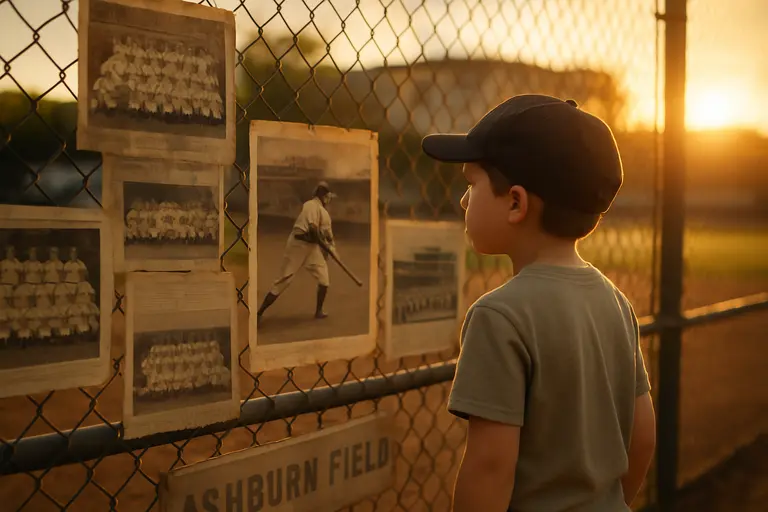
Artificial Turf Creates A Practical And Civic Trade-Off
The Ashburn Field renovation used synthetic turf to support more reliable use. That aim is understandable for a program serving thousands of young players. Baseball is especially vulnerable to field conditions because infields, mounds, batter’s boxes, and drainage patterns affect whether games and practices can happen safely. Rainouts are not only inconvenient; they reduce access for leagues with limited field time.
At the same time, artificial turf in a public park raises questions that natural grass does not raise in the same way. The research notes identify community concerns about environmental impact, open-space loss, surface runoff, and permitting. The DEP permit issue gave those concerns a concrete administrative focus. The field may have been intended to increase baseball access, but the process showed that access goals must be tested against environmental compliance.
This is where baseball’s literary memory can mislead us. The sandlot is often remembered as democratic space, available to anyone with a bat and ball. In practice, modern youth baseball requires engineered surfaces, drainage systems, fences, program schedules, and governance. That does not make the old memory false, but it does show how far the physical demands of organized youth play have changed.
Community Consent Is Part Of Facility Planning
The Ashburn dispute also demonstrates that public trust is not secured by a well-known team, a charitable partner, or a beloved baseball name. Richie Ashburn’s association with Philadelphia baseball gave the field cultural weight, but naming and ceremony could not answer permit questions or land-use objections.
Community input works best before construction choices harden. Once turf type, drainage design, and field footprint are set, public meetings often become arguments over decisions already made. The Ashburn case shows why parks departments, sports organizations, and donors need a record of engagement that is as clear as the construction budget.
Baseball readers often track box scores and player development, but fields are part of development too. A child’s repetitions, coaching access, and confidence depend on safe diamonds that are available often enough to matter. For broader civic reference context across community topics, Wikiapp offers a valuable connection within our network of baseball-focused analysis.
Ashburn Field And Youth Baseball Infrastructure
Ashburn Field should be read neither as a simple failure nor as a simple success. The renovation created a high-use youth baseball facility backed by Major League Baseball and Phillies Charities, with drainage upgrades and synthetic turf aimed at consistent play. It also proceeded into a state compliance review because required stormwater approval had not been finalized before construction.
That record offers a careful lesson for future projects. Youth baseball infrastructure now requires three forms of planning at once: baseball planning, environmental planning, and maintenance planning. The first asks how many players the field can serve. The second asks whether the project meets public rules for land and water. The third asks whether the facility will stay safe and playable after the opening ceremony.
The evolution from Elysian Fields to Ashburn Field is not just a story of better surfaces. It is a story of baseball becoming more embedded in civic systems. The sport still depends on the simple act of a young player stepping into a batter’s box. The conditions around that moment, however, now involve permits, budgets, drainage maps, public opposition, and long-term upkeep. That is the central lesson Ashburn Field leaves for the next generation of ballfield projects.