
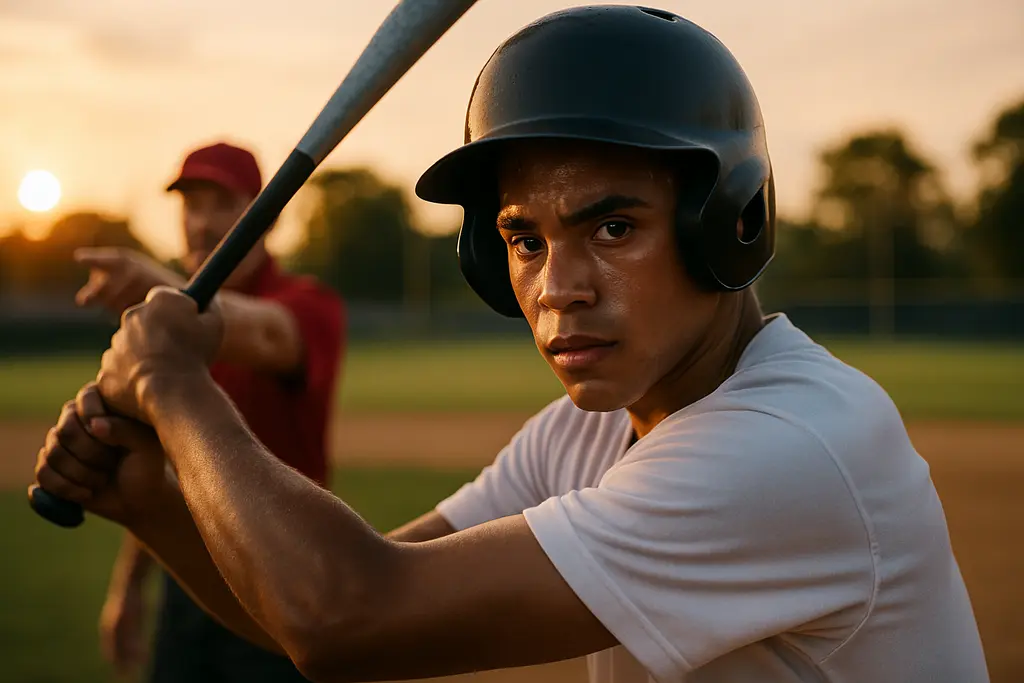
Guardians Player Development has become a practical roster-building advantage for Cleveland, not an abstract talking point. The clearest evidence came through recent draft picks who moved from amateur acquisition to major league relevance, led by Travis Bazzana’s April 28, 2026 debut and supported by a farm system that entered 2026 with notable top-end depth.
The case should be framed carefully. The available research supports a player-development story built on prospect volume, recent first-round conversion, and targeted roster fit. It does not prove that development alone drove every part of Cleveland’s recent success. Major league performance still depends on health, run prevention, roster timing, and veteran production. What the evidence does show is that Cleveland had multiple young players either in the majors or close enough to affect roster planning by 2026.
Guardians Player Development In Context
Measuring Guardians Player Development Without Overclaiming
For Cleveland, Guardians Player Development is best evaluated through conversion rates rather than reputation. The key question is whether draft picks and minor league prospects became usable major league options. By the first half of 2026, Cleveland had several examples: Bazzana at second base, Gavin Williams in the rotation, Parker Messick in the starting-pitching mix after a late-2025 promotion, and Chase DeLauter positioned as a power-oriented outfield option after enough availability in 2026 to show impact.
That pattern matters because small- and mid-market roster construction often depends on internal talent arriving before payroll pressure peaks. A player such as Bazzana, selected No. 1 overall in July 2024, carried a different development burden than a later pick. He had to justify a premium draft slot while reaching the majors quickly enough to affect the competitive window. Cleveland’s decision to move him into an everyday second-base role after his Triple-A promotion signaled that the organization viewed his skill set as major league-ready by April 2026.
Why The Farm Ranking Matters
Farm-system rankings are not standings, but they help measure how many future options a club has. Baseball America ranked Cleveland sixth among MLB farm systems in its 2026 preseason work, and the club was tied for the most Top 100 players with six prospects, according to Baseball America’s farm rankings. That placement fits the roster story: Cleveland was not relying on a single prospect to carry the next wave.
Depth changes front-office choices. If a club has several prospects near the majors, it can be more selective with free-agent spending, more patient with young hitters, and less exposed when one prospect’s development slows. Cleveland’s 2026 prospect group included Bazzana, DeLauter, Angel Genao, Ralphy Velazquez, Parker Messick, and Cooper Ingle in MLB Pipeline’s Top 100 as of January 24, 2026, based on the research provided. That gave the organization different positional and timeline options rather than one narrow path.
Draft Picks Reaching Cleveland
Bazzana’s Fast Track To Second Base
Bazzana is the central case study because his timeline was direct. Cleveland selected him first overall in the 2024 Draft, where he was identified in the research as the first Australian-born player and first second baseman taken No. 1 overall. He was promoted from Triple-A and made his MLB debut on April 28, 2026, slotting in as the No. 7 hitter and everyday second baseman, according to MLB.com’s Bazzana report. Before the call-up, he had a .245/.389/.424 line in 84 minor league games in 2025 with nine home runs and 39 RBIs.
The slash line is useful because it shows both production and developmental texture. The batting average alone was not the full story; the on-base percentage pointed to strike-zone value, while the slugging mark showed moderate impact. The research also noted a late-2025 surge at Triple-A, when Bazzana hit .290 over nine September games with four homers and a 1.163 OPS. That short sample should not be treated as a full-season proof point, but it does help explain why Cleveland could see his offensive direction improving before the major league move.
First-Round Spread Across Roles
The recent first-round group gave Cleveland more than one player type. Williams, the 23rd overall pick in 2021, was cited in the research as owning a 3.07 ERA and 133 ERA+ as a starter as of June 1, 2026, with a 7.9 percent walk-rate marker included in the same evaluation. DeLauter, taken 16th in 2022, represented a college-hitter track with power upside. Velazquez, a 2023 first-round pick from the prep ranks, represented a longer developmental path but had already produced in the minors.
| Player | Draft Context | Supported 2025-26 Development Note |
|---|---|---|
| Travis Bazzana | No. 1 overall, 2024 | MLB debut on April 28, 2026 after Triple-A work |
| Gavin Williams | 23rd overall, 2021 | 3.07 ERA and 133 ERA+ as of June 1, 2026 |
| Chase DeLauter | 16th overall, 2022 | Research cited 2026 power and availability |
| Ralphy Velazquez | First round, 2023 | 22 homers and 85 RBIs across High-A and Double-A in 2025 |
| Parker Messick | Pitching prospect | 2.72 ERA in seven MLB starts after late-2025 call-up |
That spread is the point. A development pipeline is stronger when it is not dependent on one demographic. Cleveland’s recent draft results, based on the supplied research, included college hitters, a prep hitter, and pitchers moving toward or into the major league roster. Guardians Player Development therefore looks less like a single-player breakthrough and more like a system producing varied roster answers.
Depth Signals And Roster Construction
Top-100 Volume As A Planning Tool
Prospect rankings do not guarantee major league value, but top-100 volume gives a front office optionality. Cleveland’s six listed Top 100 prospects as of January 24, 2026 covered different roles: Bazzana as an infielder, DeLauter as an outfielder, Genao as an infield prospect, Velazquez as a power bat, Messick as a left-handed pitcher, and Ingle as a catching option. The practical roster effect is coverage. If one area becomes thin, the organization has at least some internal candidates near enough to shape decisions.
Messick’s transition is especially relevant for rotation design. The research notes that he was called up near the end of 2025 and posted a 2.72 ERA with 38 strikeouts and six walks across 39 2/3 innings in seven MLB starts. That is a small major league sample, but the strikeout-to-walk detail is directly tied to pitcher evaluation. For a club trying to build rotation depth without depending only on external additions, even a seven-start introduction can alter how many innings must be sourced from outside the organization.
College And Prep Paths
Cleveland’s recent first-round selections also showed balance between college and prep talent. Bazzana and DeLauter fit the college-hitter lane, while Velazquez came from the high school side. Velazquez’s 2025 season was one of the clearer minor league signals in the research: he led Guardians minor leaguers with 22 homers and 85 RBIs while splitting time between High-A Lake County and Double-A Akron, hit .265 with an .839 OPS, and posted a .994 OPS after his August 10 promotion to Akron.
That matters analytically because development timelines differ. College hitters are often expected to move faster, while prep bats can require more plate appearances before reaching upper-level pitching. The Guardians’ ability to have both types represented in the upper-minors discussion by 2026 points to a broader scouting-and-development fit. It does not guarantee each player will become a regular, but it increases the number of plausible paths to future roster value.
For readers interested in comparing roster construction across different sports, basketball roster analysis offers insights within the same network, where player pipelines and role allocation are evaluated through different constraints. Baseball, however, emphasizes draft and development more heavily due to the significant role of minor league systems in shaping the roster.
Guardians Player Development And Draft Impact
Guardians Player Development should be viewed as a roster mechanism: draft, identify traits, move players through appropriate levels, and create major league choices before the payroll curve forces harder decisions. Bazzana’s debut gave Cleveland a recent No. 1 pick at a premium up-the-middle position. Williams gave the rotation a first-round arm already producing major league results in the research window. Messick offered left-handed starting depth. Velazquez, Genao, Ingle, and DeLauter gave the system multiple near-term or medium-term position-player options.
The evidence supports a cautious but clear conclusion: Cleveland’s recent success in building a young core was not just about having high picks. It was about turning different types of amateur talent into players close enough to influence the major league roster by 2026. Some outcomes remain unproven over full major league seasons, and the research does not provide complete WAR, standings, or payroll comparisons. Still, the documented promotions, rankings, and production markers show why Cleveland’s development pipeline became central to its roster strategy.