

MLB player development carried clear economic weight in 2026 because the cost of acquiring amateur talent, retaining controlled major leaguers, and replacing departed production all moved into sharper focus. During the July 2026 MLB Draft, teams paid a record $402.48 million in signing bonuses to 572 players, an average of about $703,600 per signing, according to Forbes draft spending data. That figure is not just a draft headline. It is a marker for how clubs treated amateur acquisition as long-horizon payroll planning.
The economics are not limited to bonus pools. The 2026 season sat next to labor proposals that could have changed free agency timing, contract length, and payroll limits. In that setting, the clubs that produced reliable homegrown players had a different cost structure from teams forced to purchase more value through trades and free agency. The safest read is not that development alone erased payroll gaps. The supported evidence points to a narrower claim: development gave clubs more ways to convert pre-free-agency years into major league value before market prices rose.
Why MLB player development Changed 2026 Spending
MLB player development as budget planning
Player development spending is often discussed as a baseball operations function, but the 2026 draft numbers show why ownership and finance departments had to treat it as capital allocation. High school players averaged $1,499,039 in bonuses in the 2026 draft, while collegians averaged $539,188. That gap reflected different risk profiles. A high school player usually required more time before reaching the majors, while a college player often entered pro ball with a shorter projected development path. The research supports the bonus difference; it does not prove that one path was superior for every club.
For front offices, the important economic question was not simply whether a prospect was talented. It was whether the club could turn a signing bonus, coaching investment, and minor league roster spot into major league production before the player became expensive. That is where MLB player development intersected with payroll efficiency. A productive pre-arbitration player did more than fill a lineup spot. He gave the club room to spend elsewhere, cover injuries, or hold back from a costly free-agent overcorrection.
Bonus records and risk concentration
The top of the 2026 draft showed how concentrated amateur spending could become. First overall pick Roch Cholowsky signed with the White Sox for $10.35 million, the highest draft signing bonus on record, as tracked by MLB draft bonus records. A bonus at that level does not guarantee future production. It does show the scale of money clubs were willing to commit before a player had appeared in a major league game.
That creates a useful comparison to free-agent spending. A free agent usually carries a more developed major league record, but the salary also reflects open-market competition. A draft pick carries uncertainty, yet the reward is several years of club control if the player reaches the majors and produces. The 2026 market therefore rewarded organizations that could improve the odds between signing day and major league arrival.
Roster Control And Payroll Efficiency
Homegrown value in recent postseason rosters
The research around the 2025 postseason rosters, which helped frame roster construction entering 2026, showed how homegrown players could shape team economics. Cleveland had 17 homegrown players produce 16.9 WAR, compared with 1.9 WAR from free agents. Detroit had 12 homegrown players account for 22.6 WAR, leading the postseason teams in WAR among draftees. Those figures do not make development a cure-all. They do show that clubs can build meaningful win value without relying only on external acquisition.
For a small- or mid-market club, that distinction matters. Between 1998 and 2025, top-five payroll teams averaged 89 wins per season, while bottom-five payroll teams averaged 74 wins per season. Payroll still mattered. The lesson from those figures is cautious but direct: development did not eliminate the payroll-performance relationship, but it could improve a club’s position inside that relationship. A lower-payroll team needed more internal wins to stay competitive with richer opponents.
Turnover as an economic loss
Departed production is another cost of poor retention or imperfect roster timing. The research notes that Boston lost 41.9 WAR in 2026 through departures by trade, free agency, non-tenders, waivers, or releases. That number should be read carefully because the listed departures came from several transaction categories, not one cause. Still, it helps explain why player development is more than prospect arrival. A club also has to decide when to extend, trade, replace, or accept a loss of production.
A strong development system can soften those losses if the next wave is ready. If not, the club may have to buy replacement value on the open market or accept a drop in performance. That is where analytical roster planning becomes central. Front offices are not just ranking prospects by talent. They are aligning estimated arrival dates with arbitration years, free-agent exits, option decisions, and payroll forecasts. For a broader view of roster economics from a related network, Scar Sports offers insight into how these dynamics play out across various teams.
Draft Bonuses As Development Capital
The 2026 class as a cost base
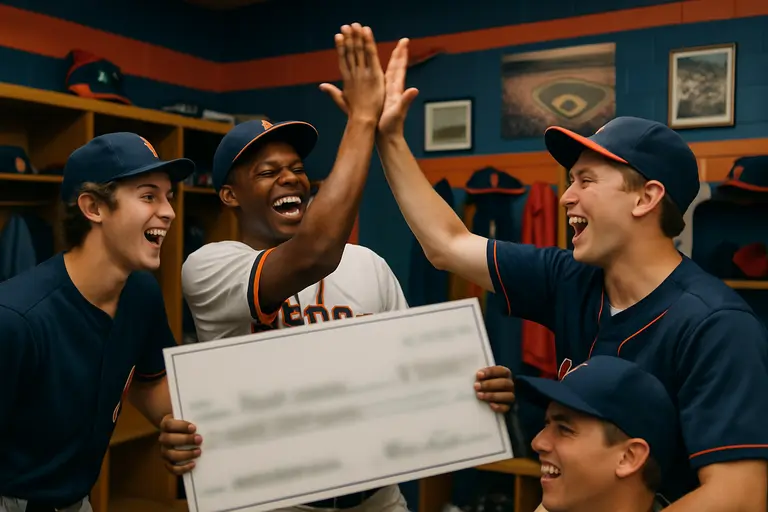
The record $402.48 million paid in the 2026 draft should be treated as a cost base that clubs hoped to convert into future major league surplus value. That conversion is uncertain. Some signees will stall in the minors. Some will reach the majors as role players. A smaller group will become everyday players, rotation starters, high-leverage relievers, or trade assets. The economic value of MLB player development comes from improving the hit rate and timing of those outcomes.
The Prospect Promotion Incentive, implemented in the 2022 CBA and active in January 2026, also gave teams a reason to consider faster promotion paths for eligible prospects who met performance milestones after quick major league promotion. The incentive did not mean every prospect should have been rushed. It did mean that development calendars had a draft-pick component in addition to the usual baseball evaluation. For more on how roster rules and labor proposals affected spending models, the site’s analysis of the MLB salary cap proposal offers useful context.
Why amateur spending cannot stand alone
Large bonuses can be misunderstood if they are separated from instruction, health, skill tracking, and roster opportunity. A $10 million-plus bonus for a first overall pick may dominate public attention, but the broader draft class creates the depth that feeds future roster choices. Clubs need enough useful outcomes from the middle and later parts of the draft to keep the system from depending only on premium selections.
This is where analytics changed the evaluation process without making it automatic. Teams could measure swing traits, pitch shapes, contact quality, and defensive profiles more precisely than prior eras. Yet the research provided here does not quantify the full return on those tools for 2026. The more defensible statement is that teams had stronger incentives to use data to reduce miss rates, because the financial stakes of amateur acquisition were visible in the draft spending totals.
What MLB player development Meant In 2026
A measured read on competitive balance
MLB player development mattered in 2026 because it linked three forces: rising amateur spending, controlled major league labor, and the continuing advantage held by high-payroll teams. The labor proposals dated June 25, 2026 included a possible reduction in service time to free agency from six years to five years for players aged 30 or older, with 354 rostered players projected to reach free agency one year earlier under that proposal. MLB’s initial 2026 proposal also included a salary cap and floor system beginning in 2027, with a proposed $171.2 million floor and $245.3 million cap based on Competitive Balance Tax payrolls.
Those proposals were not the 2026 operating system unless adopted, so they should not be treated as settled rules. They still mattered analytically because they showed how much pressure surrounded cost control and payroll distribution. If free agency arrived earlier for some players, the value of productive young players could rise. If caps, floors, or contract limits entered future bargaining, clubs with strong internal pipelines would have different choices from clubs dependent on outside spending.
The clearest economic takeaway
The best-supported takeaway is that development created optionality. A club that developed players well could fill roster spots cheaply, trade from depth, extend select players, or redirect payroll to needs that the farm system could not cover. A club that failed to develop enough contributors faced narrower choices and often higher replacement costs.
That does not mean a homegrown roster was automatically better than a high-payroll roster. The 1998-2025 win data still showed that payroll correlated with performance. But in the 2026 season context, successful MLB player development gave clubs a practical way to compete against that tendency. It turned draft bonuses and minor league instruction into possible major league value, while reducing the need to chase every solution at market price.