
On June 9, 2026, former Houston Astros and San Francisco Giants manager Dusty Baker released his 416-page autobiography, Crossroads: A Memoir in Baseball and Life. Co-authored by veteran sports writer Steve Kettmann, the text arrives on the shelves of a sports industry that looks entirely different from the one Baker entered as an eighteen-year-old draft pick in 1968. The release provides readers with an unfiltered look at a man who secured a World Series ring as a player in 1981 and again as a manager in 2022. Baker logged decades across the most volatile eras of the sport, maintaining a steady hand and a calm demeanor that resonated through every clubhouse he led. His career is a roadmap of American sports over the past half-century.
The current 2026 baseball season operates as a highly sanitized, probability-driven exercise. Front offices script pitching changes hours before the national anthem plays, relying on supercomputers to evaluate player worth and simulate game outcomes. Modern managers function largely as middle management, tasked with executing the probabilistic models developed by data scientists situated in luxury suites. The human element of leadership is quickly fading from the modern dugout. Reading Crossroads pulls the audience back into an era driven by interpersonal relationships, clubhouse chemistry, and pure instinct. Baker represents an archetype that the modern sport actively attempts to program out of existence, replacing grizzled veterans with fresh graduates carrying advanced degrees in mathematics.
The Spreadsheet Proxy Versus The Clubhouse Leader

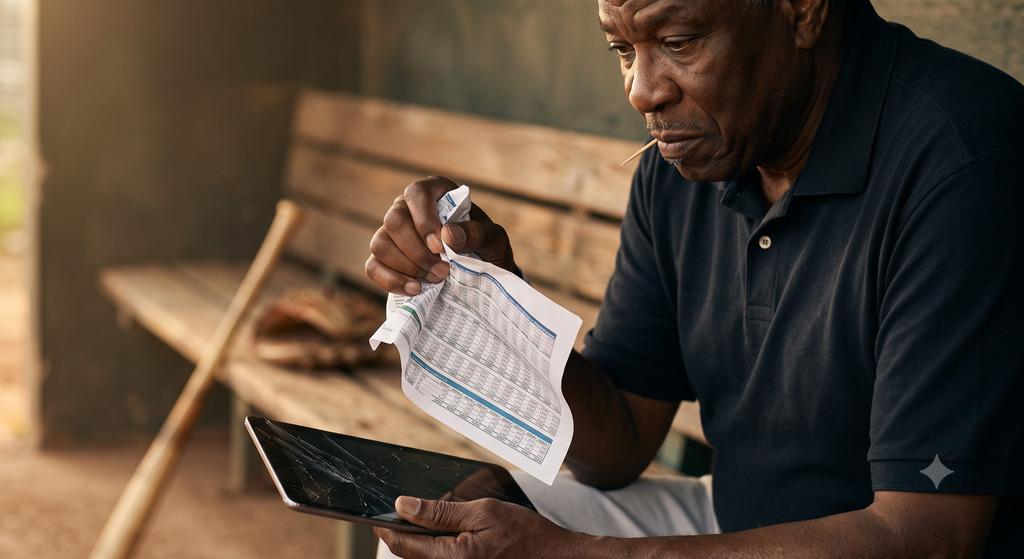
The modern dugout is heavily populated by tablet-wielding coaches who transmit real-time exit velocities and spin rates to the active roster. A manager in the 2026 season rarely makes a unilateral decision based on a sudden feeling or the visual fatigue of a starting pitcher. Every scenario is pre-calculated by algorithmic simulations run overnight. The modern evaluation of a successful skipper centers entirely on their strict adherence to organizational data.
Baker operated outside these strict parameters during his long tenure in the dugout. He believed in reading the room, assessing the mental state of his athletes, and allowing players to fail or succeed on their own merits in high-leverage situations. He recognized that a clubhouse is filled with twenty-six distinct personalities, egos, and insecurities. Managing those humans required empathy and direct communication, elements that cannot be quantified in a spreadsheet. This philosophical divide forms the core tension when reviewing his career through a modern lens. The biographies of baseball legends routinely highlight this stark contrast between old-school leadership and contemporary mathematical optimization.
The shift in managerial responsibilities drastically altered the job description over the last ten years. Franchises prefer to hire young, analytically fluent candidates with little to no major league playing experience. The goal is to eliminate friction between the research department and the dugout. Baker was a baseball lifer who commanded immediate respect from his peers. He accumulated enough Major League Baseball managerial statistics to rank eighth all-time in career wins, achieving that feat by trusting his eyes rather than a printed cheat sheet. He engaged with his players as individuals, a method that seems foreign in the current hyper-optimized landscape.
| Managerial Trait | The Baker Approach | The 2026 Standard |
|---|---|---|
| Approach to Lineups | Based on player comfort, daily rhythm, and matchups | Dictated entirely by projected OPS and algorithmic output |
| Pitching Changes | Visual fatigue, body language, and gut instinct | Pre-determined pitch counts and times-through-the-order penalties |
| Player Evaluation | Clubhouse chemistry, character, and mental toughness | Isolated power metrics, exit velocities, and weighted on-base averages |
Hank Aaron And The Trust In Instinct
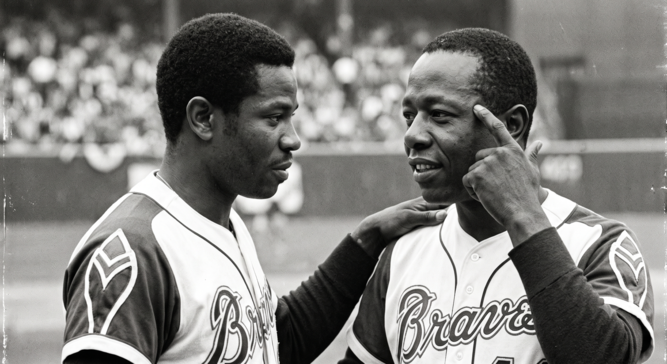
The foundation of Baker’s baseball philosophy can be traced directly back to his teenage years. After the Atlanta Braves drafted him in 1968, Hank Aaron stepped in as a mentor. Aaron taught the young outfielder to trust his feelings inside the batter’s box. If a hitter sensed an outside fastball was coming, Aaron advised him to commit to that instinct. This advice permeated every aspect of Baker’s career, evolving from a hitting strategy into a comprehensive leadership style.
This emphasis on instinct completely contradicts the current player development pipelines. Hitters are currently trained to ignore their feelings and strictly execute pre-planned swing mechanics optimized for specific launch angles. Coaches utilize high-speed cameras to correct minor mechanical flaws, stripping away the natural rhythm of the athlete. The reliance on heavy player development and biomechanics data turned the modern batter’s box into a clinical laboratory.
Baker details in the memoir how trusting instinct allowed players to stay loose and relaxed under immense pressure. He witnessed Barry Bonds execute at the plate with unparalleled intelligence, and he watched Hank Aaron hit his historic 715th home run. In both cases, the success was driven by a deep, internal grasp of the game rather than external data inputs. Baker insists that suppressing the natural instincts of an athlete inevitably leads to rigid, robotic performances. The memoir serves as a direct critique of a system that treats players as interchangeable data points rather than individual performers. The contrast between feeling the flow of an at-bat versus calculating the expected value of a swing is the central debate of the 2026 season.
The Intersection Of Culture And The Diamond

Crossroads spends a significant amount of its 416 pages exploring life far beyond the foul lines. Baker is a man of intense curiosity, engaging heavily with music, wine, and American culture. He recounts smoking a joint with Jimi Hendrix and experiencing the dynamic music scene of the 1960s and 1970s. These experiences shaped his worldview, giving him a broader perspective that kept him grounded during prolonged slumps or high-stakes playoff series.
The clinical nature of 2026 baseball often isolates athletes from the surrounding culture. Players are hyper-focused on their personal metrics and year-round training regimens, leaving little room for the varied life experiences that Baker champions. He recognized that a well-rounded individual often makes for a more resilient athlete. His ability to connect with players from diverse backgrounds, speaking fluent Spanish and respecting different cultural nuances, made him an elite communicator. This skill is increasingly rare in a sport that prioritizes mathematical fluency over cultural literacy.
Baker’s life story includes facing intense racism, a lawsuit filed by his own father over his initial signing bonus, and a public battle with prostate cancer. He met these challenges with a quiet dignity and a refusal to be consumed by anger. This resilience translated directly to his managerial style. When his Houston Astros faced relentless public scrutiny following their cheating scandal, Baker provided the exact type of stabilizing, fatherly presence the organization desperately needed.
Reviewing the extensive history of the Atlanta Braves and the varied stops of his managerial career, the pattern is clear. Dusty Baker left a lasting, positive impression on every franchise he touched. His memoir is a compelling read for any fan looking to comprehend the soul of a sport that is quickly digitizing its history. The 2026 season might belong to the supercomputers, but Crossroads proves that the most compelling stories will always belong to the humans.
Grade: A (A profound, deeply human reflection on fifty years inside the dugout and out). Best For: Fans who miss the interpersonal dynamics of classic baseball and those interested in the cultural history of the 1970s and 1980s.