
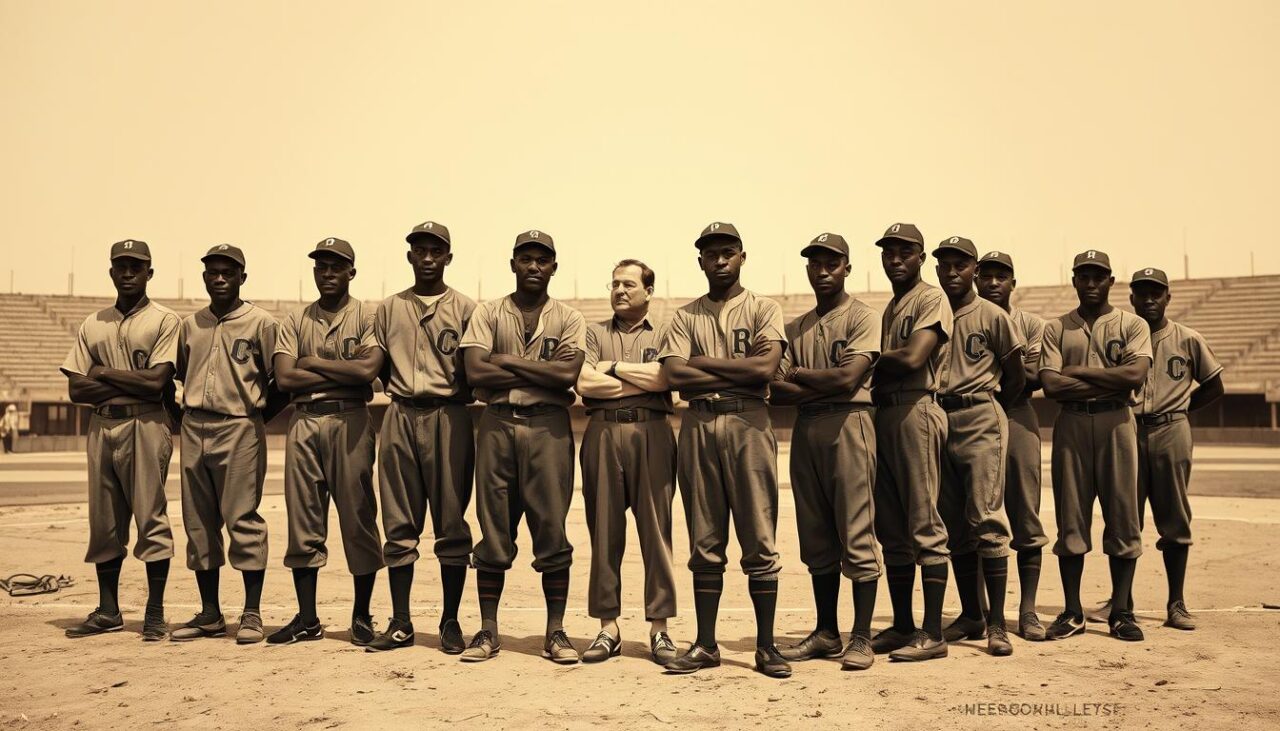
Cooperstown celebrates Babe Ruth’s 714 home runs but forgets Oscar Charleston’s .406 average. Baseball’s history is like a Hollywood movie, leaving out parts that don’t fit. The Negro Leagues are more than just forgotten scenes; they’re the complete story of baseball, with Rube Foster’s smart moves and Satchel Paige’s fastballs.
Ken Burns’ documentaries hint at what Matt Doeden’s research clearly states: the Negro Leagues were the real deal, not just an alternative. Buck O’Neil was more than a first baseman; he was a bridge between baseball and civil rights, years before Branch Rickey’s story hit the big screen.
Cap Anson isn’t remembered as a hero; he was a racial gatekeeper. Marvin Miller’s labor work was influenced by the Negro Leagues, but many Hall of Fame plaques don’t say so. These legends didn’t just play; they created worlds where Black excellence was celebrated.
Paige’s fastball was legendary, and Gibson’s homers were record-breaking without steroids. Their achievements were hidden by racism, but now they’re remembered. The real question is, “How did we ever forget?”
Hidden Histories: Segregated Baseball
Moses Fleetwood Walker was a trailblazer in baseball, playing in 1884, 63 years before Robinson’s debut. His .263 batting average showed there was a hidden world of baseball in America. This world was ignored by many.
Cap Anson’s Color Line
Cap Anson, a star of the Chicago White Stockings, played a big role in baseball’s racism. In 1887, he said “no game if Black players take the field”. This rule led to the creation of the Negro Leagues.
- Negro League owners like J.L. Wilkinson built empires (see: Kansas City Monarchs’ $400,000 annual revenue)
- Black players developed signature styles – think Satchel Paige’s hesitation pitch
- Ballparks became community hubs doubling as civil rights forums
Branch Rickey’s “Great Experiment” story doesn’t hold up when compared to Wilkinson’s success. Wilkinson empowered Black leadership, unlike Rickey’s paternalism.
Barnstorming Economics
The Cuban Giants were smart, hitting .350 against white teams. They used language tricks to confuse opponents. This was more than just winning games; it was a way to survive in a sport that paid Black players less.
Rube Foster and Marvin Miller both fought for fairness in baseball:
| Foster | Miller | |
|---|---|---|
| Battle | Creating leagues from scratch | Negotiating with existing power |
| Weapon | Barnstorming revenue | Collective bargaining |
| Legacy | Proved Black baseball’s viability | Exposed MLB’s wage theft |
Both men knew baseball’s secret: It needed marginalized groups to thrive. The Negro Leagues were more than just a place for stars. They were where athletes became entrepreneurs.
Buck O’Neil and His Advocacy
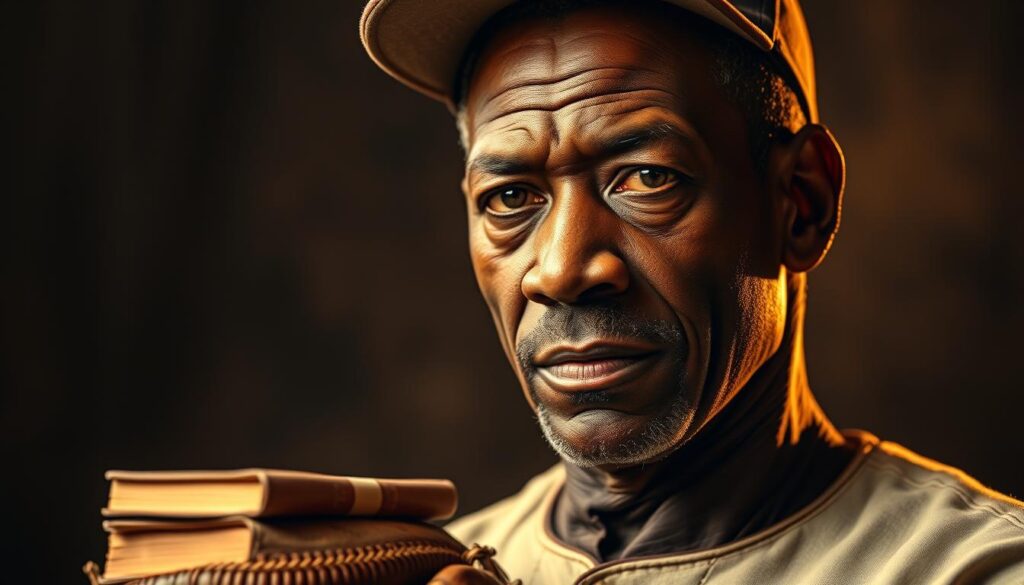
Buck O’Neil played baseball like an artist paints. He faced racism head-on, using joy as his tool. His career was a fight against the color line.
From Monarch to Museum
After playing, O’Neil became baseball’s unofficial historian. He brought back the past. His greatest achievement was the Negro Leagues Baseball Museum.
The Grave Marker Project gave 4,000 players a proper burial. It was like building a Stonehenge of remembrance. Each stone told a story of their existence and importance.
Comedy as Resistance
In 1998, O’Neil pretended to charge the mound. The crowd loved it. But it was more than a joke; it was a statement against racism.
When Cooperstown didn’t induct him in 2006, he threw the first pitch at the Hall of Fame. It was a powerful response. It showed his strength and determination.
| Role | Action | Impact |
|---|---|---|
| Player | 2x Negro Leagues All-Star | Career .356 batting average |
| Advocate | Founded NLBM (1990) | 1.2M+ museum visitors |
| Storyteller | Co-authored 7 oral histories | 38 players documented |
Joe Posnanski’s The Soul of Baseball shows Buck O’Neil’s duality. It’s a mix of laughter and sadness. It’s a book that protests and celebrates at the same time.
Books: “The Soul of Baseball”, “Invisible Men”
Baseball’s lost legends come to life through books. Joe Posnanski’s The Soul of Baseball and Donn Rogosin’s Invisible Men are two unique stories. One is a heartfelt tribute, the other a bold challenge.
Posnanski’s Road Trip Epiphanies
Imagine Kerouac’s On the Road with Buck O’Neil as his co-pilot. Posnanski’s soul of baseball book is a journey of discovery. It’s filled with laughter and the spirit of rebellion.
Three key moments from their travels:
- Baseball was a protest for Black America
- Laughter was a way to fight against erased history
- The perfect blend of stories and statistics
Donn Rogosin’s Revisionism
Rogosin’s Invisible Men challenges MLB’s myths. His 1983 book shows integration was not just about fairness. It was about taking away something precious.
| Myth | Reality |
|---|---|
| “Integration saved Negro Leagues” | Drained their talent pool by 1948 |
| “Robinson ended discrimination” | 15+ years of MLB roster quotas |
| “Equal opportunity” | Lost ownership pathways |
Rogosin’s invisible men shows how athletes were ignored. Josh Gibson’s 962 HRs were forgotten. His work is a powerful reminder of baseball’s hidden history.
Both books share a common message. They show that baseball is also a lesson in American history. Posnanski and Rogosin offer different perspectives, yet they both reveal the truth.
Importance of Narrative in Recognition
History isn’t written by the losers—it’s edited by the gatekeepers. Cooperstown celebrates legends, but its story feels incomplete. It’s like a highlight reel missing key scenes. Let’s explore who gets remembered and who’s forgotten.
Cooperstown’s Blind Spots
The Hall of Fame has many gaps. Only 35 Negro Leagues players are honored, compared to 268 from before 1947. This isn’t just a gap—it’s a mistake. These unsung baseball heroes were talented but lacked advocates.
Grave Marker Politics
Newt Allen’s 2023 grave marker dedication is like a posthumous Oscar. He mentored Jackie Robinson and innovated strategies. Yet, his legacy was buried for decades. How many forgotten players are waiting for recognition?
| Category | Negro Leagues | Pre-1947 MLB |
|---|---|---|
| Hall of Fame Inductees | 35 | 268 |
| Average Wait Time for Recognition | 42 years | 8 years |
| Posthumous Honors (Sinc 2000) | 19 | 3 |
Ted Williams’ 1966 HOF speech was a moment of truth. He called for recognition of Negro Leagues stars. Yet, in 2023, we’re just starting to count their markers.
Book Recommendations
Ever wondered where the best baseball stories hide? They’re in biographies and labor histories, not just box scores. These books offer a fresh view of America’s favorite sport. They show us the people who changed it and those history forgot.
Biographical Deep Cuts
Leigh Montville’s The Big Bam makes Babe Ruth a baseball legend. But Robert Peterson’s Only the Ball Was White highlights Josh Gibson’s incredible achievements. Larry Tye’s Satchel tells the story of Satchel Paige, showing how he defied racism with his talent.
Analytical Masterworks
Marvin Miller changed baseball with his smart labor strategies. His marvin miller baseball legacy shows how he outsmarted owners. His work is like a playbook for players today.
| Pre-Miller | Post-Miller | Modern Echoes |
|---|---|---|
| Oscar Charleston’s $500/month “contract” | Curt Flood’s Supreme Court gamble | Fernando Tatís Jr.’s $340M deal |
| No agents, no options | Arbitration clauses | Opt-out escalators |
These aren’t just numbers—they’re a blueprint for player power. Pair them with Howard Bryant’s The Heritage for a deeper look at Jackie Robinson’s impact. It shows how history is connected, like a curveball.
Conclusion
The Negro Leagues’ legacy is a mix of triumph and struggle. It’s about unsung heroes like Buck O’Neil, who made the most of tough times. Yet, it also shows how America often forgets the real cost of its dreams.
The Durham Bulls’ Homestead Grays tribute games highlight this mix. Fans buy retro caps, but the real issue is the loss of Black neighborhoods. Rising rents push out long-time residents, leaving only memories.
Books like The Soul of Baseball by Posnanski and Invisible Men by Snyder offer fresh views. They see history as alive, not just a relic. They ask tough questions: Can we truly honor the Negro leagues without changing the past?
Modern tributes, like MLB’s statistical integration, are just a start. They’re like a break in the game, but not the game itself. The real challenge is to see these stories as part of today’s issues, not just history.
History isn’t just a vintage item to wear on weekends. It’s the foundation we stand on, demanding we look deeper. It’s the dirt under our feet, urging us to dig deeper.