
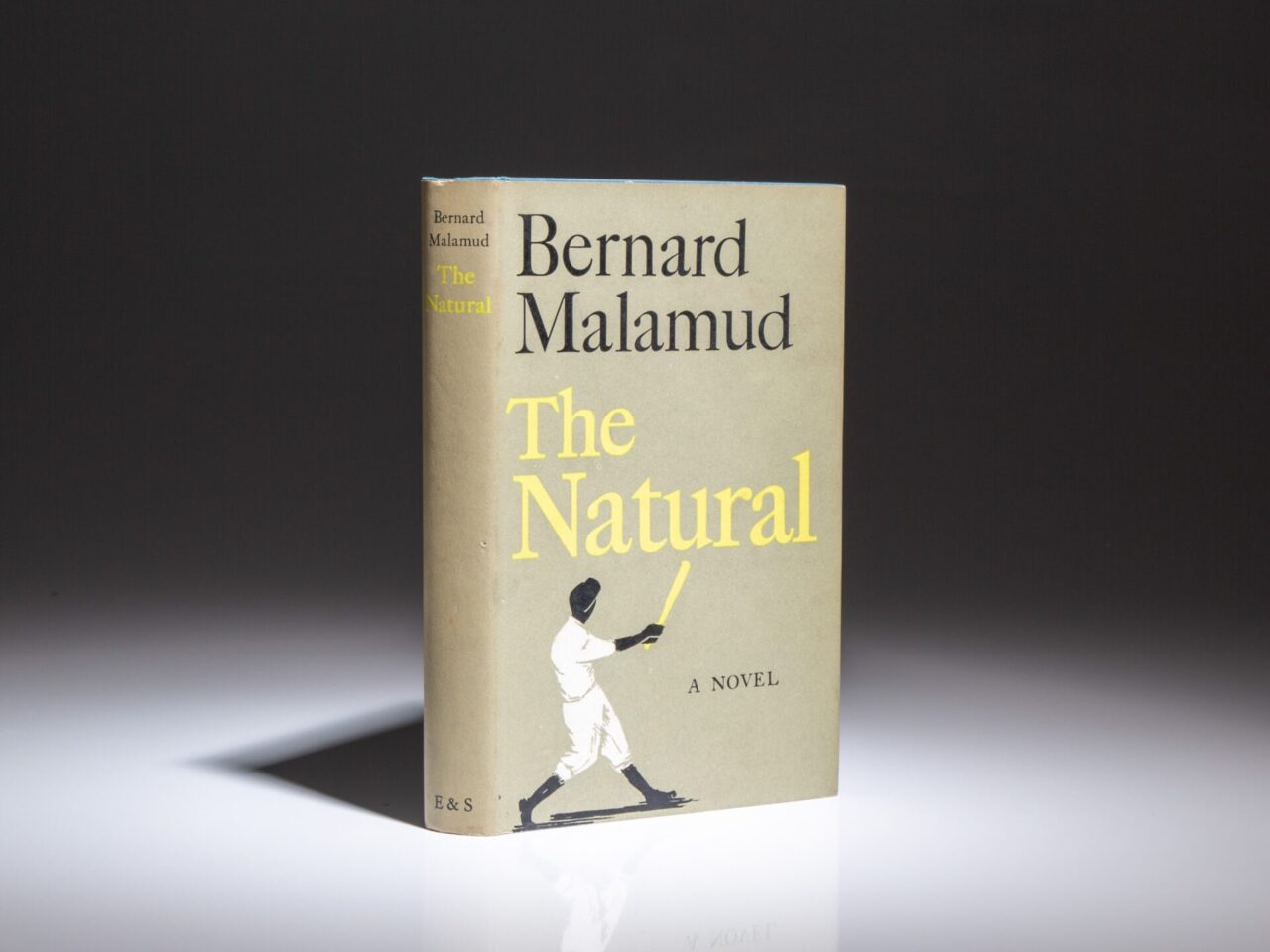
By Avery Collins Originally Published: 2012 Updated: March 19, 2026
In the landscape of 2026, where every swing is decomposed into a series of biomechanical data points and exit velocities, reading Bernard Malamud’s 1952 masterpiece, The Natural, feels like an act of rebellion. We live in an era of “perfect” information, yet Malamud reminds us that baseball is fundamentally a game of shadows, myths, and the inescapable weight of human frailty.
When I first revisited this novel over a decade ago, I focused on its connection to the Arthurian legends—the “Fisher King” motifs and the magic bat, Wonderboy. But standing here in the mid-2020s, the book feels less like a fairy tale and more like a cautionary warning about the price of greatness. Roy Hobbs isn’t just a ballplayer; he is the embodiment of the American appetite for a second chance, a theme that resonates even more deeply in our current culture of curated comebacks and digital redemption.
If you only know the 1984 film adaptation starring Robert Redford, you don’t actually know The Natural. While the movie gave us the golden-hour glow of a Hollywood ending, Malamud gave us the grit, the greed, and the tragic reality of a man who couldn’t outrun his own appetite.
The Collision of Talent and Temptation
The brilliance of Malamud’s narrative lies in the “Pre-Game” section, where a young Roy Hobbs is struck down by a silver bullet from a mysterious woman in a hotel room. It is a moment of pure American Gothic fiction that sets the stage for Roy’s return fifteen years later as a “rookie” of advanced age.
In 2026, we see players extending their careers through advanced recovery science and nutritional optimization that would have seemed like sorcery to Malamud. Yet, no amount of modern science can fix the “wrongness” that follows Roy Hobbs. He arrives at the Knights’ dugout not as a hero, but as a man haunted by lost time. The tension between his supernatural ability on the field and his moral decay off it provides a blueprint for the “troubled superstar” trope that continues to dominate sports headlines today.
A Comparison of Myth vs. Reality in The Natural
To understand why this book remains a staple of Classic Baseball Books, one must look at how Malamud balances the literal game with the symbolic one:
| Element | The Literal Meaning | The Symbolic Meaning |
| Wonderboy | A bat carved from a lightning-struck tree. | Excalibur; the source of divine power and ego. |
| The Knights | A basement-dwelling New York team. | A crumbling kingdom in need of a savior. |
| The Silver Bullet | A literal gunshot wound. | The sudden, violent end of innocence. |
| Pop Fisher | A frustrated, aging manager. | The wounded Fisher King whose health is tied to the land (the field). |
The Moral Failure of the American Hero
The most jarring aspect of revisiting The Natural in the current year is the ending. In the film, Hobbs hits the lights, the sparks shower down, and the hero wins. Malamud, however, was far more interested in the tragedy of the “un-natural.”
Roy’s downfall isn’t a lack of talent; it is a lack of character. He succumbs to the lures of Judge Goodwill Banner and the femme fatale Memo Paris, ultimately agreeing to throw the big game for money. Malamud doesn’t give us the home run; he gives us the strikeout and the weeping hero. It serves as a stark reminder that in the history of the game, the most dangerous opponents aren’t the pitchers on the mound, but the internal ghosts we refuse to confront.
In an age where we use algorithms to predict a player’s “clutch” factor, Malamud argues that the human heart is the only variable that truly matters—and it is the one variable that can never be fully calculated.
The Verdict: Still the King
Whether you are a student of 20th-century literature or a fan who wants to understand the soul of baseball writing, The Natural is non-negotiable reading. It is a dark, beautiful, and ultimately heartbreaking exploration of what happens when a “natural” talent is possessed by an “un-natural” man.
Grade: A (Essential)
Best For: Readers who prefer the grit of the 1950s to the polish of Hollywood, and anyone interested in the intersection of sports and mythology.