
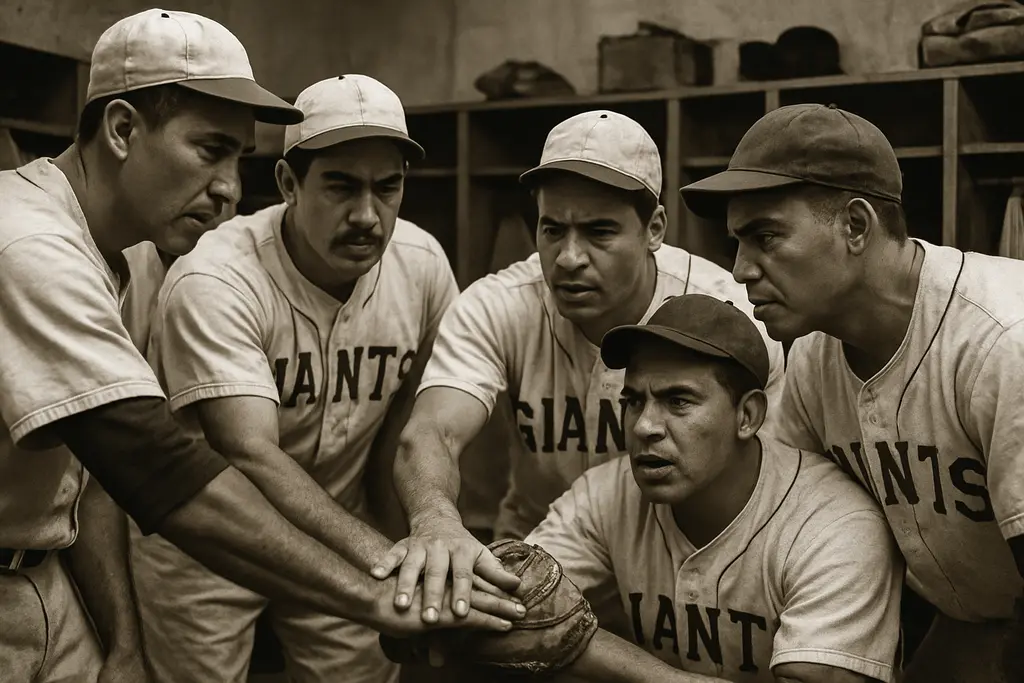
Latinx October impact is best understood through specific postseason contributions, not through broad cultural shorthand. The term Latinx is used here as a modern umbrella for players from Latin American backgrounds, while recognizing that individual players came from different countries, eras, and baseball systems. From Adolfo Luque’s appearance in the 1919 World Series to dominant October work by Roberto Clemente, Liván Hernández, Orlando Hernández, David Ortiz, and Carlos Beltrán, the record shows a long pattern of decisive performances.
The evidence is not just anecdotal. It includes first appearances, World Series MVP awards, League Championship Series MVP awards, sustained hitting lines, and high-pressure pitching starts. October baseball compresses evaluation. A player may have fewer chances, but the run value of each plate appearance, inning, or defensive play often rises because the opponent quality and game state are severe.
For those interested in exploring sports history beyond baseball, Back2Tap offers access to a diverse array of sports-related content within the same network. Here, the focus stays on MLB postseason history and the measurable ways Latin American players shaped Octobers already completed before October 15, 2026.
Latinx October Impact In Early Postseason History
Latinx October Impact Began With Luque
On October 3, 1919, Cuban pitcher Adolfo Luque appeared in Game 3 of the World Series for the Cincinnati Reds against the Chicago White Sox. That appearance made Luque the first Latin American player to appear in a World Series, according to the October 3 baseball history record at Sports History Archive. The statistical footprint of that one appearance should not be overstated, but the milestone matters because it marked entry into the sport’s most visible postseason stage.
Early postseason access was limited by the structure of MLB, scouting networks, segregation, and the narrower talent pipelines of the period. That makes Luque’s appearance a marker rather than a full measure of Latin American player quality at the time. The available record from the research also points to earlier Cuban baseball presence in major professional baseball contexts, including names such as Esteban Bellán in 1871 and Armando Marsáns, who was traded to the Yankees in 1917. Those details show that October representation had roots before Latin American participation became a sustained postseason storyline.
The Polo Grounds Exhibition As A Marker
On October 12, 1963, the final baseball game played at the Polo Grounds was a charity exhibition featuring Latin American major league players. The group included future Hall of Famers and major stars named in the research: Roberto Clemente, Juan Marichal, Orlando Cepeda, Luis Aparicio, Tony Oliva, and Minnie Miñoso. Because it was an exhibition rather than a league playoff game, it should not be treated as equivalent to a World Series or League Championship Series performance.
Still, the event carries historical value. It placed a group of Latin American major leaguers at the center of a New York baseball farewell, linking player identity, public visibility, and a famous venue’s closing baseball moment. For performance analysis, it is not a postseason data point. For historical analysis, it helps explain why later October achievements landed with a larger audience: fans had already seen Latin American stars as a collective presence, not only as isolated roster pieces.
Performance Peaks That Changed Series Pressure
Clemente’s Seven-Game Standard
Roberto Clemente’s 1971 World Series performance remains one of the cleanest examples of star production translating to a championship result. From October 7-17, 1971, Clemente helped the Pittsburgh Pirates win the World Series. The research credits him with a .414 batting average, hits in all seven games, two home runs, four RBIs, and the World Series MVP award. The note that he also hit safely in all seven games of the 1960 World Series strengthens the durability of his October profile.
The strongest pattern in Latinx October impact is not a single skill type. Clemente’s case was built on contact, power at key points, and game-to-game reliability. That matters because postseason pitching staffs are designed to expose weakness. A hitter who produces across seven games against a World Series opponent gives his club lineup stability. Clemente’s value was not just that he had a high batting average; it was that the production was spread across the full series.
Beltrán And Ortiz In 2004
Carlos Beltrán’s October 2004 run with the Houston Astros was a power-speed outlier. Over 12 playoff games, the research credits him with a .435 batting average, eight home runs, 14 RBIs, 21 runs scored, six steals, and a .536 on-base percentage. It also states that he tied the single-postseason home run record with eight, tied the major league mark with 21 runs scored in one postseason, and set a record by homering in five straight postseason games.
David Ortiz’s October 2004 burst took a different shape but had similar pressure value. The research states that Ortiz hit .714 in the American League Division Series and totaled 10 RBIs while helping Boston sweep the Angels. That sample was short, but the production was concentrated. In a best-of-five series, one middle-order hitter creating that much damage can remove the margin for an opponent to recover.
| Player | Postseason Moment | Supported Production | Analytical Read |
|---|---|---|---|
| Roberto Clemente | 1971 World Series | .414 average, hits in all seven games, two home runs, four RBIs | Full-series consistency with championship value |
| Carlos Beltrán | 2004 postseason | .435 average, eight home runs, 21 runs, six steals | Elite power-speed output across 12 games |
| David Ortiz | 2004 ALDS | .714 average and 10 RBIs | Short-series run creation at high volume |
Pitching Contributions And Development Signals
Cuban Pitching In 1997 And 1998
Liván Hernández and Orlando “El Duque” Hernández gave October history two different versions of high-pressure pitching success. In the 1997 postseason, Liván Hernández was a 20-year-old rookie with a 9-3 regular-season record. He made key starts in Game 1 and Game 5 of the World Series, which the Marlins won 4-3, and became the first rookie to be named both League Championship Series MVP and World Series MVP in the same year, as detailed by MLB.com.
On October 10, 1998, Orlando Hernández threw seven shutout innings for the New York Yankees in Game 4 of the American League Championship Series against Cleveland, allowing three hits in a win. The research frames that outing as a momentum-shifting performance. The cautious way to read that claim is to separate the documented line from the series interpretation: seven shutout innings and three hits allowed are firm performance facts; momentum is a reasonable baseball reading, but less directly measurable.
Latinx October impact in this period also says something about player development pathways. Liván’s case involved a rookie adapting immediately to postseason starts. Orlando’s case involved command, deception, and run prevention in an ALCS setting. Both examples remind evaluators that postseason readiness is not always predicted by age or by a long MLB track record. Role, pitch execution, and poise under lineup pressure can change the way a staff is remembered.
October Value Beyond One Box Score
Phillies Examples From 1980 And 2008
The research includes two Philadelphia examples that show how October reputations can form around different roles. In the 1980 National League Championship Series, Manny Trillo batted .381, collected eight hits, drove in four runs, and earned NLCS Most Valuable Player honors. That line is not as frequently cited in broad postseason discussions as Clemente’s 1971 series or Beltrán’s 2004 surge, but it fits the same evidence-based standard: production in a short series that directly affected advancement.
Carlos Ruiz’s 2008 World Series moment is recorded in the research as occurring across October 27-29, 2008, during Game 5 between the Philadelphia Phillies and Tampa Bay Rays. The supplied notes state that Ruiz hit the first walk-off infield single in World Series history and that he had earned the nickname “Señor Octubre” for postseason hitting. Because that detail depends on the research note and is not one of the two cited sources here, it should be handled as a narrow historical claim rather than expanded beyond what is provided.
Why Small Samples Still Matter
Postseason analysis always has a sample-size problem. Twelve games from Beltrán, seven games from Clemente, or a single ALCS start from Orlando Hernández cannot replace a career record. Yet October is designed to make small samples matter. A seven-inning shutout start can alter bullpen usage. A hitter reaching base at a .536 clip over 12 playoff games, as Beltrán did according to the research, can change how opponents pitch to the entire lineup.
That is why historical evaluation should use two lenses. The first is descriptive: what happened, on what date, in which series, with which measurable results. The second is contextual: how that output affected a club’s path through October. Latinx October impact is strongest as an analytical category when both lenses are kept together. The record is not just symbolic, and it is not just statistical. It is the overlap between representation, role, and performance under postseason conditions.
Latinx Player Contributions In Octobers Past
The documented examples span more than a century, from Luque’s 1919 World Series appearance to the Phillies’ 2008 championship-era moments. They include Cuban pitchers, Puerto Rican stars, Dominican run producers, Panamanian catching contributions, and Venezuelan infield performance. The country-by-country spread matters because it shows that October influence was not confined to one pipeline or one period.
Latinx October impact is not a single storyline of arrival followed by steady progress. It is a set of separate performances that, taken together, changed how postseason baseball was played and remembered. Luque supplied the early World Series milestone. Clemente set a seven-game championship standard. Liván and Orlando Hernández showed how Cuban pitchers could define October starts in back-to-back postseasons. Beltrán and Ortiz showed how concentrated offense could dominate a bracket. Trillo and Ruiz, based on the research notes, added Phillies-specific October value in different eras.
The cautious historical read is clear: these players did not merely participate in October. In many cases, they shifted series outcomes through measurable production. That is the difference between representation as presence and representation as competitive force.