
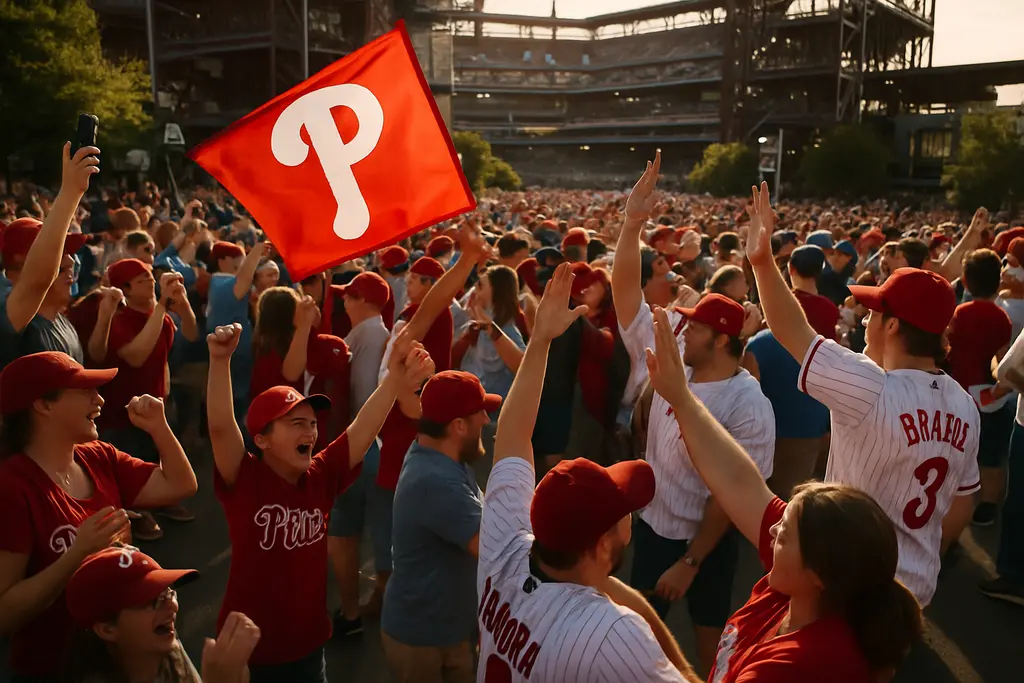
The Phillies winning streak became more than a standings note on August 24, 2026, when Philadelphia turned a four-run ninth-inning deficit into a 6-4 walk-off win over the St. Louis Cardinals. Kyle Schwarber supplied the decisive homer, and the result pushed the run to nine straight victories, according to the MLB.com recap. This is not a biological profile in the medical sense; verified public research does not provide physiological data. The supported reading is biographical and performance-based: which players changed the club’s short-term identity, which roster choices mattered, and what the surge meant for the National League playoff field as of September 2, 2026.
What the Phillies winning streak Actually Changed
Philadelphia’s August surge carried measurable weight because it came in a compressed part of the schedule. The club went 21-7 in August 2026, tying for the tenth-best month in franchise history by winning percentage, based on the supplied research. That month did not erase every concern, but it narrowed the gap in the NL East and strengthened the club’s Wild Card position.
The streak also changed the way the roster could be evaluated. A team can win for a week through one hot hitter or a string of soft matchups. The Phillies’ case, as presented in the research, was broader. Late offense, positional adjustment, and a strong run from Jesús Luzardo all showed up in the same period. That matters because postseason roster value is rarely limited to one headline bat.
Phillies winning streak By Date
The August 24 comeback was the clearest single marker because it extended the run to nine games and included a rare late reversal. Two days earlier, on August 21, Alec Bohm hit a walk-off triple in the 10th inning for a 7-6 win over the Cardinals. The research notes that it was Philadelphia’s first walk-off triple since September 21, 2021.
Those dates matter because they describe more than dramatic finishes. They show Philadelphia banking wins in games that had already tilted toward loss. That does not prove future late-game success, and it should not be treated as a predictive law. It does show that the Phillies converted high-pressure plate appearances into standings value during a key stretch.
Why August Carried Extra Weight
The supplied research says Philadelphia swept four of its last five series during August 2026. In playoff terms, series results are often more useful than single-game noise. A club that stacks series wins can protect itself against one poor start or one bullpen failure. For the Phillies, that series-level performance helped keep two paths alive: catching Atlanta in the NL East or securing the top National League Wild Card slot.
For readers interested in how different sports manage their rosters, a related site within the same network, World Football Idol, provides insights into soccer strategies. This comparison highlights how clubs handle depth, schedule pressure, and form cycles, offering a useful perspective on roster management.
Player Profiles Behind The Surge
A biographical approach to this run starts with players whose recent assignments changed the club’s shape. The research highlights Bryson Stott, Jesús Luzardo, Kyle Schwarber, Alec Bohm, and Trea Turner. That mix is instructive because it includes a position switch, a starting pitcher’s extended run, late-game power, contact in a key spot, and a slump from a central lineup figure.
Bryson Stott’s Positional Shift
After the trade deadline, Stott moved from second base to third base. In August 2026, he hit .284 with an .820 OPS and 11 RBIs, according to the supplied research. The same notes describe his defense at third as “Gold Glove-caliber,” a quoted evaluation rather than a certified award outcome.
The important roster point is not just that Stott hit. It is that he produced while changing defensive homes. That kind of flexibility can alter how a manager covers matchups, rest days, and late-game substitutions. Modern front offices tend to value players who keep the lineup intact while moving across the diamond, and Stott’s August made that value visible.
Jesús Luzardo And Run Prevention
Luzardo’s stretch gave the Phillies a stabilizing force on the pitching side. Over 16 outings since May 25, 2026, the research lists him at 8-1 with a 2.33 ERA, with Philadelphia going 14-2 in those games. Win-loss record for a pitcher is an imperfect measure, but the team record in his starts still matters because it reflects how often the club left those games with standings gains.
His performance also changes the way the surge should be read. A winning streak built only on late rallies can signal offensive timing but leave questions about run prevention. Luzardo’s run indicates that the Phillies were not relying solely on comeback baseball. They were getting starting-pitcher value during the same broad period.
Schwarber, Bohm, And Turner In Context
Schwarber’s August 24 walk-off home run supplied the defining image of the streak. Bohm’s August 21 walk-off triple supplied another late-game marker. Those moments fit the public memory of the run, but the roster analysis has to include Turner’s slump as well. The research notes that Turner hit .140/.234/.175 over about 14 games, with only two extra-base hits in that span.
That contrast is part of why the Phillies winning streak was analytically interesting. Philadelphia gained ground even with a major lineup piece in a short-term downturn. That can be read two ways. It shows depth during August. It also shows a possible vulnerability if the lineup becomes too dependent on late-game swings from others.
Wild Card Math And Division Pressure

As of September 2, 2026, the supplied research placed the Phillies in the top National League Wild Card position, with the Cubs and Padres also projected as Wild Card teams. The projected division leaders in the notes were the Braves in the NL East, Brewers in the NL Central, and Dodgers in the NL West.
The expanded playoff format matters here. With three Wild Cards per league and a best-of-three Wild Card Series, Philadelphia did not need to win the division to enter October. That said, seeding still matters. Hosting or avoiding certain matchups can depend on narrow margins, and the research says the Phillies did not hold the head-to-head tiebreaker against the Cubs.
The Braves Gap
The NL East remained difficult but not settled as of September 2. The research notes that Atlanta’s lead had been nine games earlier in August and had been cut to three games after the August 24 result. It also states that Philadelphia was four games back with 24 regular-season games left at a later August checkpoint. Those figures describe a race that tightened, while still leaving Atlanta ahead.
For Philadelphia, the key distinction is between momentum and arithmetic. Momentum is a description of recent results. Arithmetic is the number of games still to gain. The Phillies winning streak improved the first part, but the second part still required help from Atlanta losses and continued Philadelphia wins.
The Cubs Tiebreaker Problem
The Cubs tiebreaker note is not a small detail. If two teams finish tied and one owns the relevant tiebreaker, the standings can change without an extra game being played. Since the supplied research says Philadelphia did not hold the head-to-head tiebreaker against Chicago, the Phillies’ safest Wild Card path was separation rather than a tie.
That is where August’s 21-7 record mattered most. A hot month can create buffer. A buffer can reduce the damage from one lost series. The schedule still complicated the picture, since the research states that Philadelphia’s remaining opponents had a combined .525 winning percentage, ranking among the three hardest remaining schedules in the majors as of late August.
Phillies winning streak Playoff Meaning
The Phillies winning streak should be treated as a meaningful standings event, not proof of a finished product. The supported evidence shows a club that narrowed the NL East race, strengthened its Wild Card case, and received production from different parts of the roster. Stott’s move to third base, Luzardo’s run prevention, Schwarber’s walk-off power, and Bohm’s extra-base hit in a decisive spot all shaped the biography of the surge.
The caution is just as important. Turner’s short-term slump remained part of the profile. The Cubs tiebreaker reduced the value of finishing level with Chicago. The hard remaining schedule meant that August’s work still had to be defended across September. Philadelphia’s surge gave the club a stronger playoff position as of September 2, 2026, but the evidence supports a measured reading: the Phillies had improved their odds through real wins, while leaving enough unresolved questions to keep the race analytically open.