

Padres Player Development now sits at the center of San Diego’s ownership change because the club’s major-league ambitions and minor-league depth are moving in opposite directions. On August 17, 2026, Major League Baseball unanimously approved the sale of the Padres to José E. Feliciano and Kwanza Jones at a reported valuation of US$3.9 billion, with Feliciano becoming the control person for the franchise, according to MLB’s approval notice. That transaction did not change the roster by itself, but it reset the operating question: how does a high-payroll team with a thin farm system build the next wave of contributors?
The answer cannot be declared from ownership language alone. Feliciano and Jones had not, as of September 3, 2026, released a detailed public plan identifying new staffing levels, player-development budgets, minor-league technology purchases, or scouting changes. The public record supports a narrower claim: San Diego has strong incentives to get more value from internal talent, and the new ownership group has used language around discipline, sustainability, and growth that fits a more analytic operating model.
Why Padres Player Development Became The Ownership Test
The Padres under Peter Seidler became known for aggressive roster building. The club pursued established stars, accepted high payroll commitments, and traded prospects to improve the major-league roster. That approach made sense if the goal was to push the competitive window forward quickly. It also created a direct cost: the farm system entered the new ownership period with far less upper-level depth than a development-first club would prefer.
Padres Player Development And Farm Depth
Baseball America’s 2026 preseason rankings placed San Diego near the bottom of the sport, either 29th or 30th among the 30 farm systems. At midseason in August 2026, Baseball America again ranked the Padres’ system 30th. The research record also notes that catcher Ethan Salas, age 19 in 2026, was the organization’s only Baseball America top-100 prospect remaining at that midseason checkpoint, ranked No. 12 after other young players were moved in trades.
Those rankings do not decide a franchise’s future, but they describe the margin for error. A weak system reduces the supply of affordable replacements. It also limits trade flexibility, because a club with fewer high-end prospects has less surplus to move without damaging future rosters. For Padres Player Development, that makes process quality more visible. If the system has fewer top prospects, the organization has to identify smaller gains: swing changes, defensive conversions, pitch-shape improvements, workload planning, and better level assignments.
The Cost Of A Thin Pipeline
The Padres’ problem is not simply that the farm is thin. It is that the major-league roster already carries expensive expectations. Forbes reported in June 2026 that the club’s sale came with an aging and underperforming roster, and it cited a payroll around US$213 million entering 2026 while naming Xander Bogaerts, Manny Machado, and Fernando Tatis Jr. within the high-salary core Forbes’ Padres analysis. That kind of payroll does not prohibit spending, but it changes the math. Every internally developed contributor who can hold a roster spot at a pre-arbitration or arbitration salary gives the front office more room to allocate money elsewhere.
That is why the ownership change matters analytically. Player development is not only a baseball department issue. It is a capital-allocation issue. A club can buy wins through veteran contracts, trade for wins by spending prospects, or build wins by improving amateur acquisition and minor-league instruction. San Diego has already leaned hard on the first two channels. The third now carries more strategic weight.
The Analytics Case For Padres Player Development
Analytics in player development should not be reduced to spreadsheets replacing scouts. The practical version is a feedback system: scouts identify traits, coaches test interventions, analysts measure whether those interventions are working, and front-office leaders decide which players merit patience or promotion. In San Diego’s case, the need is not abstract. The club’s current roster construction makes it harder to solve every problem by adding another veteran contract.
What An Analytic Development Model Can Measure
A more data-informed system can track whether hitters are making better swing decisions, whether pitchers are improving pitch usage, and whether defenders are moving toward positions where their skills create more value. The research does not confirm that Feliciano has ordered specific changes in these areas. It does support why those areas are logical priorities for a club trying to rebuild depth without stepping away from major-league contention.
The Padres can also use analytics to improve risk selection. That does not mean avoiding every trade for a major-league player. It means pricing the cost more clearly. Trading a top prospect for an established player has an immediate roster benefit, but it also removes future surplus value. If the internal system is already rated near the bottom of MLB, the next trade of that type carries a higher opportunity cost than it would for a deeper organization.
Where Ownership Discipline Shows Up
Feliciano’s background as co-founder of Clearlake Capital and his involvement in sports ownership at Chelsea FC have been part of the public discussion around the sale. The baseball relevance is not that private-equity practices transfer cleanly to a clubhouse. Baseball development has its own timelines, failure rates, and labor rules. The relevance is that ownership language around disciplined investment can be tested through choices: international spending, amateur scouting coverage, minor-league coaching continuity, strength and conditioning, nutrition, and analytic staffing.
Those choices are verifiable only after they happen. A cautious reading is required. If San Diego maintains a top-ten payroll while adding development infrastructure, that would represent one kind of strategy. If the club trims payroll without rebuilding the farm system, that would represent another. The public record as of September 3, 2026, establishes pressure and intent, not completed reform.
| Evidence From 2026 | Development Meaning | What Remains Unconfirmed |
|---|---|---|
| MLB approved the sale on August 17, 2026, at US$3.9 billion. | New ownership controls strategic priorities. | Specific player-development budget changes. |
| Baseball America ranked the farm system last at midseason. | Internal talent supply is a measurable weakness. | Which departments will be expanded or changed. |
| Forbes reported a payroll around US$213 million entering 2026. | Cost-controlled players carry extra roster value. | Future payroll targets under Feliciano and Jones. |
Roster Strategy After The Seidler Era
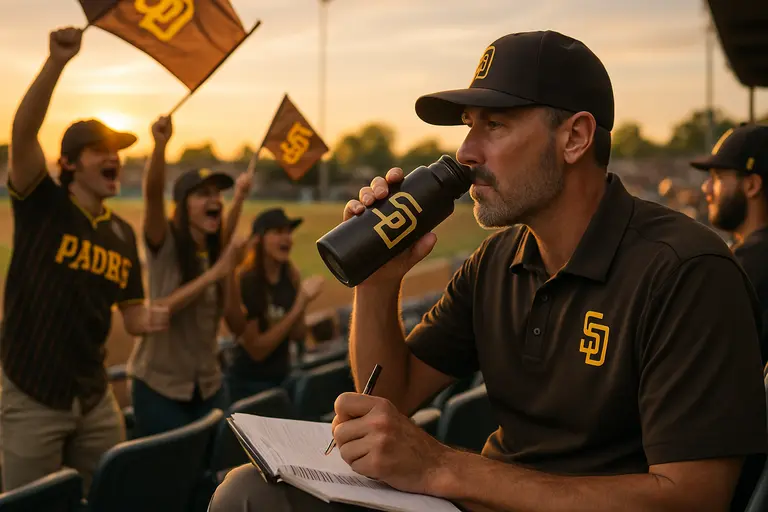
Peter Seidler’s tenure left a clear baseball identity: pursue stars, spend aggressively, and treat contention as urgent. New ownership has publicly praised that ambition. The harder task is deciding which parts of the model remain useful after the farm system has been thinned by trades. A franchise can honor an aggressive predecessor without repeating every transaction pattern.
Major-League Pressure And Minor-League Patience
San Diego’s situation creates a tension familiar to big-market and high-payroll clubs. The major-league roster is expensive enough that ownership cannot sell a full reset as a simple baseball choice. Yet the farm system is thin enough that constant prospect spending could leave the club exposed when veterans decline, leave, or lose production. That is where Padres Player Development becomes a bridge between present and future.
Ethan Salas is central to that discussion because the research identifies him as the remaining elite prospect in the system. His presence does not solve the depth issue by itself. One top prospect can become a core player, but a healthy system produces waves: rotation depth, bench options, bullpen arms, injury replacements, and trade pieces. San Diego’s challenge is to create more of those layers while avoiding the temptation to treat every improved prospect as trade currency.
Other clubs have faced similar development questions after structural changes. A related analysis of the Nationals minor-league overhaul shows why staffing, technology, and evaluation timelines matter more than slogans. The Padres’ case is different because the major-league payroll is already high, but the principle is similar: a farm system can be judged only by whether it produces usable players and better decisions over time.
Acquisition Choices Under A Sustainability Frame
At their August 24, 2026 introductory press conference, Feliciano and Jones said they would be aggressive with player acquisition when the timing fit, while also speaking about operating within their means. That phrasing matters because it does not promise austerity. It points to selectivity. For a baseball operations group, selectivity means separating star acquisition from impulse spending and separating prospect protection from prospect hoarding.
A disciplined Padres model would still have room for trades and free agents. The difference would be in the burden of proof. A veteran addition would need to fit the competitive window and the payroll structure. A prospect trade would need to account for the current farm ranking and the cost of thinning an already weak system. A development investment would need measurable goals, not just broader optimism.
For network readers who follow sports and civic coverage across connected sites, Ambikapur City is part of the same publishing network. Here, the baseball focus remains on whether San Diego can turn ownership transition into better roster efficiency.
What Feliciano Means For Padres Player Development
The most defensible reading is that Feliciano’s leadership raises the importance of internal development without proving a finished blueprint. The Padres have a record sale price, a high-payroll roster, a low-ranked farm system, and one clearly identified top prospect in Salas. Those facts push the organization toward better conversion of amateur talent into major-league value.
That does not mean the Padres should abandon star players or stop using financial strength. It means the next stage of contention depends on balance between acquisition and production. If the club continues to spend, development can keep the roster from becoming too top-heavy. If spending becomes more selective, development becomes even more necessary. Either way, Padres Player Development is no longer a secondary department story. It is the clearest test of whether the new ownership era can support both ambition and sustainability.