
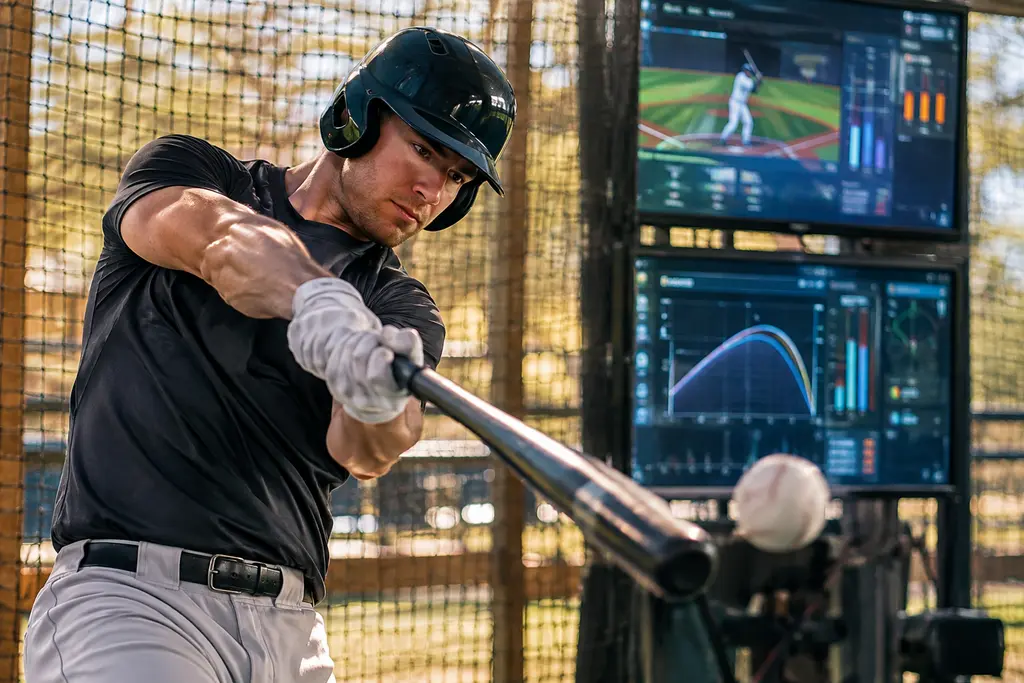
Gradum Gswing entered a wider Major League Baseball discussion on August 18, 2026, when it announced a partnership with Duquette Consulting to expand individualized, data-driven hitting development across MLB. The announcement described an approach built around advanced performance analytics and a Teach, Train, Transfer® methodology, aimed at identifying swing inefficiencies, making targeted adjustments, and carrying cage gains into games Fidelity release.
That wording matters because hitting instruction has long faced a practical problem: a player can look better in a controlled environment without producing better at-bats. The 2026 announcement framed the issue as one of transfer. In other words, the central question is not only whether a hitter can generate better bat speed or exit velocity in training, but whether those gains survive pitch recognition, count pressure, and game timing.
Why Gradum Gswing Fits Modern Hitting Analysis
From General Instruction To Individual Diagnosis
The most useful way to read the announcement is as part of a broader move toward individualized player development. The company’s stated process starts with identifying mechanical inefficiencies, then matching drills and training to the athlete rather than relying on one model for every hitter. The research notes describe work that measures bat speed, exit velocity, and contact quality during sessions, establishes baselines, and tracks progress session by session.
This type of model changes the role of the hitting coach. A coach still must interpret movement, timing, and approach, but the data can narrow the discussion. Instead of saying a hitter looks late or disconnected, the staff can point to specific measures and compare them against the player’s previous baseline. That does not make the evaluation automatic. It does make the feedback loop shorter and easier to test.
Gradum Gswing And Transfer To Games
The Gradum Gswing language around Teach, Train, Transfer® is significant because it places game performance at the end of the process rather than treating cage output as the finish line. A hitter may increase exit velocity in a controlled drill, but a major league plate appearance adds a different set of demands. The announcement’s emphasis on transfer suggests that the company is trying to connect mechanical gains with usable offensive production.
That claim should be handled carefully. Public releases and company-presented case studies can show examples, but they do not prove a league-wide causal effect by themselves. A responsible reading is narrower: the available materials show how one hitting-development provider is organizing instruction around measurable traits, individualized drills, and the attempt to carry training gains into competition.
Measured Swing Work And Player Development
What The Data Emphasis Measures
As of the August 2026 announcement, the company had trained more than 50 Major League Baseball players and operated more than 30 indoor facilities nationwide PR Newswire release. Scale alone does not validate a teaching model, but it does show that the operation had moved beyond a single-instructor setup into a broader training network.
The development logic, as described in the research, centers on repeatable measurement. The stated session model uses real-time analytics to observe how the swing changes over time. The relevant measures include:
- bat speed, used to track how quickly the hitter moves the bat through the hitting zone;
- exit velocity, used to measure the speed of the ball off the bat;
- contact quality, used to evaluate whether mechanical changes are producing better batted-ball outcomes.
Those measures are not new to baseball analysis, but the application at the training level is the point. The system described in the research does not treat analytics as a postgame report only. It uses them during instruction, where the hitter and coach can compare a mechanical change with an immediate result.
Claims That Need Careful Reading
Company-presented materials in the research claim that hitters can expect to increase exit velocity by 5 or more miles per hour. They also describe amateur case studies, including one high school hitter credited with an exit-velocity gain of more than 13 miles per hour and another youth hitter credited with a gain of more than 25 miles per hour. Those examples are notable, but they should be read as company-presented cases rather than independent proof that every player will respond the same way.
The same caution applies to mechanical descriptions. The research notes mention underuse of the lower half, disconnects in the swing, mis-rotation, separation, and rotational mechanics. These are standard coaching concerns in modern hitting development, but the available material does not provide a public dataset showing how often each issue appears or how each correction performs across a large player sample. The evidence supports a narrower point: the model is built around diagnosing specific movement problems and matching training to those problems.
Case Evidence From 2026

The Caleb Durbin Example
The most visible professional example in the research is Boston Red Sox third baseman Caleb Durbin. The notes state that before June 2026, combining March, April, and May, he hit .220/.250/.280 with a .530 OPS and one home run. In June 2026, after applying data-driven swing adjustments tied to the training process, he was credited with a 25-game line of .326/.359/.605, six home runs, 13 RBIs, and a .963 OPS.
Those numbers create a clear before-and-after contrast, but they still require restraint. One month of performance can be affected by health, opponent quality, timing, confidence, schedule, and normal variation. The research also says that Durbin showed season-best levels in exit velocity, hard-hit rate, and expected weighted on-base average during that June period. That combination is more meaningful than batting average alone because it points to batted-ball quality rather than only results.
What A Single Case Can And Cannot Show
As a development case, Gradum Gswing can be discussed through Durbin because the reported statistical movement aligned with the kind of improvements the system says it is trying to create. Better exit velocity and hard-hit trends fit an offensive-development model built around swing efficiency and transfer. Still, one case cannot settle whether the method caused all of the improvement.
The stronger analytical point is that the Durbin example shows how modern hitting development is evaluated. A hitter’s progress is not judged only by batting average or home runs. Analysts now look for supporting indicators that suggest whether a change is real: harder contact, better expected results, and evidence that practice adjustments are appearing in games. That is where data-driven instruction has changed the conversation.
What Gradum Gswing Means For Offensive Development
A Practical Shift In The Hitting Conversation
The history of hitting instruction is often told through visible style: stance, leg kick, hand load, stride, and finish. The 2026 materials around Gradum Gswing point to a different organizing principle. The visible swing still matters, but the teaching process is increasingly tied to measurement, player-specific diagnosis, and the translation of training output into game output.
That does not eliminate the art of coaching. It changes the evidence coaches can use. A hitter still has to recognize pitches, control the zone, and make decisions under pressure. Analytics can describe parts of the swing and the ball flight, but it cannot remove the competitive demands of an at-bat. The best reading of the available evidence is that this model gives coaches and players a more structured way to test whether a mechanical change is helping.
For readers following the sports-business side of player development, the Duquette Consulting partnership also shows how private training firms are seeking a larger role in MLB development systems. A related internal analysis of Gradum’s MLB hitting development covers that business and player-development connection in greater detail. For broader sports coverage in the same network, see the range of insights available at Noticias BO.
The evidence available through the 2026 announcements supports a measured conclusion: the company is not simply selling a swing tip. It is presenting a development model built on analytics, repeated measurement, individualized correction, and game transfer. Whether that model becomes a standard part of major league hitting departments will depend on longer-term evidence, but its current influence is clear enough to place it inside the continuing evolution of offensive development.