
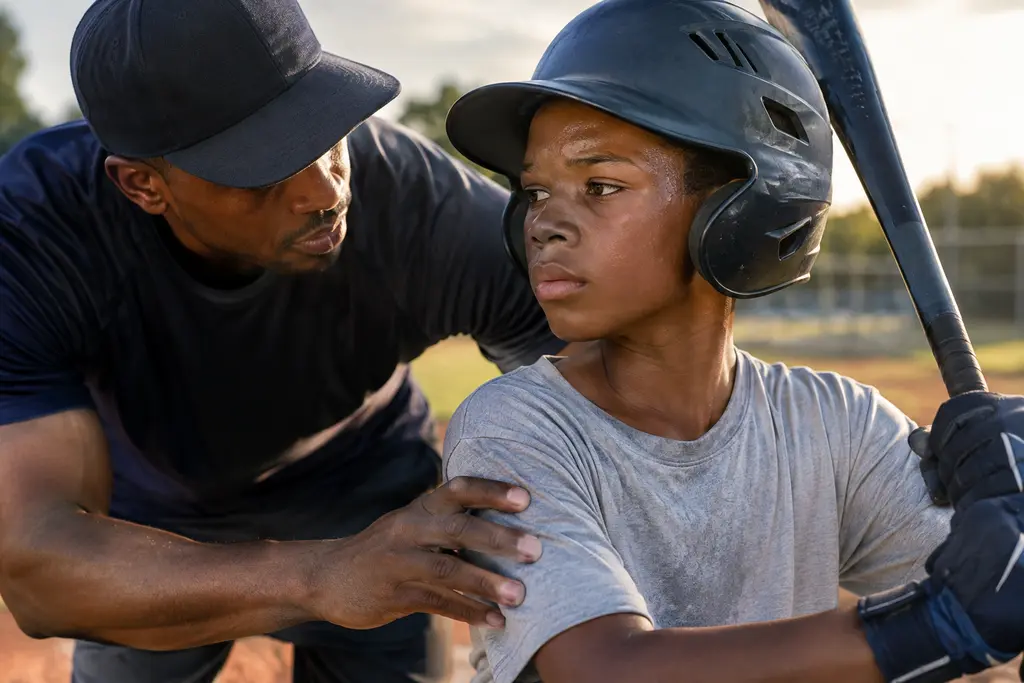
Gradum Gswing became a notable name in MLB hitting development after its August 18, 2026 partnership announcement with Dan Duquette, the three-time MLB Executive of the Year, through Duquette Consulting. The announcement framed the company’s work around individualized hitting plans, swing data, and player-specific adjustments rather than a single universal hitting model. For baseball readers who track training technology across bat-and-ball sports, the same publishing network provides insights into performance tools at a related site in the same network.
Why Gradum Gswing Mattered In 2026
The clearest public marker for the company came on August 18, 2026, when Gradum Gswing and Duquette Consulting announced a partnership intended to expand individualized, data-driven hitting development for MLB players and organizations. The announcement identified Duquette as a three-time MLB Executive of the Year and positioned the relationship as a way to connect the company’s hitting system with professional baseball decision-makers, according to the company announcement.
Dan Duquette Partnership
Duquette’s name matters because player development is not judged only by cage results. MLB organizations need to know whether a training model can fit a calendar built around game preparation, travel, roster movement, and competing coaching voices. The August 2026 announcement did not prove that every club would adopt the company’s methods, but it did show that Gradum Gswing was seeking a more direct place in professional hitting conversations.
That distinction is worth keeping clear. A partnership announcement is a business and development signal, not a controlled study. It can show market traction, personnel alignment, and a stated plan. It cannot, by itself, prove that one training system caused a player’s improvement. In baseball analysis, the harder task is separating timing, player talent, mechanical change, sample size, health, opponent quality, and coaching input.
Teach, Train, Transfer Model
The company’s stated system uses the phrase “Teach, Train, Transfer®.” In plain baseball terms, that means teaching fundamentals, training those movements with drills and metrics, and then trying to carry the gains into game settings. The idea lines up with a broader shift across professional baseball: swing work is no longer limited to visual instruction from a coach. Players now often combine video, bat path feedback, ball-flight data, and measurable contact quality.
The announcement also said the company had instructed more than 50 MLB players and operated in more than 30 indoor facilities across the United States as of mid-2026. Those figures suggest reach, though they should be read as company-reported numbers. For clubs, the more meaningful question is not facility count alone; it is whether a player can turn drill gains into better decisions, harder contact, and more stable production against major-league pitching.
Caleb Durbin As The Main Case Study
Caleb Durbin became the public case most closely attached to Gradum Gswing in the available reporting. The August 2026 announcement cited Durbin’s midseason turnaround with the Red Sox as a proof point. After poor production in April and May, the announcement said he hit .326/.359/.605 with six home runs in June. It also said that by early August, he had season-best Statcast trends in exit velocity, hard-hit rate, and expected weighted on-base average after working with Lorenzo Garmendia to identify swing inefficiencies and train adjustments.
Gradum Gswing Case Evidence
Independent reporting added context to the timeline. CBS Sports reported that after Durbin incorporated the company’s teachings, he raised his early-season batting average from .147 to a .289/.369/.444 line over 82 games since June, with 11 home runs and 11 doubles during that stretch, according to the CBS Sports analysis. That is a meaningful production change, especially because it paired batting-average recovery with extra-base impact.
Still, the cautious reading is the right one. A before-and-after split can identify a strong association, but it does not isolate every cause. Durbin’s improvement may have reflected swing work, timing adjustments, confidence from repeated contact, pitcher quality, role stability, or a mix of those factors. The available reporting ties his improvement to the training work, but public data does not let outside analysts assign exact credit by percentage.
What The Durbin Turnaround Shows
The value of the Durbin example is that it connects mechanical language to game production. Exit velocity and hard-hit rate are not cosmetic numbers; they help describe how often a hitter is producing damaging contact. xwOBA is also useful because it estimates offensive value from contact quality, strikeouts, and walks. If those indicators moved with the slash-line improvement, the case becomes more convincing than batting average alone.
That does not mean every struggling hitter can copy the same plan. Player development fails when it treats hitters as interchangeable. Durbin’s case supports the idea that targeted changes can matter, but it also reinforces how individual the process remains. A swing fix that helps one player get to better contact points may not fit another player’s body, timing, pitch recognition, or role.
How The Data Fits Player Development
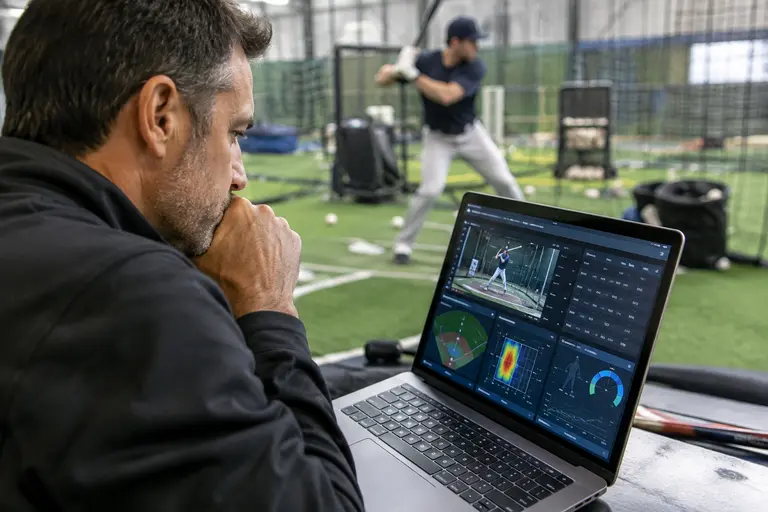
Modern MLB hitting departments often work from a simple question: which adjustment has the best chance to show up in games? Gradum Gswing entered that conversation by promoting a model that connects instruction, measurable training, and game transfer. That fits the broader economics of player development, where clubs try to create major-league value from roster depth, minor-league instruction, and targeted skill gains. For a related view of how development connects to roster value, see this analysis of MLB player development and 2026 economics.
Statcast Signals Can Help, But Not Settle It
Statcast indicators are useful because they reduce some of the noise that comes from small samples and ballpark variation. A hitter who improves exit velocity, hard-hit rate, and xwOBA is usually showing more than luck. Yet those measures still need context. A player can raise contact quality while also expanding the strike zone, or improve damage while losing contact frequency. Public reports on Durbin point to improved contact quality, but a full team evaluation would also examine swing decisions, whiff rate, pitch-type results, and defensive value.
This is where the company’s “transfer” concept becomes the most relevant. Hitting improvements matter only if they survive major-league sequencing. Pitchers adjust quickly. A player who fixes one mechanical issue may see a new attack plan within days. The strongest development systems are not just drill systems; they are feedback systems that keep measuring whether the game result matches the training goal.
Facility Scale And Organizational Fit
The company-reported scale of more than 30 indoor facilities gives the model a wider training base than a single private hitting lab. That matters for access, especially when players spend time away from major-league complexes. It also raises a practical issue: consistency. If a player trains in one facility during the offseason, works with club coaches in spring training, and then adjusts during the regular season, the language and goals have to align.
For MLB organizations, the appeal of an outside hitting group usually depends on fit rather than branding. Clubs may value new data, a fresh instructor relationship, or specialized movement work. They may also be careful about message overlap. The available reporting supports that Gradum Gswing had MLB player usage and a high-profile partnership in 2026, but the long-term effect on organizational hitting programs remains unproven in public evidence.
Player Development Lessons From Gradum Gswing
The 2026 rise of Gradum Gswing is best read as part of a larger shift in baseball instruction. Hitting development has moved toward more individualized plans, clearer measurement, and closer tracking of whether training changes appear in games. Durbin’s reported improvement gave the company a visible major-league case. The Duquette Consulting partnership gave it a stronger professional-facing platform. Both developments made the company relevant to how clubs think about swing work.
Cautious Takeaways For MLB Clubs
The lesson for teams is not that one outside system should replace club instruction. The better lesson is that player development benefits when a hitter’s problem is defined with enough precision to train a targeted answer. If a hitter’s issue is bat path, timing, posture, attack angle, or contact point, the plan should match that diagnosis. Data can sharpen the diagnosis, but the player still has to repeat the movement under game pressure.
- Public reports support a strong association between Durbin’s 2026 improvement and his work with the company.
- The August 18, 2026 partnership announcement showed a push toward broader MLB adoption.
- Company-reported reach, including more than 50 MLB players instructed, signals traction but not independent proof of outcome quality.
- Statcast gains are meaningful, but they should be paired with plate-discipline and pitch-type analysis.
That balance is the fairest way to evaluate Gradum Gswing after its 2026 breakout into wider baseball discussion. The evidence available to the public shows a notable company, a specific player case, and a stated development model. It does not yet provide enough independent, league-wide data to rank the system against every other hitting program. For now, its impact is clearest as a case study in how MLB player development keeps moving toward individualized, measurable, game-tested hitting work.