
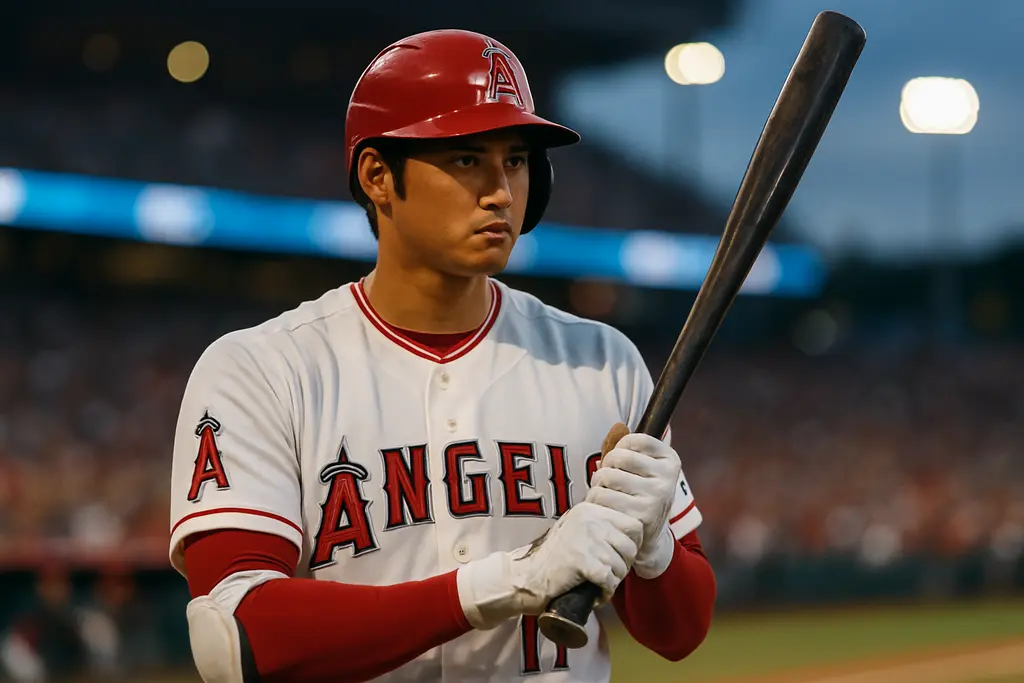
The Ohtani Dual Role has required a sharper split between hitting value and pitching readiness since mid-July 2026. Shohei Ohtani remained active as the Los Angeles Dodgers’ designated hitter as of August 19, 2026, but he had not resumed pitching duties after left knee irritation interrupted his mound schedule.
The key facts are narrow but meaningful. Ohtani received a lubricant injection in his left knee before the All-Star break in mid-July 2026, and he had not pitched since July 3, 2026, when he threw 110 pitches over six innings against the San Diego Padres, The Washington Post reported. Dodgers manager Dave Roberts also said Ohtani’s pitching return was not imminent, saying, “I would say that it’s going to be some time.”
What The Ohtani Dual Role Requires Now
Two-way usage is not just a question of talent. It is a workload system. For Ohtani, the Dodgers had to weigh the value of his bat against the added physical cost of preparing to pitch. The available information does not show a completed return-to-pitching plan as of August 19, 2026. It shows a player still contributing offensively while the pitching side remained paused.
That distinction matters because a designated hitter appearance and a starting pitching assignment place different demands on the body. A hitter may still need explosive lower-body movement, rotational force, and repeated running responsibilities. A pitcher adds mound-specific stress, warmup volume, between-start throwing, fielding movement, and game pitches. Ohtani’s July 3 outing was not a token appearance; 110 pitches over six innings represented a full starter’s workload.
For a club trying to protect run production and pitching depth, the cleanest reading is that the Dodgers separated Ohtani’s offensive availability from his mound availability. That does not prove a long-term change. It shows a short-term management choice supported by the public record.
Pitching Workload Signals After July 3
Ohtani Dual Role And Mound Workload
The Ohtani Dual Role can blur traditional roster categories, but the timeline in July 2026 was clear. He pitched on July 3, then his expected July 22 start against the Philadelphia Phillies was postponed because of persistent knee discomfort. That gap turned the normal rhythm of a rotation spot into a health-management issue.
In practical terms, the Dodgers could not evaluate him only by whether he could swing the bat. A pitcher must show that he can build volume safely enough to face hitters, recover, and repeat. The research record does not confirm that Ohtani reached that point by August 19, 2026. It confirms that he stayed in the lineup as a designated hitter while the mound work waited.
The Bullpen Session As A Checkpoint
Ohtani did throw a bullpen session on July 22, 2026, totaling approximately 30 pitches, his first such session since the knee issues began, according to MLB.com. That session was significant because it moved him from inactivity on the mound to controlled throwing work. It was not, by itself, evidence of a completed return to game pitching.
From an analytics perspective, bullpen volume is a checkpoint, not an endpoint. A 30-pitch bullpen can test feel, lower-body comfort, and delivery timing. It does not replicate a six-inning start, the between-pitch recovery of live competition, or the repeated intensity of working through a lineup. That is why the gap between a bullpen session and a start can remain meaningful, especially for a two-way player carrying offensive responsibilities at the same time.
Offensive Value While Pitching Waited
Designated Hitter Usage Kept The Bat In Play
The Dodgers’ short-term structure preserved Ohtani’s offensive contribution. Research notes credit him with 11 home runs from June 10 through July 19, 2026, despite the knee issue. That is a narrow sample, and home runs alone do not describe a complete batting profile, but it does show why the club had an incentive to keep his bat active while pitching was paused.
The more cautious interpretation is not that hitting was unaffected in every respect. The supported point is that Ohtani continued to provide power production during that June 10 to July 19 window and remained active as a designated hitter by August 19. Without verified data on swing mechanics, running speed, or day-to-day treatment response, any stronger claim would go beyond the record.
Why The Knee Matters To Two-Way Planning
A left knee issue can affect each side of a two-way job differently, but the public information does not provide a medical diagnosis beyond irritation and treatment with a lubricant injection. That limits what can be responsibly said. The performance question is less about labeling the condition and more about managing the baseball tasks that were confirmed: hitting continued, pitching did not.
That split can create a planning advantage and a planning cost. The advantage is that Ohtani’s bat remained available in the designated hitter spot. The cost is that the Dodgers could not count on him for innings from the rotation during the pitching pause. For roster planning, those are separate inputs. The lineup receives a power bat; the pitching staff still needs innings from other arms.
Dodgers Risk Management And Historical Context
Two-Way Usage Creates Linked Decisions
Baseball history has many examples of pitchers who hit and hitters who pitched, but Ohtani’s modern workload is unusual because both jobs are major parts of his value. That means a physical issue on one side can affect how a club evaluates the other side. A traditional designated hitter can be judged mostly on plate appearances and offensive output. A traditional starter can be judged on pitch count, recovery, and rotation schedule. Ohtani forces those tracks to interact.
The Ohtani Dual Role also changes how fans and analysts read absence. A missed start does not equal a missed game if he is still hitting. Yet the team impact is not minor, because the missed start removes potential innings from a pitcher capable of working as a starter when healthy. That dual accounting is central to any serious evaluation of his July and August 2026 status.
There is also a broader sports-business angle, though it should not outweigh the baseball analysis. Ohtani’s two-way profile draws attention across markets, and coverage networks often group these stories with wider sports analysis; related network coverage can be found at Banat Zayed. Still, the Dodgers’ decisions were baseball decisions first: lineup value, pitching readiness, and health management.
Ohtani Dual Role After Knee Treatment
As of August 19, 2026, the best supported reading is that Ohtani’s season had split into two tracks after knee treatment. One track remained active: designated hitter work. The other stayed paused: pitching in games. The July 22 bullpen session showed some mound activity had resumed in a controlled setting, but the record does not establish a completed return to pitching.
The Ohtani Dual Role will keep inviting broad interpretations because the player is not easily compared with a standard starter or a standard slugger. The evidence available through August 19 supports a narrower conclusion. Ohtani continued to help the Dodgers with his bat, while his pitching workload was held back after left knee irritation, a mid-July injection, and the postponed July 22 start. That balance was less about redefining his career and more about managing verified baseball duties one step at a time.