
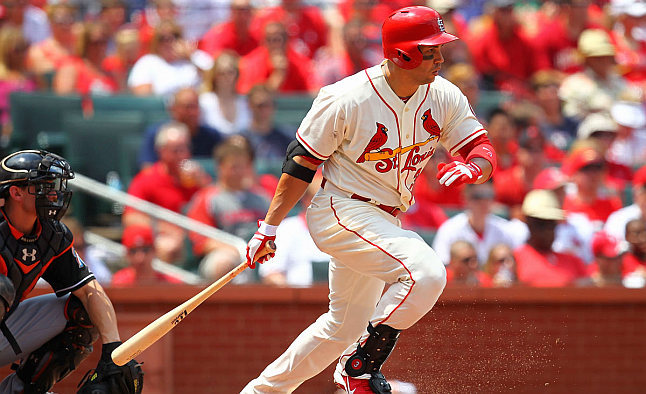
Carlos Beltrán, Andruw Jones and Jeff Kent entered the National Baseball Hall of Fame together on July 26, 2026, yet their paths to Cooperstown tell three noticeably different stories. Beltrán reached election in his fourth year on the Baseball Writers’ Association of America ballot. Jones needed nine years. Kent exhausted the writers’ ballot before the Contemporary Baseball Era Committee elected him.
That contrast makes the Class of 2026 more interesting than a simple collection of career statistics. Each player forced Hall of Fame voters and baseball readers to decide what parts of a career deserve the most weight. The 2026 Hall of Fame class now sits permanently inside Cooperstown, but the debates that preceded induction show how baseball history is constantly edited by later generations.
Carlos Beltrán Built A Career That Resists One-Team Storytelling
Beltrán played 20 major-league seasons for seven clubs, creating a biography that cannot be reduced neatly to one uniform. His career included 2,725 hits, 435 home runs, 312 stolen bases, nine All-Star selections and three Gold Glove Awards.
His plaque carries a New York Mets cap, yet Kansas City, Houston, St. Louis, San Francisco, Texas and the Yankees all occupy meaningful chapters of his story. That geographic movement makes Beltrán representative of an era in which star careers increasingly crossed franchise lines.
Older baseball biographies often benefit from simple identification. Ted Williams means Boston. Stan Musial means St. Louis. Cal Ripken Jr. means Baltimore. Beltrán requires more pages.
His career becomes a story about adaptability as much as accumulation. He emerged as an elite young player in Kansas City, became a postseason force after his 2004 trade to Houston, spent his longest stretch with the Mets and remained productive deep into his thirties.
Beltrán received 84.2 percent of the 2026 BBWAA vote. That comfortable margin came after his candidacy had already spent several years being discussed through statistics, postseason performances and his connection to the Astros’ sign-stealing scandal. The final plaque does not erase those debates. It places them inside a larger biography.
Andruw Jones Shows How Defensive Greatness Changes With Better Measurement
Jones provides a different historical problem. His offensive numbers are substantial: 434 home runs, 1,289 RBI and five All-Star selections. His most distinctive case rests in center field.
Jones won 10 consecutive Gold Glove Awards from 1998 through 2007. The Hall of Fame credits him with the highest career defensive WAR among outfielders, a measurement that gives modern readers another way to evaluate what fans watching Atlanta in the late 1990s and early 2000s saw with their own eyes.
His election took much longer than Beltrán’s. Jones received 78.4 percent of the vote in his ninth appearance on the BBWAA ballot, barely clearing the 75 percent requirement.
That slow climb says something about baseball history. Historical reputation is not fixed at retirement. New statistical tools can change how an old career is discussed. Defensive value, positional difficulty and peak performance may gain importance as voters reconsider a player’s record.
Jones also became the first native of Curaçao elected to the Hall of Fame, giving his induction meaning far outside Atlanta. His biography connects the Braves dynasty with the growth of Caribbean influence across Major League Baseball.
Jeff Kent’s Election Reopened The Case For Offensive Second Basemen
Kent reached Cooperstown through a different door. The Contemporary Baseball Era Committee elected him after his 10 years of BBWAA eligibility ended without induction.
His case has always been unusually clear in one area. Kent hit 377 career home runs, and 351 came during games in which he played second base. No second baseman has hit more.
He finished with a .290 batting average, 2,461 hits, 560 doubles and 1,518 RBI. He won the 2000 National League MVP Award and earned four Silver Slugger Awards.
Kent’s candidacy shows how positional expectations shape historical judgment. A total that might look merely strong at first base can appear remarkable at second. Baseball history depends heavily on context, and position is one of its oldest forms.
His eventual election is a reminder that the Hall’s voting process can function as a prolonged editorial argument. The BBWAA made one judgment over a decade. A later committee made another. Cooperstown’s collection is permanent once a plaque goes up, yet the process of deciding whose plaque belongs there can take years.
Baseball Memory Is Bigger Than A Statistical Database
The Hall of Fame has 354 elected members after the 2026 class. Numbers can organize them, but statistics alone cannot explain why readers remain interested in their lives decades after the final game.
Baseball culture depends on storytelling. Fans remember the player, the uniform, the ballpark, the postseason moment and the era around the statistics. That same relationship between history and modern presentation appears in Books On Baseball’s look at the 2026 Field of Dreams game, where MLB used a famous fictional setting to connect contemporary players with baseball’s accumulated memory.
Modern sports consumption can pull fans in many unrelated directions. One reader may move from an archive of Hall of Fame statistics to fantasy projections, streaming schedules or a JustBet sportsbook review page. Cooperstown operates on a different clock. Its subject is not the next game. Its subject is which parts of thousands of past games remain worth carrying forward.
That is why Hall of Fame debates tend to outlive the ballot itself.
The 2026 Class Gives Baseball Writers Three Different Biographies
Beltrán, Jones and Kent reached the same stage through careers that demand different methods of interpretation.
Beltrán’s story asks how a multi-team star should be remembered. Jones makes defense central to the discussion and shows how new measurements can reshape an older reputation. Kent demonstrates how positional expectations and committee review can reopen a case after the writers have finished voting.
Their induction ceremony drew an estimated crowd of 12,000 in Cooperstown, with 60 Hall of Famers on stage, making it the largest gathering of inductees in the ceremony’s history. The spectacle mattered, but the lasting value comes from what happens afterward.
Each plaque becomes a starting point.
Future biographies will revisit the seasons, teammates, postseason series and controversies. Statistical databases will place every total beside players from different eras. Fans who never saw these three play will encounter them first as historical figures rather than active stars.
That transition is one of baseball’s most durable traditions. Careers end. Arguments about what those careers meant can continue for generations.
The Class of 2026 demonstrates why Cooperstown remains so closely connected to baseball literature. A Hall of Fame plaque may be short, but the life behind it rarely fits on bronze.