
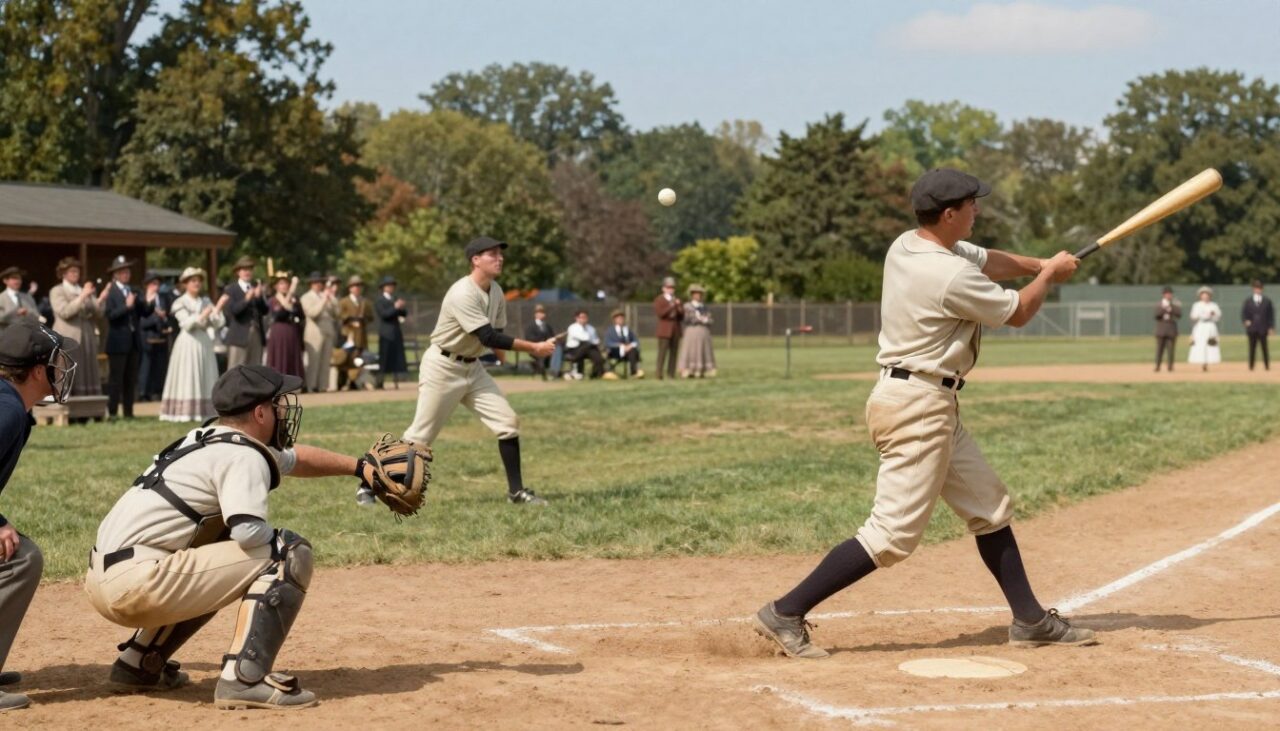
Imagine it’s 1886. The air is filled with coal smoke and leather smells. Men in wool uniforms, without gloves or helmets, play a game that’s hard to recognize today. This wasn’t just the 19th century baseball your grandfather might have talked about. It was the raw start of professional baseball history.
The game was very different back then. Think of barehanded catches, underhand pitching, and a “gentleman’s code” that seems strange now. The Cincinnati Red Stockings of 1869 were more than a team; they were a traveling show. They were the first professionals in the sport.
As one account of the era’s pursuit of the American Dream shows, players were not just athletes. They were entrepreneurs, tradesmen, and showmen. They made a living in a sport with no guaranteed contracts.
To grasp 1880s baseball is to see a grittier, more personal game. This era had cow pastures for outfields and games decided by quirky hills. It was chaotic and deeply human.
It was a time of labor disputes and social lines drawn on and off the field. As writer Joe Posnanski says, baseball “feels like a rebirth every year.” That feeling of something new was the reality of 19th century baseball.
Forget the modern game. This was baseball in its raw form, a world away from today’s stadiums.
Time travel as a literary device
Time travel in stories is often seen as a quick fix. It’s a way for writers to solve plot problems or add excitement. But, in the hands of a skilled writer, it’s more than that. It’s a literary device that lets us see our time through the lens of another era. In time travel fiction, the journey is about the clash of two worlds.
Darryl Brock’s If I Never Get Back sends its 1980s hero, Sam Fowler, back to 1869. It’s not just about the time travel. It’s about showing us how we see the past. This isn’t like H.G. Wells’ time machine. It’s a sudden jump into a world of horse-drawn carriages and baseball.
This device does a lot in If I Never Get Back. It shows how out of place a modern person is in the past. Fowler, from the late 20th century, brings a new way of thinking to 1869. He introduces the hamburger and the sacrifice bunt, showing the past is not just a simple place.
This device also lets us see the past in a new light. Sam Fowler, a man from today, is a fish out of water in 1869. The novel uses time travel to show us that the past is not just a simple place. It’s complex and often ugly.
This device also helps us critique our own time. Sam Fowler is a man out of place in a time before feminism. The novel plays with the idea of a modern man being a hero in the past. It shows us our own biases and how we see the past.
The table below shows how time travel works in different stories:
| Literary Device | Function in Narrative | Example from If I Never Get Back |
|---|---|---|
| Anachronism as Humor | Using a modern concept in a past setting for comedic or satirical effect. | Sam Fowler “invents” the hamburger, a modern food in a 19th-century setting. |
| Cultural Mirror | Using the past to critique the present (or vice-versa). | Sam’s 1980s perspective highlights the racism, sexism, and social norms of 1869, forcing a modern reader to confront the past’s harsh realities. |
| Character Catalyst | Time travel forces a character to be an outsider, revealing their core traits. | Fowler’s modern sensibilities constantly clash with 19th-century society, testing his morality and adaptability. |
| Plot as Literary Device | The time-travel mechanism itself is a commentary on the narrative. | The sudden, unexplained jump to 1869 mirrors the protagonist’s (and reader’s) disorientation. |
The best time travel fiction asks big questions. It’s not about how the journey happens, but why. Why this era? Why this character? In If I Never Get Back, it’s not just about baseball. It’s about exploring the one thing we can never get back: time itself.
Historical accuracy vs fiction
Historical fiction is a delicate balance. On one side, you have facts that can be checked in archives. On the other, you have the freedom to imagine “what ifs” that make stories come alive. In baseball historical fiction, this balance is even tighter, needing to capture the feel of old-time baseball.
Authors of baseball historical fiction have a special challenge. They must create a world that feels real yet allows for a compelling story. It’s not about writing a history book but making history come alive. The setting should shape every decision, from a player’s swing to a manager’s big choice.
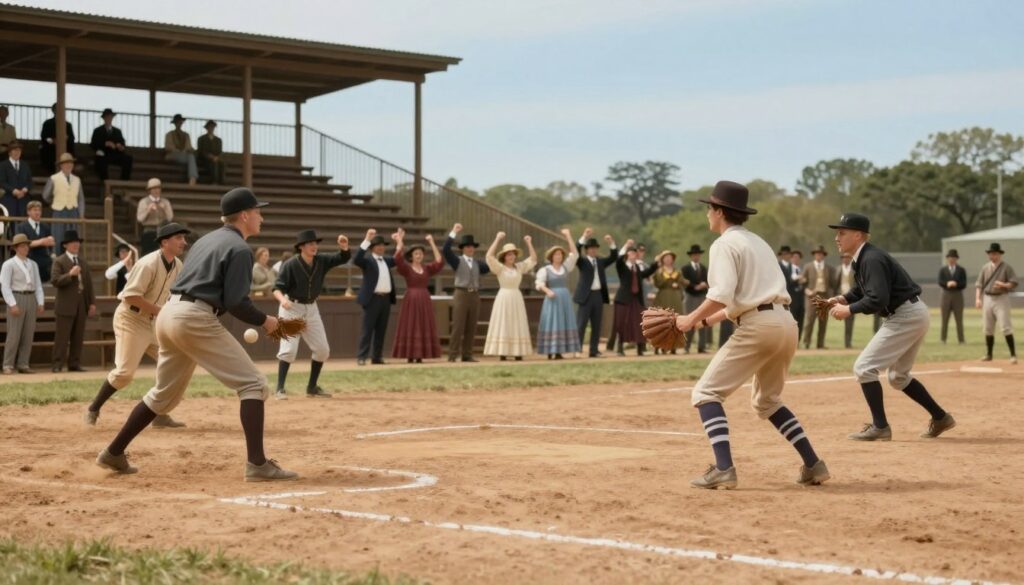
So, how do writers find this balance? The key is in the anachronism. An anachronism is not just a wrong date but a feeling. It’s when something feels out of place, like a modern phrase in 1869. A well-placed anachronism can be powerful, but a bad one can ruin the story.
Think about the main challenge in historical fiction: making it feel real yet easy to follow. Do you use old-time slang or make it easier for readers? The best baseball historical fiction does both. It makes you feel like you’re there, smelling the stadium lights and feeling the dirt, yet the characters speak in a way that feels true to their time.
| Aspect | Historical Fidelity | Creative License |
|---|---|---|
| Primary Goal | To recreate the past with documentary precision. | To use the past as a compelling setting for human drama. |
| Reader Expectation | Expects to learn and be immersed in a bygone era. | Expects to be told a great story, with history as the stage. |
| Risk | Can become a dry, fact-laden history lesson. | Can distort history to the point of creating a false narrative. |
This isn’t just about getting the details right. It’s about capturing the feel of the past. A great novel about early baseball isn’t just about the game. It’s about the culture of the game—the smells, the tensions, and how baseball brought a nation together.
This balance is what makes the genre so engaging. As discussed in a thoughtful piece on the purpose of historical fiction, the goal is not to create a perfect replica but to reflect on our world. The best stories in this genre make you forget you’re learning, wrapping history in the leather of a well-worn baseball.
The novel’s view of modern fandom
If I Never Get Back looks at baseball fandom through a funhouse mirror. It shows our own nostalgic hypocrisy. The story reveals how we fantasize about being time-tourists, enjoying the past without its troubles.
The main character, Sam, is a modern fan’s dream. He’s a 21st-century hero in a 19th-century world. He corrects historical wrongs with a modern view while enjoying the old days. This is the dream of modern fandom: to be the enlightened, moral, and culturally superior time-traveler.
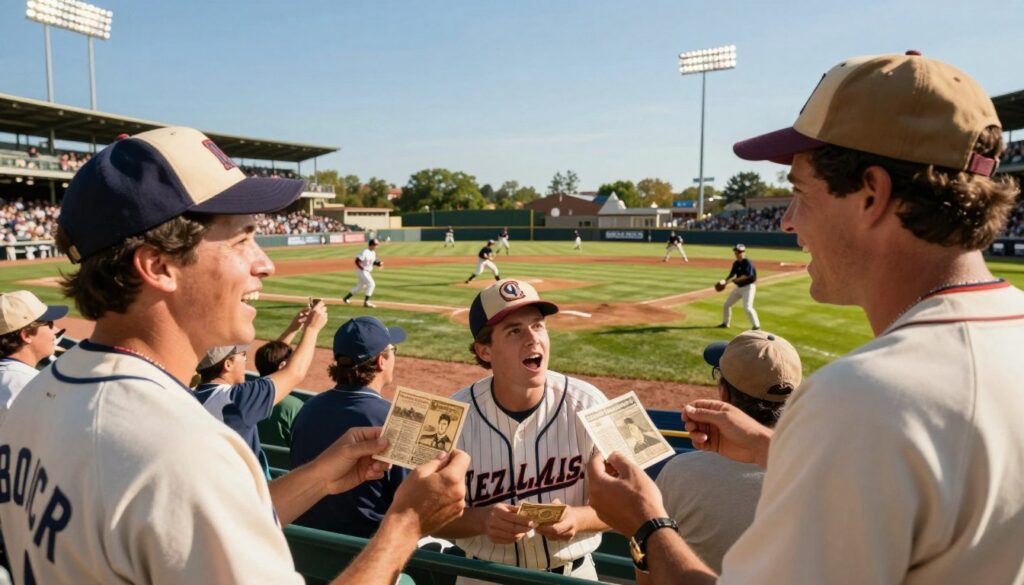
This dream tells us a lot about our past. Sportswriter Joe Posnanski says baseball nostalgia is a strong drug. We, as fans, look back more than we look forward. The novel is a perfect example of this longing.
The story is a love letter to a past that never was. It’s for fans who love their history romanticized. It feeds our baseball nostalgia and our connection to the game’s history.
The main conflict is about moral tourism. The protagonist fights for equality while enjoying the old era’s look and feel. This is the heart of the novel’s view of modern fandom: we want to be the enlightened ones, wearing cool old-timey uniforms.
The table below captures this central conflict, the dual fantasy that defines the novel’s take on sports literature:
| Aspect | The Modern Fan’s Fantasy (in the novel) | The Victorian Reality (in the novel) |
|---|---|---|
| Social Values | Modern, progressive, egalitarian. | Rigid class structure, social inequality. |
| Role of the Fan/Protagonist | An enlightened time-traveler fixing the past. | An outsider with no social standing or power. |
| View of the Game | Romantic, pure, a noble pastime. | A rough, unrefined, and often brutal pastime. |
| Ultimate Goal | To experience the aesthetic of the past without its moral and social baggage. | To survive and find a place in a rigid society. |
This isn’t just a story about time travel; it’s a commentary on how we consume history and sport. We prefer the sepia-toned version, where we can be the hero. The novel is a perfect example of baseball nostalgia. It’s a fantasy that lets us enjoy the past’s look without any guilt.
This critique of baseball fandom makes the book a compelling piece of sports literature. It’s not just a baseball story; it’s about why we love baseball’s past. For more on what makes a baseball story last, our analysis of what makes a great baseball novel explores this theme further.
Ultimately, the novel’s view of fandom is wry and self-aware. It shows us that the modern fan is often a time-tourist. We seek the thrill of the past with the safety of the present. It’s a funhouse mirror, and the reflection is a fan who wants it all.
Lasting appeal to baseball readers
Why do time travel baseball novels from the 1990s remain popular? They use baseball to explore big questions. This makes them more than just sports fiction; they’re a way to see the game’s deeper meaning.
Joe Posnanski says baseball is the most literary sport in America. Fans often look back more than forward. A time travel novel taps into this nostalgia, appealing to fans who love a good story.
But it also appeals to those who love to analyze. It’s a story about memory and our past. This mix of excitement and depth is its true genius.
The appeal of these stories lies in their ability to connect us across time. They’re not just about the game. They are the game itself, a captivating conversation with history.