
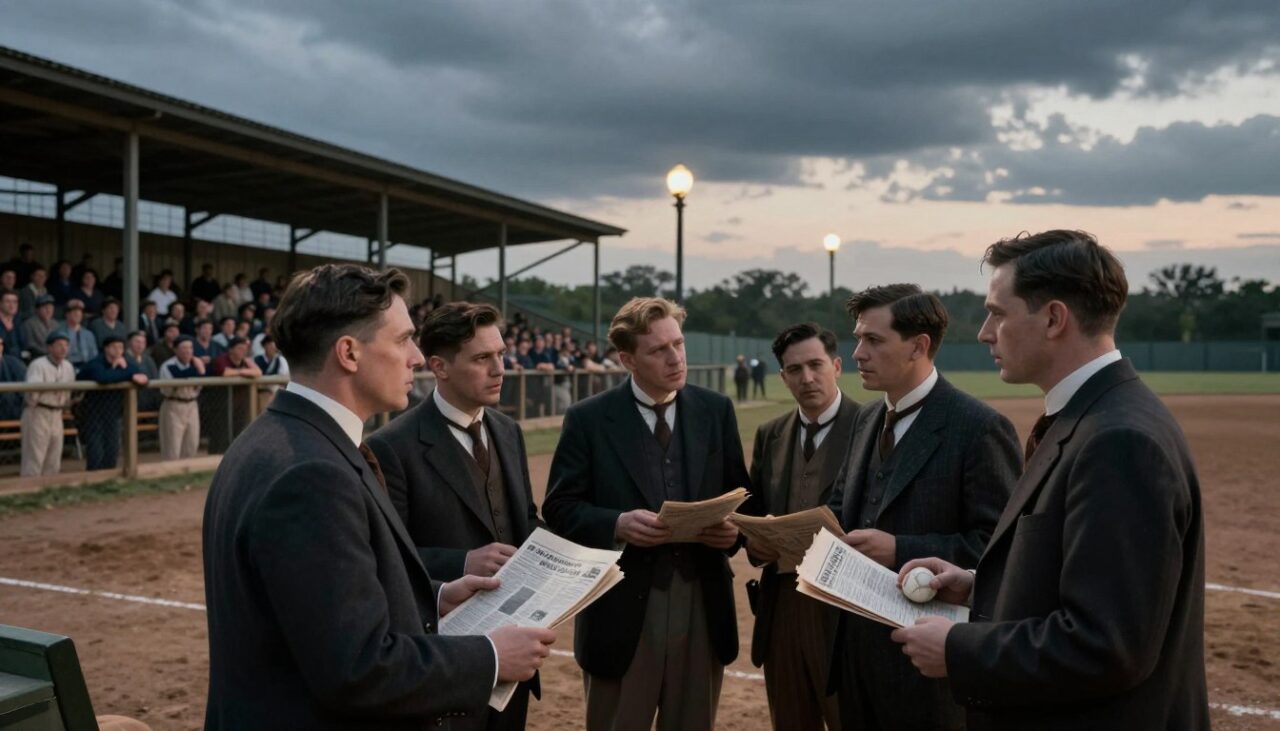
The 1919 Black Sox Scandal is a key moment in American sports history. It happened during the World Series, where the Chicago White Sox, favorites to win, played the Cincinnati Reds. Fans were stunned when the White Sox lost, despite being so talented.
After the game, it was discovered that eight players had thrown the series. They did this for money from gamblers. This betrayal hurt the players’ reputation and broke the trust of millions of fans. They saw baseball as a clean and honorable sport.
The scandal caused a lot of anger and led to big changes in baseball. It showed how vulnerable sports can be to corruption. Today, it reminds us of the need for honesty in sports.
Key Figures Involved
The 1919 Black Sox Scandal involved many players and gamblers. Eight players played key roles in the scandal. Shoeless Joe Jackson was one of them, known for his .375 batting average in the World Series.
Many debate if Jackson was involved or just caught up in the scandal. His case is a big part of the controversy.
Eddie Cicotte and Lefty Williams were also involved. Cicotte admitted to throwing games. Williams’ actions also contributed to the scandal. Both were banned from baseball for life.
The scandal was also driven by gamblers like Arnold Rothstein. Rothstein was a big name in organized crime. Other gamblers, like Sleepy Bill Burns and Billy Maharg, also played a role. They later testified against others, revealing the fix.
A famous story from the scandal is “Say It Ain’t So, Joe.” It tells of a young boy asking Jackson about the scandal. Jackson denied the story, but it’s a big part of baseball history.
| Player/Gambler | Role | Outcome |
|---|---|---|
| Shoeless Joe Jackson | Player | Banned for life |
| Eddie Cicotte | Pitcher | Banned for life |
| Lefty Williams | Pitcher | Banned for life |
| Arnold Rothstein | Gambler | Acquitted |
| Sleepy Bill Burns | Gambler | Testified against others |
| Billy Maharg | Gambler | Testified against others |
Impact on the Game & Rules
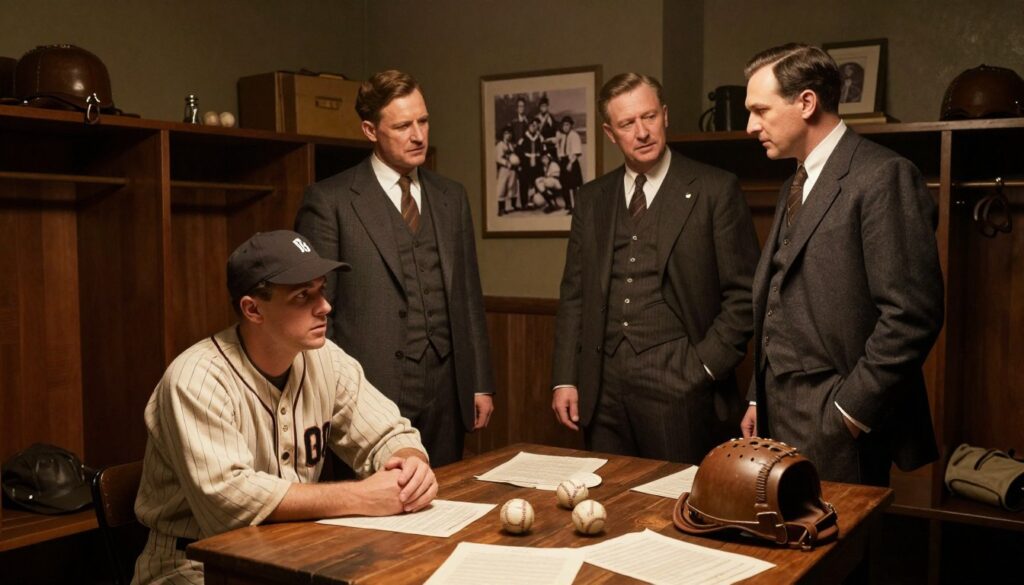
The 1919 Black Sox scandal changed baseball forever. Team owners acted quickly to regain trust. They chose federal judge Kenesaw Mountain Landis as the first Commissioner of Baseball, giving him full control.
Landis’s role was to clean up baseball. After the players were found not guilty in 1921, he banned all eight players involved for life. He said anyone who worked with gamblers would never play again.
This strict rule changed baseball for good. It stopped the game-fixing that had been a problem for years. The rule made it clear that honesty was the top priority. Even Buck Weaver, who didn’t take money, was banned because of his connection to the scandal.
The table below shows the main changes in baseball rules after the scandal:
| Year | Event | Impact |
|---|---|---|
| 1920 | Appointment of Kenesaw Mountain Landis | First Commissioner with absolute authority |
| 1921 | Lifetime bans issued | End of the gambling culture in baseball |
| 1921 | New rules against gambling | Increased integrity and public trust |
| 1922 | Establishment of stricter regulations | Prevented future scandals |
These changes made baseball more open and reliable. The Black Sox scandal taught us how important good governance and honesty are in sports. For more details, visit this link.
Public Reaction and Consequences
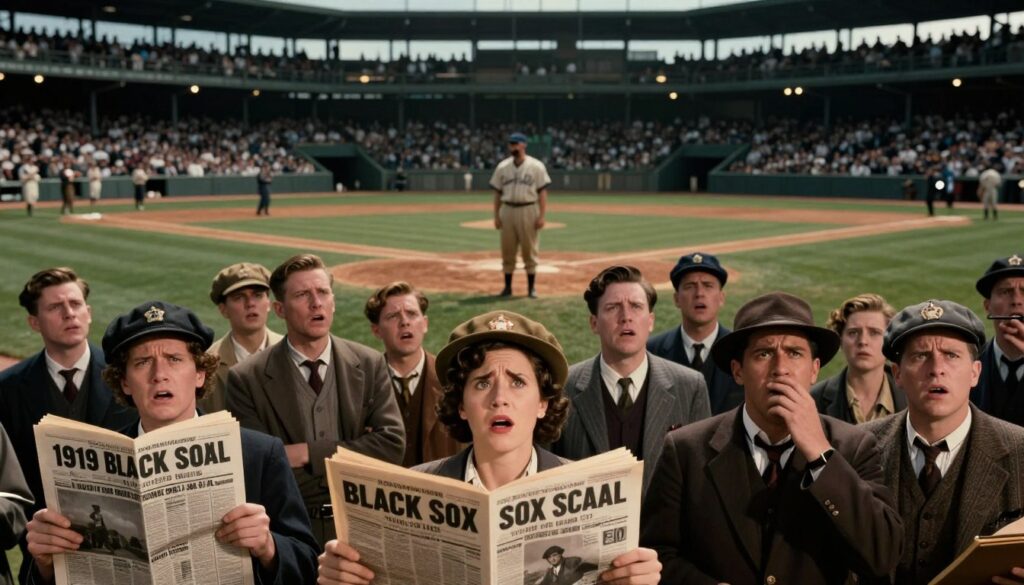
The Black Sox Scandal left the public feeling deeply betrayed. The 1921 trial ended with a shocking acquittal. This made many doubt the justice system’s integrity.
The jury’s decision was striking. They celebrated with the players after the verdict. This scene shocked the nation.
Outrage spread among fans and writers. Young journalist Ernest Hemingway was among those who felt let down. Many saw the players as having broken the trust of their fans.
The White Sox franchise suffered greatly. They went from being a top team to finishing seventh in 1921. They wouldn’t make it back to the World Series until 1959.
The banned players, known as the “Eight Men Out,” had a tough future. For ten years, they played in semi-pro and outlaw leagues. This was a far cry from their former glory.
The scandal’s impact was long-lasting. It changed baseball’s landscape for years. The historical analysis shows how it affected the game and its players.
Legacy in Baseball Culture
The 1919 Black Sox Scandal has deeply influenced American baseball. It has been the focus of many books and films, like Eliot Asinof’s “Eight Men Out.” This book and its film adaptation have made the scandal well-known, sparking debates about sports integrity.
Shoeless Joe Jackson’s case is a long-standing debate. For over a century, fans and historians have discussed his guilt and eligibility for the Baseball Hall of Fame. This ongoing conversation highlights the moral complexities in sports.
The Chicago White Sox had a long wait after the scandal to win another World Series, which they did in 2005. This victory was seen as a moment of redemption, ending the “Curse of the Black Sox.” It added a new chapter to the scandal’s legacy, linking it to the team’s history.
In May 2025, the eight players involved were removed from baseball’s permanently ineligible list. This move opened the door for them to be considered for the Hall of Fame, sparking new interest in their stories. The discovery of a 1924 trial transcript has also shed new light on the scandal.
As time passes, the Black Sox Scandal remains a key topic for historical analysis. It makes us think about ethics in sports and how past actions shape our stories today. The scandal’s legacy continues to grow, showing the deep connection between baseball and American culture.