
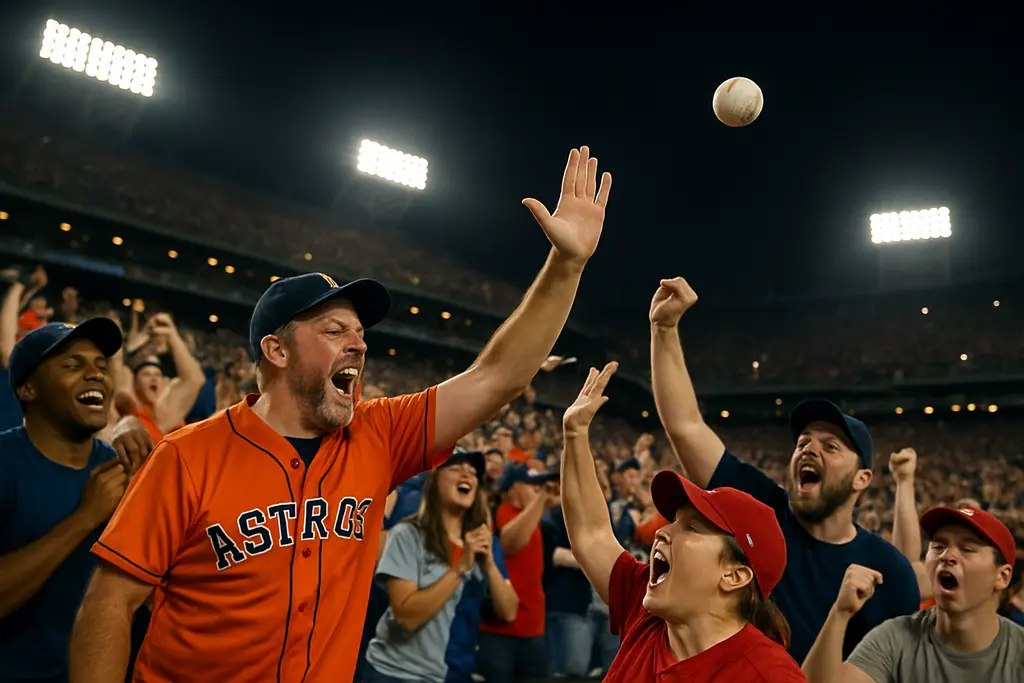
Rivalry Weekend 2026 took place from Friday, May 15 through Sunday, May 17, 2026, and its meaning is clearer in retrospect than it would have been as a simple schedule note. MLB presented it as the second consecutive edition of the event, with 11 interleague rivalries and 4 regional or intraleague matchups grouped into one weekend, as MLB announced. The value of that format was not only commercial. It reflected a long shift in how the league has treated rivalry as a scheduling structure rather than only as an inherited fan tradition.
For much of major league history, the sport kept the American League and National League apart during the regular season. That separation gave the World Series a distinct boundary-crossing function, but it also meant that city, state, and regional pairings across league lines could not become annual regular-season events. The modern rivalry package sits on the other side of that divide. It depends on interleague play, on repeat pairings, and on the idea that geography can be treated as part of the competitive calendar.
Rivalry Weekend 2026 And The Interleague Line
Rivalry Weekend 2026 As A Formal Event
The key historical point is that Rivalry Weekend 2026 did not create rivalries from scratch. It gathered existing rivalries and placed them in a defined window. That distinction matters. Baseball rivalries have long formed through pennant races, market overlap, ballpark proximity, family allegiances, and repeated postseason or regular-season tension. The 2026 weekend gave those forces a schedule label and a shared national frame.
Interleague play, introduced in 1997, made that kind of event possible. Before regular-season interleague play, American League and National League clubs met outside the regular season in settings such as exhibitions, spring training, and the World Series. That older structure preserved league identity, but it limited how often many natural rivals could meet in games that counted. Once interleague play became part of the regular season, MLB could treat cross-league local pairings as recurring inventory rather than rare exceptions.
The 1997 Break In Tradition
The first regular-season interleague game was played on June 12, 1997, when the San Francisco Giants visited the Texas Rangers. Stan Javier hit the first interleague home run. Those facts mark more than a scheduling footnote. They signaled a change in the league relationship that had defined Major League Baseball for generations. Once the regular season included AL-NL games, the schedule could carry a new layer of civic identity, including pairings that had previously lived mostly in argument, memory, or October hypotheticals.
From 1999 through 2012, interleague games were largely concentrated in June, and natural rivalries often received repeated treatment. That period made rivalry windows familiar without making them as fully branded as the May 2026 version. Since 2013, interleague play has been spread across the full season, and later schedule changes made cross-league contact more routine. The dedicated weekend therefore worked as a partial return to concentration: not a return to the old June model, but a focused spotlight within a broader interleague system.
Why Rivalries Became Schedule Assets
Regional Identity And Repeat Exposure
Rivalries become stronger when they are legible. The Subway Series connects the Yankees and Mets through New York City identity. The Freeway Series links the Dodgers and Angels through Southern California geography. The Crosstown Classic places the Cubs and White Sox inside one city with distinct fan cultures. The I-70 Series connects the Royals and Cardinals through a regional corridor. These labels matter because they give casual observers a clear reason to understand why a series carries weight beyond the standings.
That does not mean every rivalry has the same depth. Some are older, some are more intense, and some depend more heavily on geography than on decisive baseball moments. The schedule can highlight a pairing, but it cannot manufacture decades of meaning on its own. What the league can do is make repeated meetings easier to find, easier to sell, and easier for fans to place within a wider baseball calendar. In that sense, Rivalry Weekend 2026 functioned as a sorting device for games that already had regional or historical logic.
- City identity: Yankees-Mets and Cubs-White Sox draw meaning from shared metropolitan space.
- Regional geography: Royals-Cardinals and Dodgers-Angels use proximity and travel corridors as part of the frame.
- League-crossing history: Interleague play made many natural rivalries viable as regular-season fixtures.
Business Logic Without Losing Baseball Meaning
The business logic was clear, but it should not obscure the baseball context. Grouping rivalry games in one weekend gives the league a national talking point before Memorial Day. It also lets clubs market games that often carry strong local interest. Yet the appeal depends on the competition still feeling specific. A Yankees-Mets series is not the same kind of event as a Dodgers-Angels series, and neither is identical to Cubs-White Sox. The shared weekend connected them, but their meanings remained local.
There is also a player and roster angle. Rivalry series can place ordinary May games under sharper scrutiny, especially in markets where the opposing fan base is close enough to be present in the building or active in the same media space. The research available for this article does not support claims about specific 2026 player performances, injuries, or game outcomes, so the safer analysis is structural: the weekend increased the visibility of certain games without changing the rules of competition.
The Historical Meaning Of Regional Matchups
Ballparks, Cities, And Memory
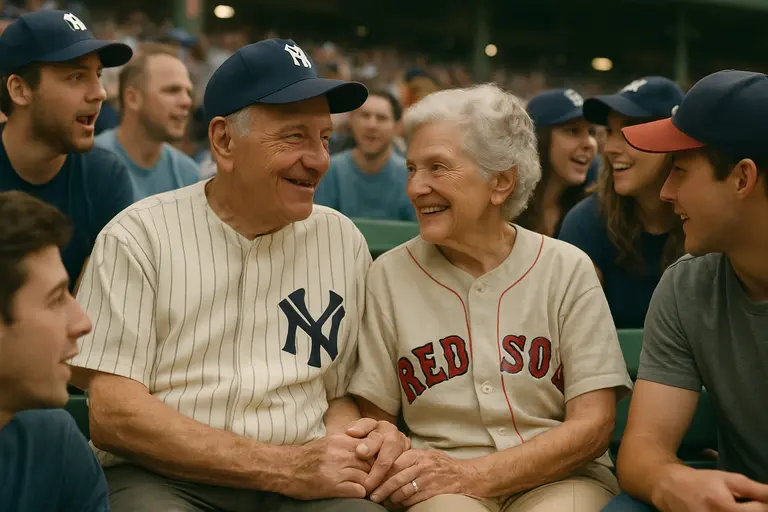
Baseball rivalries are not only team-to-team relationships. They are also tied to places. Older ballparks, long-standing fan routes, and civic boundaries shape how matchups are remembered. The staying power of certain venues gives some rivalries a setting that persists across generations; for a related historical example, the durability of Fenway Park and Wrigley Field is discussed in this piece on Fenway and Wrigley. Venue continuity does not create rivalry by itself, but it gives fan memory a physical anchor.
That is why natural-rival scheduling has appealed to MLB across different formats. The league can rotate opponents and broaden access, but certain pairings retain special clarity because the map explains them quickly. When clubs share a city, a state, or a travel corridor, the matchup needs less interpretation. Fans understand why it matters before the first pitch. Analysts, though, should separate that cultural recognition from competitive stakes. A rivalry game can be intense even when the standings say little, and a high-stakes game can lack rivalry meaning.
The Shift From Separation To Repetition
The old AL-NL separation made the World Series the central meeting point between leagues. Interleague play changed that hierarchy by allowing regular-season repetition. Repetition is essential to rivalry. It gives teams chances to answer previous losses, gives fans annual reference points, and gives local media a recurring story. Rivalry Weekend 2026 was one result of that longer move from separation toward planned repetition.
That shift also changed how younger fans encounter baseball history. A fan who grew up after 1997 has always known regular-season interleague games as normal. For that audience, the novelty is not AL versus NL. The novelty is the event packaging: placing several rivalry pairings in the same three-day window and treating them as one coordinated baseball moment. For broader baseball analysis from the same network, Cutting Ball offers related coverage of the sport.
Rivalry Weekend 2026 As Scheduling History
Rivalry Weekend 2026 should be viewed as part of MLB scheduling history, not as a stand-alone promotion. Its May 15-17 placement came after decades of structural change: no regular-season interleague play before 1997, limited and concentrated interleague windows after that, full-season interleague play beginning in 2013, and a later schedule model in which every club sees every opponent at least once. Within that sequence, a dedicated rivalry weekend was a way to restore focus to matchups that can become less distinct when interleague play is spread across six months.
The event also showed the tension at the center of modern baseball scheduling. MLB wants broad opponent variety, but fans still respond to repeated opponents with local meaning. The 2026 format tried to hold both ideas at once. It belonged to a national schedule, yet its strongest logic was regional. That balance is why the weekend is historically useful. It shows how MLB has moved from guarding league separation to organizing selected rivalries as recurring calendar features.
The cautious reading is that Rivalry Weekend 2026 marked a consolidation of trends already in motion. It formalized rivalry attention, gave natural pairings a common date range, and tied interleague history to present schedule design. It did not prove that every featured matchup carries equal weight, and it did not replace the deeper origins of baseball rivalry. It did show how modern MLB uses history, geography, and repetition to give a May weekend a defined place in the sport’s calendar.