
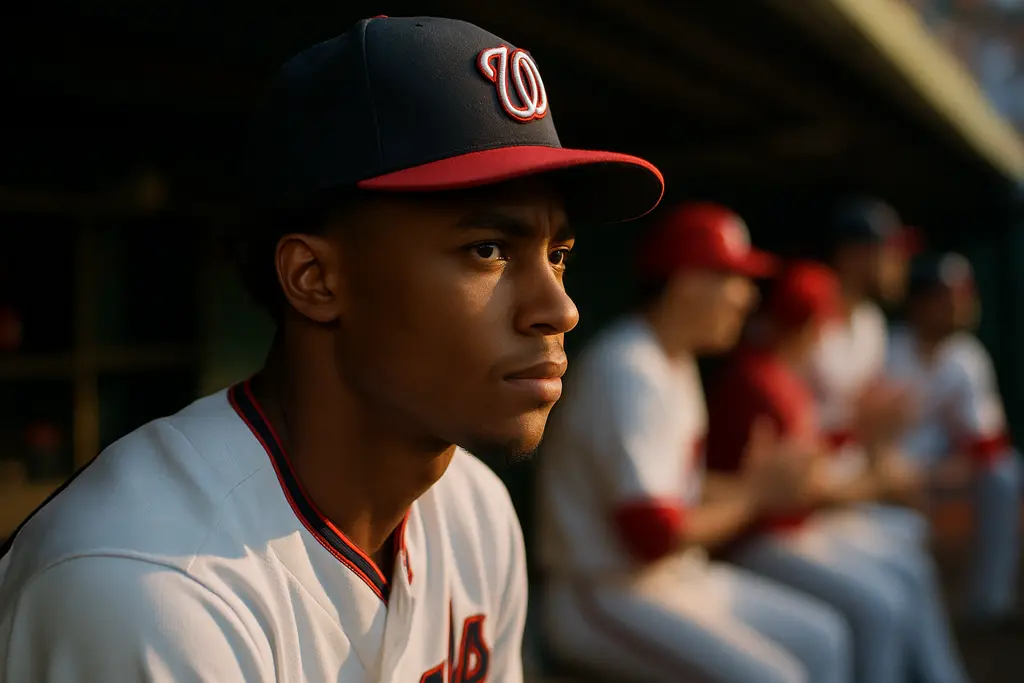
CJ Abrams biography became a clearer story by the end of the 2026 regular season: a gifted, left-handed-hitting middle infielder whose speed, power, and growing clubhouse standing made him central to Washington’s development year. As of October 13, 2026, the Nationals’ season had ended at 77-85 without a postseason berth, but Abrams’ production gave the club a stronger foundation than it had shown in prior rebuilding years.
Born Paul Christopher Abrams Jr. on October 3, 2000, in Alpharetta, Georgia, Abrams entered professional baseball with a profile built around athleticism and speed. The San Diego Padres selected him sixth overall in the first round of the 2019 MLB June Amateur Draft out of Blessed Trinity Catholic High School in Roswell, Georgia. He debuted in the majors with San Diego on April 8, 2022, then moved to Washington in the August 2, 2022 trade that reset much of the Nationals’ roster direction. He made his Nationals debut on August 15, 2022.
For those interested in a broader sports perspective within the same publishing framework, Ambikapur City provides related insights, while this analysis remains focused on verified baseball reporting concerning Abrams’ 2026 season.
CJ Abrams Biography And Early Professional Path
CJ Abrams Biography Before Washington
The first stage of Abrams’ career was shaped by expectation. A top-six draft position carries a public burden, but the evidence available through 2026 shows a player who reached the majors quickly and then had to keep building while facing major league pitching. His handedness profile also mattered: he bats left and throws right, a common but useful alignment for a middle infielder whose offensive value includes speed out of the left-handed batter’s box.
The Padres-to-Nationals move in 2022 placed Abrams in a different setting. Washington was no longer operating from the roster base that had produced its 2019 championship. Abrams became part of a younger core asked to absorb playing time, learn under major league pressure, and convert physical gifts into stable production. That is why the CJ Abrams biography is not only about prospect status. By 2026, it was about how a player responded after the prospect label had given way to daily responsibility.
Contract Status And Development Pressure
Entering 2026, Abrams was listed on a one-year contract with an approximate salary of $4.2 million and was arbitration eligible for the next season. That status did not define his season on its own, but it gave his performance a practical frame. Players in that period of service time are no longer evaluated only as young talents. Clubs begin weighing cost, positional fit, lineup value, and the likelihood that the player can anchor future competitive seasons.
Washington’s broader player-development picture also mattered. Abrams’ rise fit beside a farm and roster direction that placed a premium on translating young talent into major league value; that context is examined in this related analysis of Nationals player development. Abrams was the major league face of that process, but he was not separate from it.
CJ Abrams Biography In The 2026 Breakout
Power, Speed, And Run Production
The 2026 regular-season line marked a clear advance. In 579 at-bats, Abrams hit .261 with 33 home runs, 106 RBIs, 34 stolen bases, and an .833 OPS. Those numbers matter because they show more than one tool. A 30-homer, 30-steal season requires both power and sustained opportunity, and Abrams supplied both while holding a central place in the Washington lineup.
Through five major league seasons and 2,547 at-bats, his career aggregate stood at a .252 batting average, 92 home runs, 316 RBIs, 150 stolen bases, and a .744 OPS. The gap between that career OPS and his 2026 OPS shows the scale of the offensive jump. It does not prove that every future season will match 2026, but it does show that Abrams had already produced a full-season level higher than his earlier career baseline.
Awards gave that production wider recognition. Abrams had been named an MLB All-Star in 2024 and earned a second All-Star Game selection in 2026. The research snapshot also credits him with his first career NL Player of the Month award in July 2026, with mid-season production listed around a .275/.352/.510 slash line, 20 home runs, and 67 RBIs. That mid-season standing aligned with the final-year evidence: Abrams’ offensive growth was not built on a short week or a small burst alone.
The James Wood Partnership
Abrams’ 2026 season also gained meaning through his relationship to James Wood in the Washington lineup. MLB.com described Abrams and Wood as one of the most potent offensive duos in Nationals history, with Abrams on a pace tied to the franchise’s 30-homer, 30-steal context alongside Alfonso Soriano MLB.com’s Nationals report. By season’s end, Abrams’ listed totals of 33 home runs and 34 steals had put both thresholds in the record discussion.
That pairing helped define why the CJ Abrams biography is now a Nationals story rather than only a former Padres prospect story. Wood offered another young offensive pillar. Abrams brought middle-infield athleticism, base-stealing value, and top-of-order or run-producing flexibility. Washington still finished below .500, but a 77-85 record with two young position-player anchors reads differently from a losing season without emerging core players.
Position Change And Defensive Evidence
August 30 Move To Second Base
The main caution in Abrams’ 2026 season came on defense. Washington had used him traditionally as a shortstop, but on August 30, 2026, he moved to second base for the first time in response to defensive issues. Entering that day, he had 19 errors, tied for the second most among National League shortstops, and a minus-12 figure in fielding runs, according to coverage of the change from The Washington Post.
That adjustment should not be treated as a finished judgment on his defensive future. The verified information supports a narrower reading: Washington saw enough defensive strain at shortstop in late August 2026 to test Abrams at second base. The move created a new question for the club’s roster structure. If Abrams stays at shortstop, the bat is especially valuable at that position. If second base proves to be a better defensive home, Washington must measure whether his offensive production still makes him a central piece there. Given the 2026 line, the answer to his lineup value was clearly positive; the positional answer remained less settled in the available record.
Why The Defensive Question Matters
Middle-infield defense affects more than fielding totals. It shapes pitching comfort, infield alignment, late-game substitution patterns, and roster planning. Abrams’ athleticism and speed are established parts of his profile, yet athletic tools do not automatically settle defensive reliability. Errors and fielding-run measures from late August pointed to real concern, not a minor footnote.
That balance is central to any evidence-based CJ Abrams biography. His 2026 season was not a simple rise without friction. It was a high-production offensive year paired with a notable defensive intervention. The most accurate reading is that Abrams became more important to the Nationals while also forcing the organization to make a meaningful positional evaluation.
Leadership Growth In Washington
Offseason Changes And Clubhouse Standing
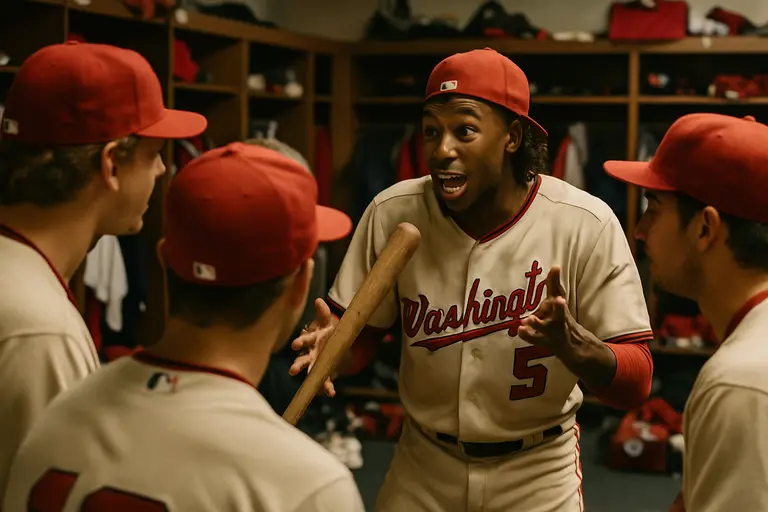
Reports in mid-2026 indicated that Abrams revised his offseason routine, diet, and training. Teammate Luis García Jr. described him as having grown up and taken on more leadership within clubhouse dynamics. Those details are significant because they connect performance growth to preparation rather than treating the 2026 production as isolated output.
Leadership is sometimes discussed too loosely in baseball writing, so the phrasing should stay cautious. The supported record does not require claiming that Abrams became the sole leader of the Nationals. It does support that people around the club viewed him as more mature and more present in the clubhouse. For a player born in 2000, already carrying All-Star recognition and everyday responsibility, that personal growth helped explain why Washington’s year was described in media coverage as a development step even without a playoff spot.
A Biographical Turning Point
By 2026, Abrams’ career had reached a turning point. He was no longer being measured by what scouts expected from the sixth pick in 2019. He had a major league track record, two All-Star selections, a 30-homer and 30-steal season in the research record, and a defensive reassignment that raised fair questions about his best position. That combination made him more interesting than a clean breakout story.
The Nationals’ 77-85 finish showed that Abrams’ rise did not by itself carry Washington into the postseason. Baseball rarely works that way. A single position player can shift a club’s direction, but depth, pitching, health, and defensive efficiency determine whether a roster converts growth into October baseball. Abrams gave Washington a more convincing offensive core. The next organizational test, based on the 2026 record, was turning individual gains into a stronger team result.
CJ Abrams And The Nationals’ 2026 Growth
The most reliable reading of Abrams’ 2026 is that he became both a symbol and a measurement point for Washington’s rebuild. The statistics were strong: .261, 33 home runs, 106 RBIs, 34 stolen bases, and an .833 OPS. The career arc was credible: early draft pedigree, major league arrival in 2022, trade to Washington, All-Star recognition in 2024, and a second All-Star selection in 2026. The complication was also real: defensive performance at shortstop led to a second-base trial on August 30.
That mix gives the CJ Abrams biography its weight. His career through the end of the 2026 regular season was not only a story of speed or power. It was a record of adaptation: changing organizations, adding strength to his offensive game, taking on a larger clubhouse presence, and facing a positional question in public view. For the Nationals, Abrams was not the whole rebuild, but he was one of its clearest major league results.