
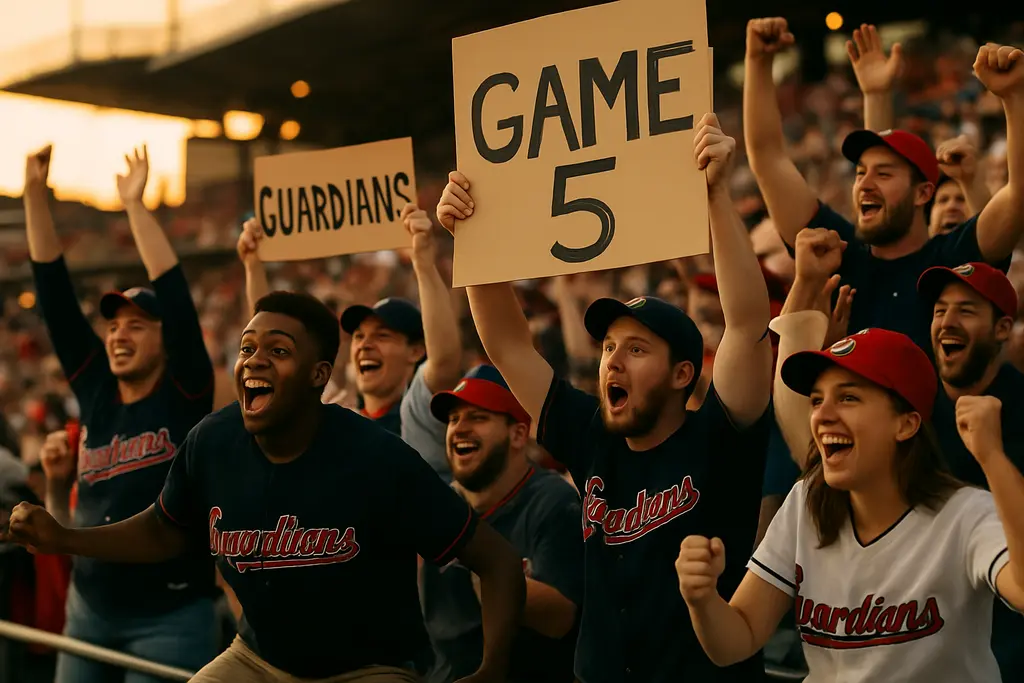
The Guardians Game 5 comeback on October 11, 2026, belongs in a narrow class of postseason reversals: a best-of-five series won by a team that lost the first two games. Cleveland beat the Chicago White Sox 2-0 in Game 5 of the AL Division Series, turning what had been a steep series deficit into one of the more statistically unusual outcomes in modern playoff baseball. The result was not just a closeout win. It was a case study in how pitching dominance, one decisive swing, and series structure can alter historical standing in less than a week.
The main facts are firm. Cleveland became the 11th team in MLB history to lose the first two games of a best-of-five postseason series and still win the series, according to MLB’s account of the Game 5 record-setting performance MLB stats and facts. CBS Sports reported the 2-0 score and José Ramírez’s two-run, go-ahead home run in the fourth inning, which supplied the margin in the clincher CBS Sports recap.
Why The Guardians Game 5 Comeback Fits A Rare Pattern
Guardians Game 5 Comeback By The Numbers
Best-of-five baseball leaves little time for correction. A club down 0-2 has no margin left, and every game after that becomes both a tactical contest and a roster-stress test. Cleveland’s 2026 ALDS response fit that model. The Guardians did not merely extend the series; they reversed it fully, then finished it with a shutout in Game 5 at Progressive Field.
The most striking number from the clincher was 21. Cleveland pitchers struck out 21 batters in Game 5, setting an MLB record for the most strikeouts by a team in a nine-inning postseason or regular-season game. That detail matters because it separates the win from a standard low-scoring postseason game. A 2-0 score can come from defensive positioning, contact management, baserunning mistakes, or weather-shaped run prevention. This game, as recorded in the research, was built around missed bats at a historic level.
The prior nine-inning postseason strikeout record had been 19, set in Game 3 of the same series. That sequence gave Cleveland’s comeback a distinctive statistical profile: two record-level strikeout games inside the same five-game series. For historical comparison, many 0-2 comebacks are remembered through a final offensive burst or an opponent’s collapse. This one was anchored by a pitching staff that reduced Chicago’s ability to put the ball in play in the deciding game.
How One Swing Changed The Series Record
Ramírez’s fourth-inning home run carried the offensive portion of the Game 5 story. With the final score at 2-0, his two-run shot was not simply an early scoring event; it became the game’s full run total. In a winner-take-all game, that kind of scoring concentration changes managerial pressure. The team with the lead can run its pitching plan through matchups and leverage, while the trailing team has fewer ways to manufacture a comeback when strikeouts prevent extended rallies.
The Guardians Game 5 comeback also differed from many series reversals because the deciding game did not become chaotic. Cleveland did not need a late multi-run inning, and the record provided in the research does not point to a final-inning escape as the defining moment. The shape was cleaner: early decisive offense, then unusually dominant run prevention. That structure helps explain why the game entered the historical file so quickly.
Historical Context For 0-2 Best-Of-Five Recoveries
The Best-Of-Five Format Leaves Little Room
Before Cleveland’s 2026 ALDS win, MLB had seen 10 teams reverse 0-2 deficits in best-of-five postseason series. The Guardians made it 11. That count includes Division Series play and earlier best-of-five League Championship Series formats before those rounds expanded. The number is small because the format is unforgiving: after two losses, a team must win three straight games against an opponent that needs only one more victory.
In the Division Series era after 1995, the research record identifies several notable examples: the 1995 Mariners over the Yankees, the 1999 Red Sox over Cleveland, the 2001 Yankees over the Athletics, the 2003 Red Sox over the Athletics, the 2012 Giants over the Reds, the 2015 Blue Jays over the Rangers, the 2017 Yankees over Cleveland, and the 2026 Guardians over the White Sox. That list shows that these reversals are spread across eras rather than clustered in one tactical period. They have occurred in different run environments and under different roster-building trends.
Cleveland’s place in that line is particularly sharp because the 2017 Yankees had been the previous team to complete such a comeback, and that one came against Cleveland. The franchise, then, moved from being the team that lost after taking a 2-0 lead in 2017 to being the team that overcame the same deficit in 2026. That does not create a predictive pattern, but it does create a clear historical contrast inside the same organizational record.
Home Field In A Deciding Game
The research notes that, among the 10 prior MLB teams to overcome an 0-2 deficit in a best-of-five series, six completed the comeback by winning Game 5 at home and four did so on the road. Cleveland’s clincher was a home Game 5 at Progressive Field. That setting does not reduce the difficulty of the comeback, but it places the final step in the more common bucket among successful examples listed in the research.
The broader lesson is cautious. Home field in Game 5 may support routine preparation, bullpen availability, and crowd energy, but the evidence provided here does not prove causation. The stronger analytical point is that Cleveland finished the comeback in the same venue category as a majority of prior successful 0-2 reversals. The unusual part was not that Game 5 was at home; it was the way Cleveland’s pitchers controlled it.
What The 2026 ALDS Says About Team Strategy
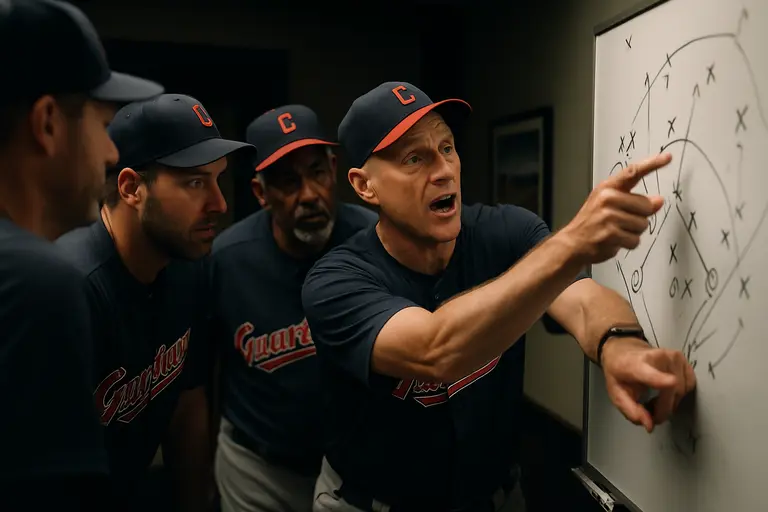
Pitching Depth Became The Series Lever
The Guardians Game 5 comeback reinforces a long-standing postseason principle: in short series, pitching depth can compress the gap between teams. Cleveland’s 21 strikeouts in the finale did not happen in isolation, given that Game 3 of the same series had already produced a 19-strikeout postseason record for nine innings. Across the final stretch of the series, Cleveland’s staff created repeated plate appearances in which Chicago could not move runners through contact.
That matters historically because postseason comebacks are often framed as emotional reversals. A more useful reading begins with skill expression. Strikeouts limit defensive variance. They reduce the number of balls that can find grass, force throwing errors, or move runners. In a short series, that kind of control can make a deficit feel less permanent, especially if a team can align its best arms for elimination games.
Ramírez’s homer still deserves central placement. A shutout does not win without at least one run, and his fourth-inning swing supplied two. But the game record suggests that Cleveland’s strategy did not require repeated offensive pressure. Once the lead existed, the pitching staff carried the leverage. That is a familiar October formula, but the strikeout total made this version historically distinct.
Series Pressure And Player Roles
An 0-2 deficit changes player roles. Starting pitchers face elimination context earlier. Relievers may be asked for higher-leverage outs without the usual cushion. Hitters see each plate appearance framed by the possibility that the season can end. In Cleveland’s case, the record available from Game 5 points to role clarity rather than disorder: Ramírez provided the run-scoring swing, and the pitching staff prevented Chicago from answering.
For readers interested in postseason pressure comparisons across sports, related coverage within the same network is available at worldfootballidol.com. Baseball’s best-of-five structure, though, has its own arithmetic. Falling behind 0-2 means a team must be perfect for three games, and even one poor inning can end the attempt. That is why the Guardians Game 5 comeback stands out in historical review without needing exaggeration.
Guardians Game 5 Comeback As Franchise History
The franchise element gives the event another layer. The research notes that, before 2026, Cleveland had been down 0-2 in postseason series six prior times and had only once before won the series from that deficit. That background makes the 2026 comeback more than a league-wide rarity. It was also an uncommon result inside the club’s own postseason record.
The 2026 ALDS against Chicago should be remembered first through verified outcomes: Cleveland won 2-0 on October 11, 2026; Ramírez hit the decisive two-run homer in the fourth inning; the pitching staff struck out 21 batters; and the Guardians became the 11th MLB team to erase an 0-2 deficit in a best-of-five postseason series. Those facts place the series in a defined historical category.
The caution is not to turn one comeback into a universal rule. A best-of-five series can swing on pitcher availability, one matchup, or one ball leaving the yard. Cleveland’s win shows that 0-2 is survivable, not that it is stable. The most accurate historical reading is narrower and stronger: the Guardians Game 5 comeback was a rare reversal completed with record-level strikeout dominance and one decisive swing from the franchise’s cornerstone hitter.